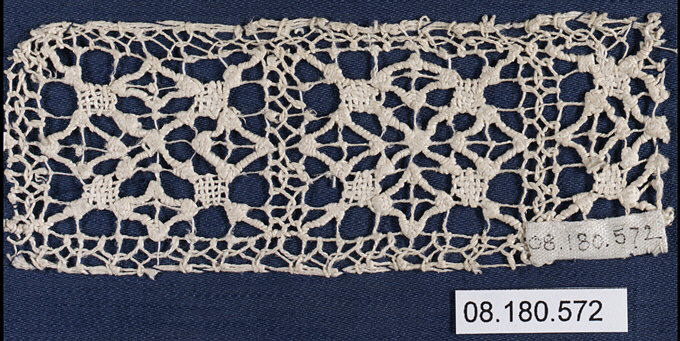
The Art of Insertion: A Couture Analysis of Katherine Fashion Lab’s Embroidered Net Mastery
In the rarefied realm of haute couture, where craftsmanship meets narrative, Katherine Fashion Lab has carved a distinctive niche by reimagining the technique of “insertion” as a foundational design philosophy. This standalone study examines the house’s latest collection, which draws upon a global heritage of textile artistry while centering on the delicate yet architecturally potent medium of embroidered net. The result is a nuanced exploration of transparency, structure, and cultural memory—an analysis that reveals how insertion, far from being a mere embellishment, becomes a language of spatial and emotional layering.
Defining Insertion: Beyond Decorative Additive
Traditionally, insertion in couture refers to the deliberate placement of contrasting materials—lace, tulle, or embroidery—into a garment’s seams or panels to create visual breaks or structural support. However, Katherine Fashion Lab elevates this technique into a conceptual tool. Here, insertion is not an afterthought but a primary design gesture. The embroidered net, often perceived as a lightweight, translucent substrate, is treated as a canvas for architectural intervention. By inserting panels of densely stitched floral motifs, geometric lattices, or abstract filigree into the net’s negative spaces, the lab creates a dialogue between absence and presence. The net becomes a ghostly second skin, while the inserted embroidery acts as a tactile memory—a scar, a tattoo, a whispered narrative.
This approach challenges conventional hierarchies of fabric weight. In many couture houses, heavier materials like silk faille or wool crepe dominate structural silhouettes. Katherine Fashion Lab inverts this logic: the net provides the airy volume, while the inserted embroidery supplies the tensile strength. The result is a garment that feels both ethereal and grounded, as if floating yet anchored by its own intricate history.
Global Heritage as a Palette of Techniques
The collection’s title, Insertion: Global Heritage, signals a deliberate departure from Eurocentric couture narratives. Katherine Fashion Lab draws from a polyglot of textile traditions, each reinterpreted through the lens of embroidered net. From the Chikankari of Lucknow—a delicate white-on-white embroidery on muslin—to the Calado of Madeira, where openwork patterns are stitched into linen, the lab synthesizes these global vocabularies into a cohesive visual language.
For instance, a floor-length gown features a bodice of sheer net with inserted motifs inspired by Japanese Sashiko stitching—traditionally used for mending and reinforcing. Here, the running stitches are rendered in metallic silver thread, creating a luminous grid that mimics the structural logic of kimonos. The skirt, meanwhile, incorporates Guipure lace inserts from Venice, but reworked in a matte black silk thread that echoes the geometric precision of Islamic Girih patterns. This fusion is not mere pastiche; it is a deliberate act of cultural translation. Each insertion honors its origin while being subsumed into a new, hybrid silhouette—one that speaks to the globalized identity of the contemporary wearer.
Materiality: The Paradox of Embroidered Net
The choice of embroidered net as the primary material is both a technical and symbolic decision. Net, by nature, is a fabric of voids—its open structure invites light, air, and movement. Yet embroidery, by definition, fills voids. Katherine Fashion Lab exploits this tension. In the collection’s centerpiece—a high-neck, long-sleeved column dress—the net is entirely covered in a dense, hand-embroidered layer of French knots and bullion stitches. The insertion here is not spatial but temporal: each knot represents hours of labor, inserted into the fabric’s timeline. The net remains visible only in the negative spaces between stitches, creating a shimmering, pixelated effect that shifts with the wearer’s motion.
The material also challenges the notion of modesty and exposure. In one piece, a backless jumpsuit, the net is left completely bare across the shoulders, while the front panel features inserted Chantilly lace motifs that trace the ribcage. The net’s transparency is thus controlled, used as a tool for revelation and concealment. This aligns with the lab’s broader philosophy: insertion is not about covering but about framing. The body is not hidden; it is curated.
Structural Innovation: The Insertion as Armature
From a construction standpoint, Katherine Fashion Lab’s use of embroidered net requires radical pattern engineering. Traditional couture relies on internal structures—boning, corsetry, interfacing—to shape a garment. Here, the inserted embroidery itself becomes the armature. In a sculptural jacket, for example, the net is cut in panels that are then joined by inserted strips of rigid metallic mesh, hand-embroidered with seed pearls. The mesh acts as a flexible yet unyielding seam, allowing the jacket to stand away from the body without internal supports. The effect is a silhouette that seems to float, as if the embroidery has summoned its own gravity.
This technique also allows for unprecedented movement. A pleated skirt, seemingly voluminous, is actually composed of multiple layers of net, each with inserted cutwork embroidery that creates permanent pleats. The fabric’s memory is encoded by the stitches, not by heat or chemical finishing. The result is a garment that moves like liquid, yet retains its shape when at rest—a paradox that defines the collection’s quiet dynamism.
Contextualizing the Standalone Study: A Wardrobe for the Discerning Nomad
This standalone study positions Katherine Fashion Lab’s work as both a departure from and a continuation of couture’s lineage. Unlike seasonal collections driven by trend cycles, this body of work is intended as an enduring archive—a “wardrobe for the discerning nomad,” as the lab’s creative director states. The garments are designed to be worn across climates and cultures, their embroidered net adapting to both a humid evening in Marrakech and a crisp autumn in Kyoto. The insertion technique ensures that each piece can be layered or deconstructed, the net’s transparency allowing for infinite styling permutations.
The global heritage references are not decorative; they are functional. The lab’s research into Indian Zardozi metal embroidery, for instance, yielded a technique for incorporating thin copper wires into the net’s structure, creating garments that can be shaped by hand, like clay. This is couture as cartography—each insertion a coordinate in a map of human craft.
Conclusion: The Future of Insertion
Katherine Fashion Lab’s Insertion collection redefines what embroidery can achieve when treated as a structural, narrative, and cultural medium. The embroidered net is not a backdrop but a protagonist—a fabric that, through the lab’s mastery of insertion, becomes a living document of global textile heritage. For the wearer, these garments offer more than beauty; they offer a tactile dialogue with the past, inserted into the present. In a fashion landscape often dominated by speed and disposability, this standalone study is a deliberate, breathless pause—a testament to the power of the needle to connect worlds. As the lab continues to evolve its technique, one truth remains: in the hands of Katherine Fashion Lab, insertion is not merely a method; it is a manifesto.