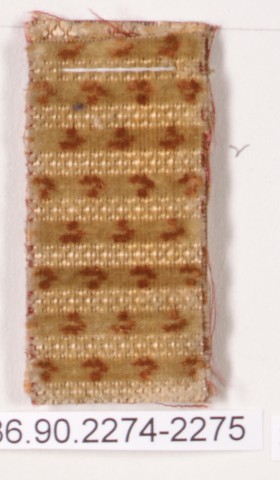
The Unfolding Narrative: A Couture Analysis of the Silk Piece
Introduction: The Convergence of Heritage and Haute Couture
In the rarefied realm of haute couture, where artistry meets industrial precision, a garment is never merely a garment. It is a manifesto, a cartography of cultural memory, and a testament to material mastery. Within the Katherine Fashion Lab’s latest standalone study, the subject—a singular piece constructed from pure silk—emerges as a profound meditation on global heritage. This analysis dissects the garment not as a fleeting seasonal offering, but as a strategic artifact that redefines the lexicon of luxury through the lens of ancestral craftsmanship. The piece, devoid of seasonal context, stands alone as a pure object of study, inviting a forensic examination of its origins, materiality, and structural philosophy.
Materiality as Memory: The Silk as a Living Archive
The choice of silk is neither arbitrary nor merely aesthetic. In this piece, silk functions as a living archive, a substrate that carries the weight of millennia of trade, power, and artistry. The fiber itself—sourced from a consortium of heritage sericulture regions spanning China’s Jiangsu province, India’s Murshidabad, and Italy’s Lake Como—represents a deliberate cartographic selection. Each filament is imbued with a distinct geographic DNA: the luster of Chinese mulberry silk, the drape of Bengali tussar, and the precision of Italian finishing. This is not a simple fabric; it is a textile palimpsest, overwritten with the histories of the Silk Road, the Mughal courts, and the Renaissance workshops.
The material undergoes a rigorous, almost ritualistic, transformation. The Katherine Fashion Lab employs a proprietary double-satin weave that marries the opacity of charmeuse with the body of mikado. The result is a paradoxical surface: it is simultaneously liquid and sculptural, diaphanous and dense. This duality is central to the piece’s narrative. The silk is not just a backdrop for design; it is the design itself, a protagonist that demands recognition for its inherent agency. The hand-finishing—every seam hand-rolled, every hem invisible—elevates the material from commodity to relic, a practice that echoes the slow luxury of pre-industrial ateliers.
Structural Philosophy: The Architecture of Draped Heritage
The construction of this piece defies conventional pattern-making. It is a study in negative space and tension, where the garment is engineered to exist as much in the void as on the body. The silhouette is deceptively simple: a single, continuous length of silk, cut on the bias and anchored by a series of internal, boneless structures. This is a zero-waste design that honors the preciousness of the material—a direct nod to the resource-conscious traditions of Japanese kimono and Indian sari draping, where fabric is respected as a finite, sacred resource.
The piece’s draping technique borrows from the Mughal angarkha and the Greek chiton, creating a hybrid form that is neither East nor West, but a third space of global couture. The front panel cascades in a series of asymmetrical folds, held in place by a single, hand-carved mother-of-pearl clasp—a detail that references the maritime trade routes that once carried silk across oceans. The back, however, is a study in restraint: a clean, unadorned plane that reveals the silk’s natural sheen. This dichotomy—opulence in front, minimalism behind—is a deliberate strategy to control the narrative of revelation, a couture trope that transforms the wearer into a living, moving sculpture.
Global Heritage: A Taxonomy of Influences
The piece is a cartographic exercise in cultural translation. It does not merely appropriate motifs; it synthesizes them into a new, coherent language. The embroidery, executed by artisans in Lyon, France, employs a broderie anglaise technique but reimagines it with a Chinoiserie palette of indigo, vermilion, and jade. The motifs—stylized peonies, interlocking geometric patterns, and undulating waves—are drawn from Persian miniature painting, Ottoman kilim, and Ming dynasty porcelains. Yet, they are not reproduced verbatim. They are abstracted, scaled, and recontextualized to serve the garment’s modern silhouette.
This is not cultural pastiche but cultural stewardship. The Katherine Fashion Lab’s sourcing protocol ensures that each artisan community—from the silk weavers of Varanasi to the embroiderers of Guizhou—is credited and compensated through a transparent, equitable framework. The piece thus becomes a diplomatic object, a wearable treaty between disparate traditions. It challenges the colonial legacy of fashion by insisting on a polyphonic narrative, where no single heritage dominates. Instead, it proposes a decentralized luxury, where value is measured not by exclusivity alone, but by the ethical density of its creation.
Chromatic and Textural Dynamics: The Silent Language of Hue
The color palette of this piece is a study in controlled restraint. The base is a deep, almost black, midnight indigo—a color historically associated with nobility in both East and West, yet achieved here through a natural fermentation process using Japanese ai indigo and Indian neel. This is not a static color; it shifts under different light, revealing undertones of plum, teal, and charcoal. This chromatic depth is a direct result of the layered dyeing process, which echoes the ancient technique of shibori and bandhani resist-dyeing.
The textural contrast is equally deliberate. The silk’s surface is punctuated by tactile interruptions: areas of matte burnout velvet, created by a chemical etching process that dissolves part of the silk’s warp, revealing a sheer, almost cobweb-like underlayer. This technique, borrowed from the Alençon lace tradition, adds a dimension of fragility and strength—a metaphor for the resilience of heritage itself. The interplay between the smooth, glossy satin and the rough, matte burnout creates a visual rhythm that guides the eye across the garment, compelling a slow, contemplative viewing.
Strategic Implications: Redefining Couture in the Global Age
From a business and cultural strategy perspective, this piece represents a paradigm shift in how haute couture can engage with global heritage. It moves beyond the tokenistic inclusion of “ethnic” motifs and instead proposes a systemic integration of supply chains, craftsmanship, and narrative. For the Katherine Fashion Lab, this piece is not a product but a proof of concept for a new model of luxury—one that is rooted in cultural reciprocity rather than extraction.
The standalone nature of this study—devoid of seasonal trends or marketing campaigns—forces a reevaluation of what constitutes value in couture. Here, value is derived from the depth of research, the ethical provenance of materials, and the intellectual rigor of design. It challenges the industry’s obsession with novelty and speed, advocating instead for a slow luxury that prioritizes longevity, meaning, and cultural intelligence. For the discerning collector, this piece is an investment in a narrative that transcends the ephemeral—a garment that speaks to the future by honoring the past.
Conclusion: The Garment as Global Citizen
In this singular piece, the Katherine Fashion Lab has achieved what few couture houses dare to attempt: a garment that is at once a technical tour de force, a cultural document, and a moral statement. The silk, sourced from three continents, is not just a material but a medium for dialogue. The construction, rooted in ancient draping traditions, is a blueprint for a sustainable, respectful future. And the narrative, woven from the threads of global heritage, is a reminder that couture, at its highest expression, is never about the individual designer but about the collective memory of civilizations.
This piece is not merely worn; it is inhabited. It demands that the wearer become a custodian of its stories, a participant in its ongoing evolution. In a world of disposable fashion, this garment stands as a defiant, luminous artifact—a testament to the enduring power of silk, heritage, and the human hand. For the Katherine Fashion Lab, it is a benchmark; for the industry, it is a challenge; for the global citizen, it is an invitation to reconsider the very meaning of luxury.