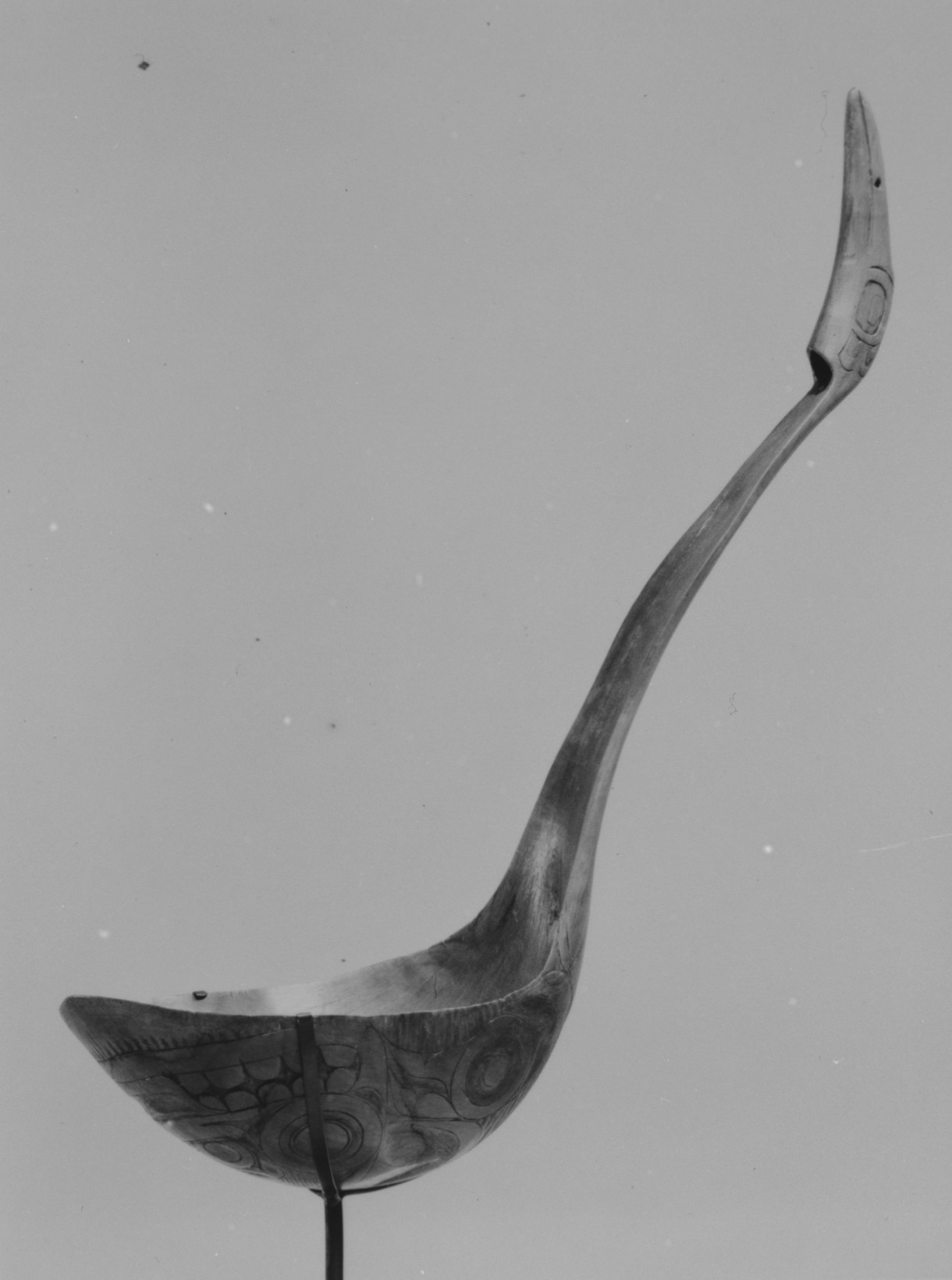
Heritage Analysis: The Haida Horn Ladle
Introduction: A Vessel of Authority and Sustenance
The Haida horn ladle, meticulously carved from mountain goat or sheep horn, is far more than a utilitarian implement. It is a potent symbol of status, spiritual authority, and communal sustenance within the Haida Nation of the Pacific Northwest Coast. For Katherine Fashion Lab, this object presents a profound strategic opportunity to anchor a 2026 high-end luxury collection in the language of cultural sovereignty, ritualistic adornment, and material transcendence. This analysis deconstructs the ladle’s symbolic power, historical adornment, and spiritual meaning, then translates these layers into a coherent luxury strategy that respects indigenous heritage while innovating within the global fashion ecosystem.
Symbolic Power: The Ladle as a Sceptre of Generosity
In Haida culture, the ladle was not merely a tool for serving food; it was an emblem of chiefly authority and clan identity. During potlatch ceremonies—the grand redistributive feasts that affirmed social hierarchy and kinship bonds—the host would use an elaborately carved horn ladle to serve guests. The act of ladling food symbolized the distribution of wealth, nurturance of community, and validation of status. The ladle’s size, material, and carving complexity directly correlated with the owner’s rank; a large, ornately carved ladle signified a high-ranking chief or matriarch.
For the luxury consumer, this object translates into a narrative of curated power and generosity as a form of leadership. The 2026 Katherine Fashion Lab strategy can leverage this by positioning accessories—such as sculptural necklaces, belt buckles, or handbag closures—as emblems of social capital. The ladle’s form, with its sweeping handle and deep bowl, can inspire a silhouette that is both protective and expansive, echoing the wearer’s role as a giver of experiences rather than mere possessions.
Historical Adornment: The Body as a Living Archive
Historically, the Haida adorned themselves and their objects with formline design—a sophisticated system of ovoids, U-shapes, and S-shapes that depicted crest animals (e.g., Raven, Eagle, Bear, Whale). The horn ladle served as a mobile canvas for these narratives, with each carving encoding lineage, mythology, and territorial rights. The medium itself—horn—was chosen for its durability, translucence when heated, and capacity to hold fine detail. Adornment was not decorative but mnemonic; every line told a story of creation, transformation, or ancestral encounter.
Katherine Fashion Lab can translate this into a material-first design philosophy. The 2026 collection should explore sustainable, sculptural materials that mimic horn’s organic qualities—such as bio-resin, polished wood, or recycled metal—and apply abstracted formline motifs as a signature graphic language. Rather than direct replication, the brand can collaborate with Haida artists to create exclusive, co-licensed patterns that adorn garments, leather goods, and jewelry. This transforms the body into a living archive, where each piece carries a story of lineage and protection, resonating with the luxury consumer’s desire for authenticity and narrative depth.
Spiritual Meaning: The Ladle as a Conduit for Transformation
Beyond its social function, the horn ladle held deep spiritual significance. Horn was considered a sacred material—derived from mountain goats or sheep that inhabited the liminal spaces between sky and earth. The carving process was a ritual act, often performed by a shaman or master carver who would fast and pray before working. The ladle was believed to channel supernatural energy during feasts, transforming food into spiritual sustenance. It also served as a protective talisman; the creature carved on the handle was thought to guard the user and their lineage from harm.
For the 2026 luxury strategy, this spiritual dimension offers a powerful counterpoint to the secularity of contemporary fashion. Katherine Fashion Lab can position the ladle-inspired collection as ceremonial wear for the modern soul—pieces designed for moments of personal or communal significance, such as milestone celebrations, private rituals, or philanthropic gatherings. The brand can introduce a “Guardian” capsule, where each item features a specific crest animal that corresponds to the wearer’s intended protection or aspiration. This elevates the product from commodity to talisman, aligning with the high-end consumer’s growing interest in mindfulness, intention, and spiritual wellness.
2026 High-End Luxury Strategy: From Artifact to Icon
To integrate the Haida horn ladle’s heritage into a commercially viable and culturally respectful luxury strategy, Katherine Fashion Lab must adopt a three-pillar approach: Cultural Stewardship, Material Innovation, and Experiential Storytelling.
Cultural Stewardship: The brand must enter into a formal, equitable partnership with Haida Nation representatives, including the Council of the Haida Nation and individual master carvers. This involves co-creation agreements, royalty structures, and educational initiatives that ensure the community benefits directly. The 2026 collection should be launched with a digital provenance system, where each piece is linked to a specific Haida artist or lineage, using blockchain or QR codes. This transparency builds trust and justifies premium pricing.
Material Innovation: The ladle’s horn medium inspires a focus on biophilic materials and artisanal finishes. Katherine Fashion Lab can develop a proprietary “Hornite” composite—a sustainable, high-durability material that mimics horn’s translucence and warmth, suitable for accessories, buttons, and hardware. Alternatively, the brand can source ethically harvested, naturally shed horn from regulated suppliers, working with Haida carvers to create limited-edition, numbered pieces. This material story aligns with the luxury market’s shift toward circularity and craftsmanship.
Experiential Storytelling: The 2026 strategy should position the collection within a narrative of transformation. The ladle’s journey from raw horn to ceremonial object mirrors the consumer’s own journey of self-discovery. Katherine Fashion Lab can host intimate, invitation-only events in key luxury markets (e.g., Paris, Tokyo, New York) where Haida elders or artists perform a digital or live carving demonstration, explaining the spiritual and symbolic layers. Each attendee receives a custom “ladle-inspired” accessory—such as a pendant or cuff—that is blessed or consecrated in a symbolic ceremony. This creates an emotional and spiritual connection that transcends transactional retail.
Conclusion: The Ladle as a Blueprint for Cultural Luxury
The Haida horn ladle is a masterclass in how utility, symbolism, and spirituality can converge into an object of enduring power. For Katherine Fashion Lab, it offers a strategic blueprint for creating luxury that is not merely beautiful but meaningful, ethical, and transformative. By honoring the ladle’s legacy through collaboration, innovation, and storytelling, the brand can position itself as a leader in culturally intelligent luxury—a space where heritage is not appropriated but celebrated, and where the consumer becomes a steward of tradition. In 2026, the ladle will not serve food; it will serve as a vessel for cultural renewal, carrying the Haida spirit into the global fashion dialogue.