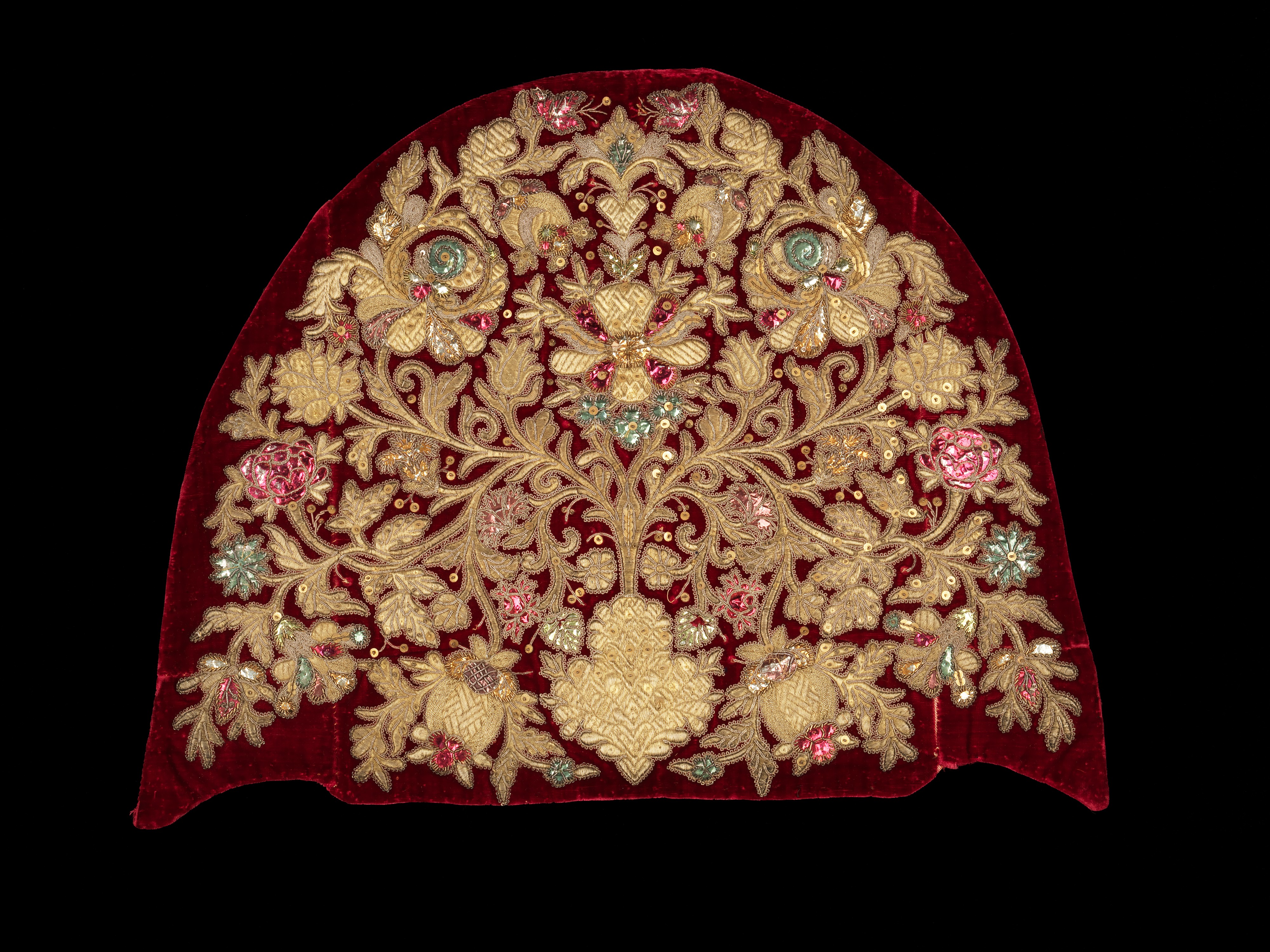
The Headdress as Sculpture: Deconstructing Russian Heritage at Katherine Fashion Lab
In the rarefied air of haute couture, where fabric meets philosophy and tradition collides with avant-garde expression, the headdress emerges as a singular artifact of cultural storytelling. At Katherine Fashion Lab, the latest standalone study devoted to the Russian headdress transcends mere accessory to become a meditation on identity, materiality, and the politics of adornment. This analysis dissects the intricate interplay of silk, metal, and linen within a design that simultaneously honors and reimagines a storied heritage. The result is not a nostalgic replica but a contemporary sculpture that demands intellectual engagement as much as aesthetic appreciation.
Material Alchemy: Silk, Metal, and Linen as Narrative Agents
The selection of materials in this headdress is no arbitrary curation; it is a deliberate lexicon of Russian cultural memory. Silk, historically a commodity of the Silk Road and a marker of aristocratic status in Imperial Russia, here serves as the foundational skin. Its liquid sheen captures light in undulating waves, evoking the opulent court dress of the Romanov era. Yet, Katherine Fashion Lab subverts this opulence by pairing silk with raw, unbleached linen—a fabric associated with peasantry, simplicity, and the Russian land itself. This juxtaposition creates a dialectic between the elite and the vernacular, suggesting that national identity is not monolithic but a layered conversation between classes and epochs.
Metal, in the form of hand-hammered brass filigree, introduces structural tension. Unlike the delicate gold embroidery typical of traditional kokoshnik headdresses, here the metal is bold, almost architectural. It forms a crown-like framework that rises above the silk base, its geometric patterns referencing the onion domes of Russian Orthodox cathedrals while simultaneously echoing the industrial rigor of Constructivist art. The metal is not merely decorative; it is a load-bearing element that transforms the headdress from a wearable object into a freestanding sculpture. The weight of the metal—both literal and symbolic—anchors the piece in a narrative of resilience, echoing the iron will of a nation that has weathered revolutions, wars, and cultural shifts.
Structural Semiotics: Reimagining the Kokoshnik
The traditional Russian kokoshnik is a crescent-shaped headdress that frames the face, often adorned with pearls, beads, and intricate embroidery. It is a symbol of femininity, fertility, and regional identity. Katherine Fashion Lab’s interpretation dismantles this archetype. The crescent is elongated and asymmetrical, tilting forward like a modernist visor. This shift in proportion challenges the wearer’s relationship with space: the headdress no longer passively frames but actively projects, creating a silhouette that is both protective and confrontational. The asymmetry introduces a sense of dynamic motion, as if the headdress is caught mid-transformation—a frozen moment of becoming.
The integration of linen panels, stitched with visible, raw-edged seams, introduces a tactile roughness that contrasts with the silk’s smoothness. This technique, reminiscent of deconstructivist fashion, suggests that the headdress is not a finished product but an ongoing process of cultural reinterpretation. The seams are not hidden; they are celebrated as markers of labor and craft. In this, Katherine Fashion Lab aligns with the Russian avant-garde tradition of faktura—the emphasis on the material’s inherent qualities and the artist’s hand. The headdress becomes a manifesto for honesty in design, rejecting the illusion of seamless perfection in favor of a narrative of making.
Cultural Context: Between Tradition and Transgression
To understand this headdress is to situate it within the broader landscape of Russian cultural identity—a terrain marked by tension between East and West, between Orthodox conservatism and revolutionary iconoclasm. The headdress, historically worn by married women as a symbol of modesty and social status, is here recontextualized as a statement of autonomy. The metal framework, with its sharp, unyielding lines, evokes the armor of a warrior rather than the submissive veil. This is not a headdress that bows; it is a headdress that commands.
The choice of linen, a material associated with mourning and simplicity in Russian folk tradition, adds a layer of solemnity. Yet, the silk’s luminosity prevents the piece from descending into austerity. Instead, it creates a chiaroscuro effect—light and shadow playing across the surface, suggesting the duality of Russian history: the brilliance of its artistic achievements shadowed by periods of hardship. The headdress thus functions as a wearable palimpsest, each material layer revealing a different chapter of national memory.
Wearability and the Body as Gallery
In the context of standalone study, the headdress must be considered not only as an object but as an experience. Its scale and weight demand a specific posture—a straight spine, a lifted chin. The wearer becomes a living pedestal, the headdress transforming the human form into an architectural element. This is not a passive accessory for daily wear; it is a ceremonial piece designed for moments of significance—a gallery opening, a performance, a rite of passage. The interaction between the metal and the skin introduces a sensory dimension: the coolness of the brass against the warmth of the body, the slight pressure of the linen against the scalp. These tactile sensations ground the wearer in the present, while the visual spectacle transports the observer into a dialogue with history.
Katherine Fashion Lab’s decision to present this headdress as a standalone study—without accompanying garments—underscores its autonomy. It is not subordinate to a dress or a coat; it is the protagonist. This curatorial choice invites the viewer to focus entirely on the headdress’s form, materiality, and symbolism, free from the distractions of a full ensemble. In this, the piece functions as a microcosm of the Russian soul: complex, contradictory, and unapologetically monumental.
Conclusion: A New Lexicon for Russian Couture
This headdress from Katherine Fashion Lab is not merely a homage to Russian heritage; it is a radical redefinition of what that heritage can signify in the 21st century. By weaving together silk, metal, and linen, the designer creates a textile dialogue that speaks of class, faith, and resilience. The structural innovations—the asymmetrical kokoshnik, the visible seams, the architectural metalwork—challenge the wearer and observer to reconsider the headdress as a site of intellectual and emotional expression. In an era where fashion often defaults to nostalgia or novelty, this piece stands as a rigorous, scholarly contribution to the ongoing conversation about cultural identity and material practice. It is a headdress that does not simply adorn; it articulates.