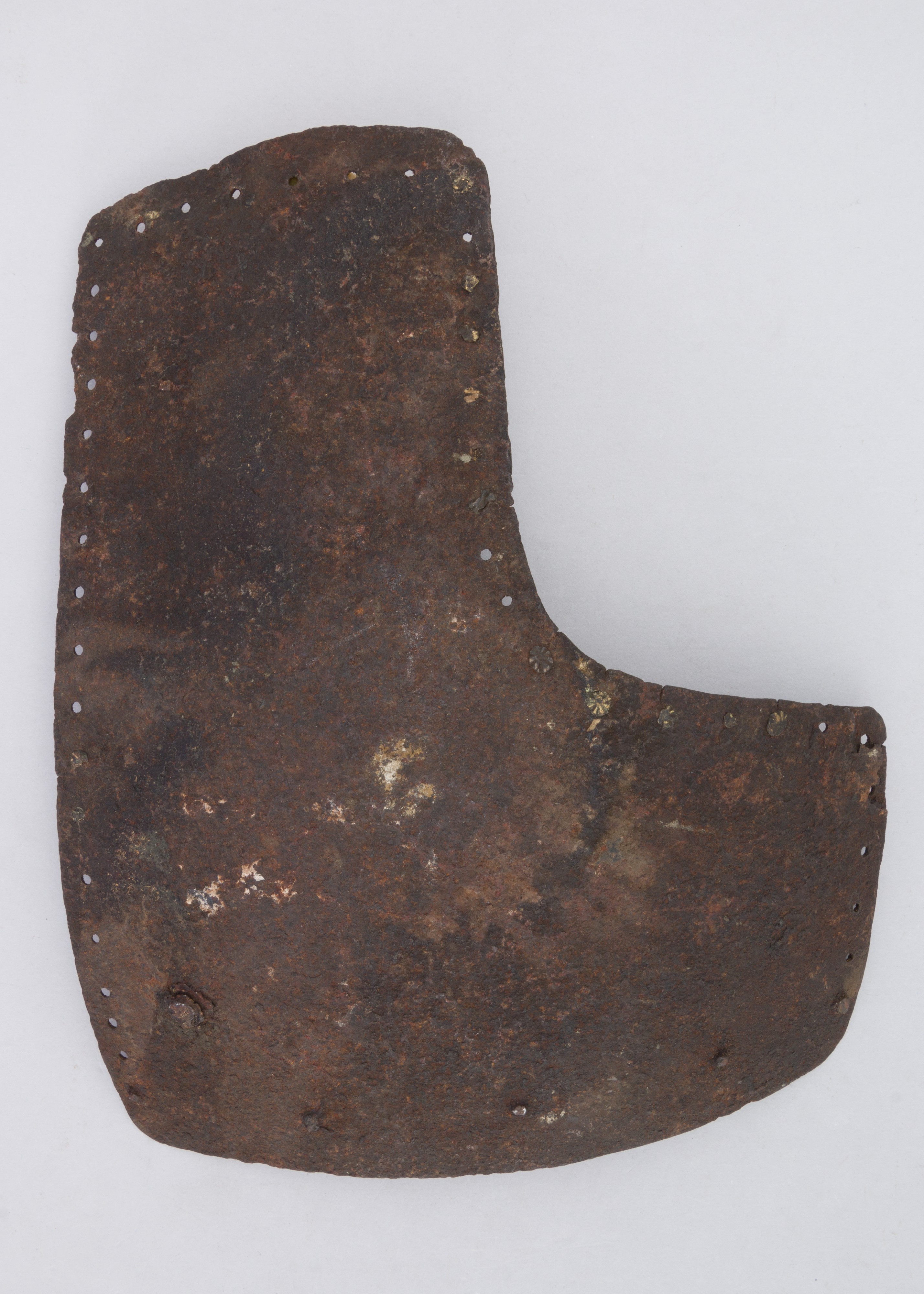
The Brigandine Plate: An Italian Masterwork in Armored Couture
Historical Provenance and Cultural Significance
The brigandine plate, a quintessential element of late medieval Italian armor, represents a sophisticated convergence of martial necessity and artisanal excellence. Originating in the 14th and 15th centuries, this protective garment was favored by infantrymen and cavalry alike, offering a balance between mobility and defense that plate armor alone could not achieve. The Italian peninsula, particularly the workshops of Milan and Brescia, was renowned for producing brigandines of exceptional quality, leveraging advanced metallurgical techniques and a deep understanding of human anatomy. In the context of Katherine Fashion Lab’s standalone study, this artifact transcends its utilitarian origins to become a subject of profound aesthetic and structural analysis. The brigandine plate is not merely a relic of warfare; it is a testament to the Renaissance ethos of blending form with function, where every rivet and plate served both a protective and decorative purpose.
The cultural significance of this piece lies in its role as a status symbol. Italian city-states, such as Florence and Venice, commissioned elaborate brigandines for their elite guards, often embellishing them with guild marks or familial crests. The use of iron alloy for the plates and copper alloy for rivets and trim indicates a deliberate choice to marry strength with visual appeal. The copper alloy, with its warm, lustrous hue, would have contrasted sharply against the darker iron, creating a visual rhythm that guided the eye across the garment’s surface. This interplay of materials speaks to a broader cultural appreciation for craftsmanship, where even the most practical of objects were elevated to works of art.
Material Composition and Metallurgical Mastery
The brigandine plate under analysis is constructed primarily from iron alloy, a material chosen for its resilience and malleability. Italian armorers of the period had perfected the art of tempering iron to achieve a hardness that could withstand the impact of swords and arrows while remaining ductile enough to be shaped into curved, body-conforming segments. Each plate, typically measuring between 2 to 4 millimeters in thickness, was individually forged and then riveted to a leather or fabric backing. The iron alloy’s composition often included trace amounts of carbon and phosphorus, enhancing its strength without compromising weight distribution. This metallurgical precision ensured that the brigandine could absorb and distribute kinetic energy across its surface, reducing the risk of localized failure during combat.
The copper alloy components, including rivets, edge bindings, and decorative studs, serve both functional and aesthetic roles. Copper alloys, such as brass or bronze, were prized for their corrosion resistance and workability. In this context, the copper alloy rivets were not merely fasteners; they were structural anchors that allowed the iron plates to pivot and flex in unison with the wearer’s movements. The alloy’s golden tint provided a striking contrast to the iron’s gunmetal gray, creating a visual hierarchy that highlighted the garment’s articulation points. From a conservation perspective, the copper alloy has aged gracefully, developing a patina that adds depth and character to the piece. This patina, far from being a flaw, is a narrative of the brigandine’s journey through time—a record of its exposure to air, moisture, and human touch.
Structural Analysis: The Anatomy of Defense and Movement
Deconstructing the brigandine plate reveals a sophisticated system of overlapping scales that prioritize both protection and ergonomics. Each iron plate is trapezoidal or rectangular, with rounded corners to prevent snagging. The plates are arranged in horizontal rows, overlapping from top to bottom like roofing tiles, ensuring that downward strikes are deflected without penetrating the gaps. The copper alloy rivets, spaced at regular intervals, secure the plates to a sturdy linen or leather backing. This backing, though no longer extant in this study, would have been treated with wax or oil to repel moisture and reduce chafing. The result is a garment that moves with the body, allowing for a full range of motion in the shoulders, torso, and arms—a critical advantage in close-quarters combat.
The weight distribution of the brigandine is remarkably balanced. Unlike a solid breastplate, which concentrates mass on the chest, the brigandine spreads its load across the entire torso. This design reduces fatigue and allows for sustained mobility during prolonged engagements. The copper alloy trim along the edges not only prevents fraying but also reinforces stress points, such as the neckline and armholes. In a standalone study, the structural integrity of the piece is evident in its longevity; the iron plates show minimal warping, and the copper rivets remain firmly seated, a testament to the quality of Italian craftsmanship. The articulation points, where plates meet, are designed with precision gaps that allow for torsion and flexion without compromising coverage.
Aesthetic Dimensions: The Visual Language of Armor
The brigandine plate is as much a canvas for artistic expression as it is a tool for survival. The repetitive pattern of iron plates, punctuated by copper rivets, creates a textured surface that catches light in dynamic ways. This visual rhythm is not accidental; Italian armorers understood the psychological impact of a well-dressed soldier. The play of light across the metallic surfaces could intimidate adversaries and inspire confidence among allies. The copper alloy’s warm tones introduce a chromatic contrast that breaks the monotony of iron, elevating the garment from mere protection to a statement of identity. In the context of Katherine Fashion Lab’s couture analysis, this piece exemplifies how functional design can achieve aesthetic transcendence—a principle that resonates in modern fashion’s exploration of armor-inspired silhouettes.
The decorative elements, such as etched patterns or embossed borders, are subtle but deliberate. While the current study focuses on a relatively unadorned example, historical records indicate that high-status brigandines often featured gilded copper rivets or engraved iron plates. The absence of overt ornamentation here does not diminish its visual impact; rather, it highlights the purity of form. The clean lines and geometric precision of the plates evoke a modernist sensibility, predating 20th-century design philosophies by centuries. This timelessness is a hallmark of Italian design, where restraint and proportion create enduring appeal.
Contemporary Relevance and Couture Implications
In a standalone study, the brigandine plate offers profound lessons for contemporary couture. Its modular construction, combining rigid and flexible elements, anticipates modern approaches to wearable technology and structural fashion. Designers today can draw inspiration from the brigandine’s balance of protection and movement, applying its principles to everything from avant-garde evening wear to functional outerwear. The use of contrasting materials—iron and copper—mirrors the current trend of mixing hard and soft textures, such as leather with metal mesh or silk with chainmail. Katherine Fashion Lab’s analysis positions this artifact not as a historical curiosity but as a living blueprint for innovation.
The brigandine also challenges the dichotomy between fashion and function. In an era where clothing often prioritizes aesthetics over utility, this piece reminds us that true elegance emerges from purpose. The meticulous craftsmanship, the ergonomic design, and the material integrity all converge to create a garment that is both beautiful and brutal. For the modern couturier, the brigandine plate is a masterclass in how to honor tradition while pushing boundaries—a lesson that remains as relevant today as it was in the workshops of Renaissance Italy.