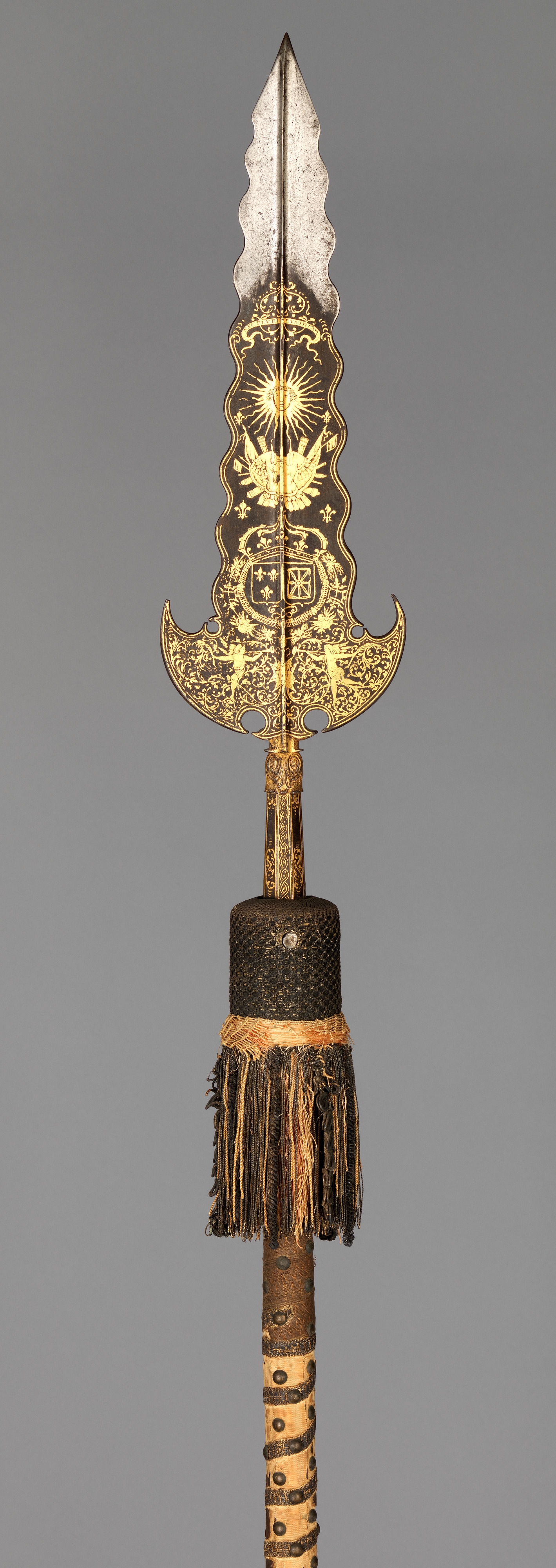
Heritage Analysis: The Partisan of Louis XIV’s Bodyguard
This research paper presents a strategic heritage analysis of a ceremonial partisan, carried by the bodyguard of Louis XIV (1638–1715, reigned from 1643). Crafted in Paris from steel, gold, wood, textile, and brass, this object transcends its functional role as a weapon to become a profound artifact of symbolic power, historical adornment, and spiritual meaning. For Katherine Fashion Lab, this analysis serves as a foundational case study for developing a 2026 high-end luxury strategy that leverages deep cultural symbolism and historical narrative to create unparalleled brand distinction.
Symbolic Power: The Partisan as a Visual Manifestation of Absolute Monarchy
The partisan, a polearm with a broad, double-edged blade, was not merely a tool of defense but a potent emblem of royal authority. In the court of Louis XIV, the Sun King, every object was a carefully curated instrument of statecraft. The bodyguard’s partisan, therefore, was a mobile symbol of the king’s omnipresent power. Its steel blade, often etched or gilded, reflected the unwavering, shining force of the monarchy. The gold inlay and brass fittings were not decorative excess; they were deliberate signifiers of the king’s wealth, control over precious materials, and the divine right to command the most exquisite resources.
For Katherine Fashion Lab, this concept of embodied authority offers a powerful strategic template. In 2026 luxury, consumers are not merely purchasing products; they are acquiring symbols of personal sovereignty and influence. A high-end fashion strategy can reinterpret this symbolic power through design elements that evoke controlled strength and refined dominance. For example, a tailored blazer might feature a subtle, abstracted “partisan blade” silhouette in its lapel structure, or a jewelry collection could incorporate gold and steel in a manner that suggests both protection and prestige. The key is to translate the partisan’s visual language of authority into wearable, modern forms that empower the wearer without overt militarism.
Historical Adornment: The Bodyguard as a Living Ornament of the Court
The bodyguard who carried this partisan was not a mere soldier but a living ornament of the court. His uniform, weapon, and comportment were part of a greater theatrical performance designed to glorify the king. The partisan itself was adorned with gold and fine textiles, transforming a weapon into an object of exquisite craftsmanship. The wood shaft, likely of polished hardwood, the silk or velvet grip, and the brass mounts all contributed to a cohesive aesthetic that was as much about beauty as it was about function. This fusion of martial utility and artistic adornment is a hallmark of French luxury from the 17th century.
Katherine Fashion Lab can draw directly from this principle of adorned functionality. In 2026, the most compelling luxury items will be those that seamlessly integrate high craftsmanship with practical purpose. Consider a handbag designed with a structural, “partisan-inspired” metal clasp that is both a locking mechanism and a sculptural statement. Or a pair of boots where the heel is cast in brass and steel, echoing the weapon’s metallic accents, while the leather is sourced from the same heritage tanneries that supplied the court. The strategy is to elevate everyday objects into ritualistic adornments, making the act of dressing a performance of historical continuity and personal refinement.
Spiritual Meaning: The Partisan as a Guardian of the Sacred
Beyond political and aesthetic dimensions, the partisan carried a profound spiritual meaning. In the context of Louis XIV’s court, the king was considered God’s representative on Earth. The bodyguard and his weapon were thus guardians of a sacred personage. The partisan’s blade, often cross-shaped in its silhouette, subtly invoked Christian iconography, suggesting a divine mandate for protection. The gold, a metal associated with the sun and immortality, reinforced the king’s semi-divine status. The act of carrying the partisan was a spiritual duty, a form of devotion expressed through material means.
For a 2026 luxury strategy, this spiritual dimension can be repurposed as a narrative of protection, legacy, and inner strength. Modern consumers seek brands that offer more than status; they seek talismans of meaning. Katherine Fashion Lab can develop a “Guardian” collection, where each piece is imbued with symbolic protection. For instance, a gold-and-steel pendant could be designed to resemble a miniature partisan, representing the wearer’s own inner guardian. The marketing narrative could emphasize the concept of sacred self-care—the idea that luxury is a form of spiritual armor against a chaotic world. This moves the brand from mere fashion to a purveyor of personal mythology.
2026 High-End Luxury Strategy: Integrating the Partisan’s Legacy
The analysis of Louis XIV’s bodyguard partisan yields three strategic pillars for Katherine Fashion Lab’s 2026 luxury positioning: Symbolic Sovereignty, Adorned Utility, and Sacred Protection. These pillars must be operationalized across product design, brand storytelling, and customer experience.
Product Design: Introduce a limited-edition “Partisan” capsule. Use materials that echo the original: cold steel accents against warm gold, rich wood textures, and tactile textiles. Each piece should have a clear functional element (a clasp, a hinge, a structural seam) that is also an aesthetic focal point. The design language should be authoritative yet elegant, avoiding aggressive militarism in favor of poised strength.
Brand Storytelling: Develop a narrative series titled “The Guardians.” Each story profiles a historical figure—like the bodyguard—and translates their symbolic role into a modern archetype. Use high-production video and print content that highlights the craftsmanship of the partisan, drawing parallels to the artisan skills used in Katherine Fashion Lab’s ateliers. This creates an authentic heritage lineage that differentiates the brand from ephemeral trends.
Customer Experience: Offer a “Ceremony of Fit” for VIP clients, inspired by the ritual of arming a royal bodyguard. This private appointment includes a historical briefing, material selection, and a personalized fitting where the client chooses their “sign of authority” (a specific gold detail or steel accent). This transforms the purchase into a rite of passage, embedding deep emotional and spiritual value.
In conclusion, the partisan of Louis XIV’s bodyguard is not a relic of a bygone era but a living blueprint for a 2026 luxury strategy. By decoding its layers of symbolic power, historical adornment, and spiritual meaning, Katherine Fashion Lab can create a brand that is not just fashionable but historically resonant, spiritually significant, and strategically sovereign. The past becomes the most powerful asset for the future of high-end luxury.