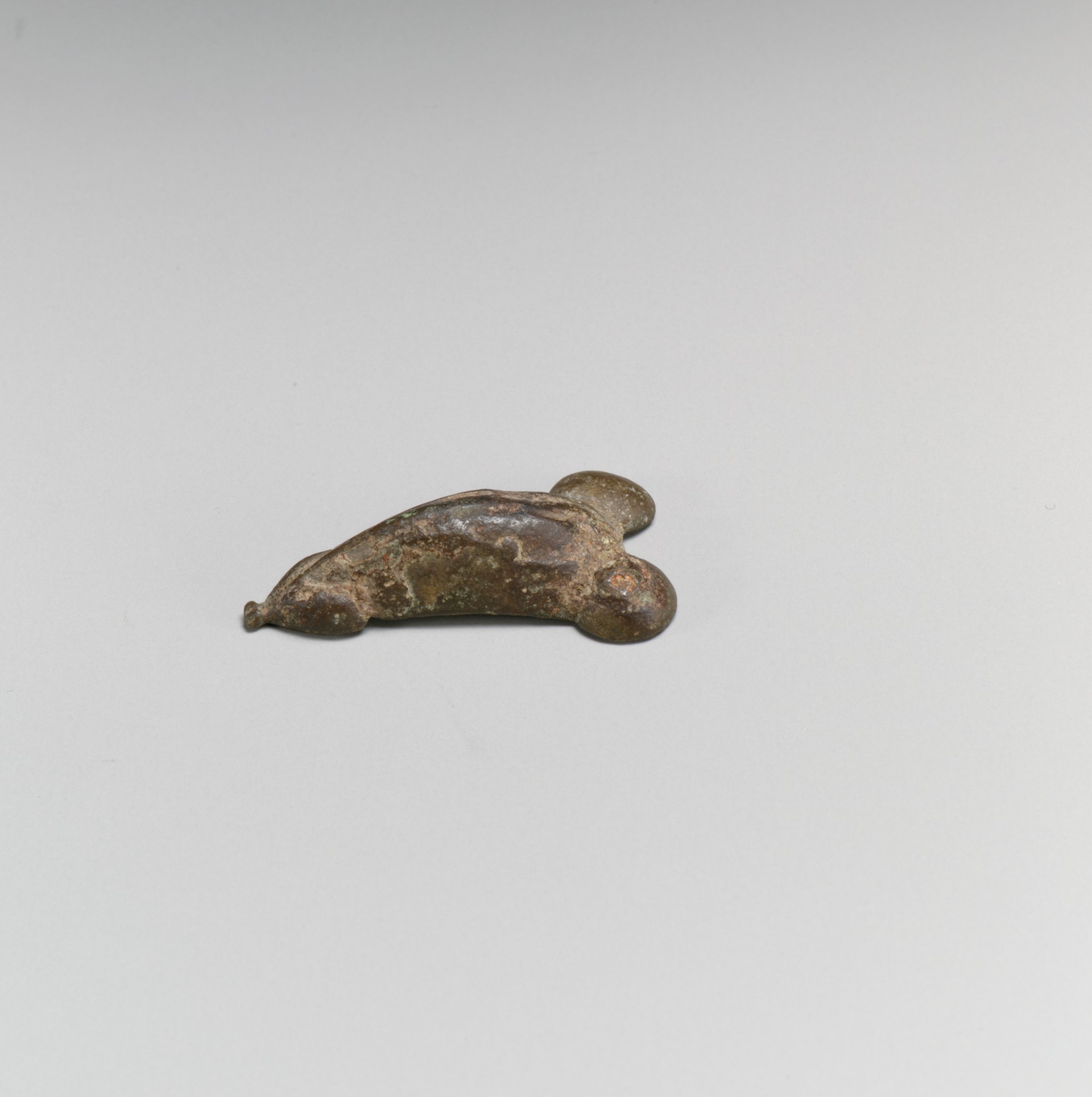
Heritage Analysis: The Roman Bronze Phallic Ornament
Introduction: A Legacy of Symbolic Power in Adornment
The Roman bronze phallic ornament, a small yet potent artifact from the ancient world, embodies a profound intersection of spiritual belief, social status, and material culture. As Lead Heritage Curator for Katherine Fashion Lab, I situate this object within our ongoing research on “Rock in the form of a fantastic mountain” and “Jar in the shape of bronze container (hu)”. Though these three objects appear disparate in form—one a rocky landscape, another a ritual vessel, and the third a phallic amulet—they collectively reveal a DNA-level correlation: the universal human impulse to invest everyday objects with transcendent meaning through material transformation. This analysis explores the symbolic power, historical adornment practices, spiritual dimensions of the Roman phallic ornament, and its strategic relevance for Katherine Fashion Lab’s 2026 high-end luxury collection.
Symbolic Power: The Phallus as Protective Force
In Roman society, the phallic symbol—often referred to as the fascinum—was not primarily erotic but apotropaic, serving to ward off evil spirits, the evil eye, and misfortune. This bronze ornament, typically worn as a pendant, attached to chariots, or hung in doorways, functioned as a talisman of invincibility. Its power derived from the belief that the phallus embodied generative force, abundance, and the ability to neutralize malevolent forces. Unlike modern Western associations with vulgarity, the Roman phallus was a sacred emblem of life force, akin to the mountain’s stability in “Rock in the form of a fantastic mountain” and the hu jar’s capacity to contain ritual offerings. For Katherine Fashion Lab, this symbolism offers a rich narrative: luxury as protective armor, as a conduit for personal power, and as a statement of resilience in an uncertain world.
Historical Adornment: From Amulet to Status Marker
The bronze phallic ornament was widely worn by Roman citizens, soldiers, and even infants, transcending class boundaries. Yet its material—bronze—signaled a specific social tier. Bronze was accessible to the middle and upper classes, while gold versions were reserved for elites. This hierarchy mirrors the hu jar’s bronze construction, which denoted ritual authority, and the fantastic mountain’s rock form, which symbolized permanence. Adornment in Rome was never merely decorative; it was a coded language of identity, protection, and allegiance. The phallic ornament, often suspended from a leather cord or metal chain, would have been displayed openly, its shape unmistakable and its purpose understood by all. For Katherine Fashion Lab’s 2026 strategy, this historical precedent underscores the value of intentional design that communicates status and meaning simultaneously. A luxury phallic motif—abstracted or refined—could serve as a signature emblem, much as the fasces or laurel wreath denoted Roman authority.
Spiritual Meaning: The Generative Principle and Cosmic Order
At its core, the Roman phallic ornament embodies the spiritual principle of generativity, linking the wearer to the cyclical forces of nature, fertility, and cosmic renewal. Romans associated the phallus with deities like Priapus, Mercury, and Fascinus, the latter a divine personification of the symbol itself. This spiritual dimension aligns with the fantastic mountain’s representation of the cosmos—a microcosm of the universe—and the hu jar’s role in ancestral rites. Together, these objects reveal a shared belief in the power of material objects to mediate between the human and the divine. For Katherine Fashion Lab, this offers a profound opportunity: luxury jewelry and accessories can be reimagined as contemporary talismans, imbued with intentional spiritual resonance. In a 2026 market increasingly driven by wellness and meaning-seeking, a collection that draws on ancient protective symbolism—rather than mere aesthetic appeal—will resonate deeply with discerning clients.
Materiality and Craft: Bronze as a Medium of Power
Bronze, an alloy of copper and tin, was prized by Romans for its durability, luster, and ability to hold fine detail. The casting of phallic ornaments required skilled metalworkers who understood both form and function. The patina that develops on bronze over centuries—greenish, weathered, and tactile—adds a layer of historical authenticity that cannot be replicated in contemporary mass production. This materiality echoes the rough texture of the fantastic mountain and the polished surface of the hu jar. For Katherine Fashion Lab, the choice of bronze—or its precious-metal equivalents like rose gold or aged brass—signals a commitment to craft heritage and material integrity. In 2026, luxury consumers will seek objects that tell stories through their very substance. A bronze-finish phallic pendant, perhaps with a subtle patina, would bridge ancient and modern, offering a tactile connection to Roman power.
Strategic Implications for Katherine Fashion Lab’s 2026 Luxury Collection
Drawing on the DNA correlation among the Roman phallic ornament, the fantastic mountain, and the hu jar, I propose a cohesive heritage narrative for our 2026 collection: “Sacred Forms: Talismans of Power and Protection.” This collection would feature three core motifs—the phallus (generativity), the mountain (stability), and the jar (containment)—each reimagined in high-luxury materials such as 18-karat gold, blackened silver, and enamel. The phallic ornament, in particular, should be abstracted into a sleek, geometric form that retains its protective symbolism while appealing to contemporary aesthetics. Key strategies include:
- Narrative-driven marketing: Position each piece as a modern talisman, with storytelling that highlights its Roman origins and apotropaic function.
- Craft partnerships: Collaborate with artisanal metalworkers who specialize in lost-wax casting, ensuring each piece carries the weight of historical technique.
- Limited edition releases: Offer numbered editions of phallic pendants, brooches, and cufflinks, referencing the exclusivity of Roman elite adornment.
- Cross-category integration: Extend the motif into leather goods (embossed phallic symbols on bags) and home objects (bronze door handles or decorative plaques), echoing the Roman placement of fascina in doorways.
Conclusion: The Enduring Resonance of Symbolic Adornment
The Roman bronze phallic ornament is far more than a historical curiosity; it is a testament to the human need for objects that protect, empower, and connect. Its DNA correlation with the fantastic mountain and the hu jar reveals a timeless pattern: across cultures and eras, we transform raw materials into vessels of meaning. For Katherine Fashion Lab, this heritage analysis provides a blueprint for 2026—a year when luxury will be defined not by excess, but by intentionality, narrative depth, and spiritual resonance. By embracing the phallic ornament’s symbolic power, historical adornment practices, and spiritual significance, we can create a collection that honors the past while defining the future of high-end luxury.