The Art of the Sampler: A Couture Analysis of Global Heritage Embroidery
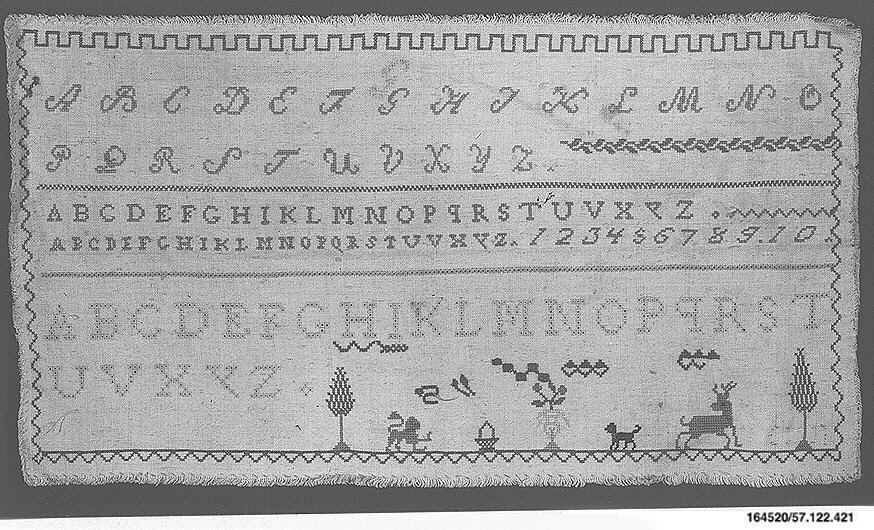
In the rarefied world of haute couture, where fabric is a canvas and thread is a narrative, the sampler stands as a testament to the intersection of skill, memory, and cultural identity. Katherine Fashion Lab’s recent standalone study, “Sampler: Global Heritage,” recontextualizes this humble pedagogical tool into a profound exploration of materiality and design philosophy. Using a foundation of silk and cotton on linen, the piece transcends mere decoration to become a lexicon of global textile traditions. This analysis dissects the sampler’s construction, its historical echoes, and its strategic implications for contemporary couture.
Deconstructing the Material Triad: Silk, Cotton, and Linen
The choice of materials in this study is neither arbitrary nor purely aesthetic; it is a deliberate dialogue with heritage. Silk, with its luminous sheen and tensile strength, represents the opulent trade routes of Asia and the Middle East—a fiber historically reserved for royalty and ritual. Its inclusion in the sampler invokes the “silk road” of cultural exchange, where techniques and motifs traveled as fluidly as the thread itself. Conversely, cotton, a democratic fiber indigenous to India, Africa, and the Americas, grounds the piece in everyday utility. It is the thread of labor, of domestic craft, and of the anonymous hands that preserved these patterns for generations. Linen, derived from the flax plant and revered in ancient Egypt and Europe, provides a neutral, durable canvas—a substrate that absorbs dye and stitch with equal grace. This triad—silk’s luxury, cotton’s accessibility, linen’s resilience—creates a hierarchical tension that mirrors the social strata of global textile production.
From a technical standpoint, the interplay of these fibers demands mastery. Silk thread, prone to fraying and static, requires a steady hand and precise tension. Cotton, while more forgiving, can lose its shape if overworked. Linen, though sturdy, resists elasticity. The sampler’s success lies in the synchronization of these properties, achieving a surface that is both textured and uniform, fragile and enduring. This material balance is a metaphor for the curator’s role: to harmonize disparate traditions without erasing their individual voices.
Narrative Stitches: The Sampler as a Global Lexicon
The sampler, historically, was a record of stitches and motifs—a reference for future projects. In this study, Katherine Fashion Lab elevates it to a cartography of cultural memory. Each stitch type—cross-stitch, satin stitch, chain stitch, and French knots—becomes a glyph in a global alphabet. Cross-stitch, ubiquitous in European folk embroidery, appears alongside the intricate geometric patterns of “suzani” from Central Asia, rendered in lustrous silk. The satin stitch, reminiscent of Chinese “xiu” (embroidery), flows into the dense, rhythmic patterns of Mexican “tenango” needlework, executed in cotton. The linen ground, left bare in strategic intervals, acts as a negative space that invites the eye to rest and reflect—a design principle borrowed from Japanese “ma” (interval).
The arrangement of these motifs is not chronological or geographical but associative. A floral motif from Indian “chikan” work nestles beside a geometric pattern from Moroccan “tiraz” textiles, suggesting a visual conversation across continents. This curatorial choice challenges the viewer to abandon linear narratives of influence and instead embrace a rhizomatic model of cultural exchange. The sampler becomes a living archive, where each stitch is a node in a network of global craftsmanship.
Contextualizing the Standalone Study: From Pedagogy to Philosophy
Positioned as a “standalone study,” this piece deliberately eschews the context of a garment or accessory. It is not a component of a larger ensemble but a self-contained artifact—a thesis in thread. This framing invites a deeper interrogation of value in couture. In an industry driven by wearability and commerce, a study that cannot be worn challenges the very definition of fashion. It insists that the process of making—the hours of stitching, the decisions of color and texture—is itself a form of luxury.
Historically, samplers were created by young women to demonstrate their proficiency in needlework, often as part of a dowry or domestic education. By reimagining the sampler as a high-couture object, Katherine Fashion Lab reclaims this gendered craft from its historical marginalization. The study positions embroidery not as “women’s work” but as a sophisticated design language requiring equal parts creativity and technical rigor. This is a strategic move in the discourse of fashion sustainability and cultural preservation: to elevate the hand-made as an antidote to the machine-made, and to honor the anonymous artisans whose techniques have shaped global aesthetics.
Strategic Implications for Contemporary Couture
For the discerning collector or industry professional, this study offers several actionable insights. First, it demonstrates how cultural appropriation can be transformed into cultural appreciation through rigorous research and attribution. Each stitch in the sampler is rooted in a specific tradition, yet the overall composition is original—a synthesis, not a copy. This model is replicable for brands seeking to engage with global heritage without perpetuating colonialist narratives.
Second, the material choices signal a shift toward sustainable luxury. Linen and cotton are biodegradable; silk, while requiring careful sourcing, is a natural protein fiber. The study implicitly critiques the synthetic, throwaway culture of fast fashion by foregrounding materials that age gracefully and can be repaired. The sampler, by its nature, is a document of process—a record of time spent, not time wasted.
Finally, the standalone format challenges the retail paradigm. In a market saturated with garments, a study that exists purely for contemplation or display occupies a niche that appeals to the “slow fashion” connoisseur. It is an investment in knowledge, not just adornment. This positions Katherine Fashion Lab as a thought leader at the intersection of craft, anthropology, and design—a brand that values depth over breadth.
Conclusion: The Stitch as Signature
The “Sampler: Global Heritage” study is more than a technical exercise; it is a manifesto. By weaving silk, cotton, and linen into a unified field of global motifs, Katherine Fashion Lab asserts that couture can be a repository of cultural intelligence. The sampler, once a tool of instruction, becomes a mirror reflecting the complexity of our interconnected world. For the viewer, it is an invitation to read—not just to see—the stories embedded in every thread. In an era of digital saturation, this tactile, hand-wrought object reminds us that the most profound innovations often begin with a single, deliberate stitch.