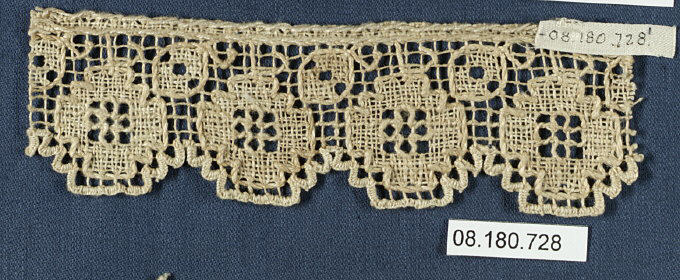
Deconstructing the Fragment: A Couture Analysis of Katherine Fashion Lab’s Embroidered Net Study
Introduction: The Fragment as a Foundational Aesthetic
In the rarefied echelons of haute couture, where garment construction often aspires to the monolithic and the seamless, Katherine Fashion Lab’s standalone study, Fragment, presents a provocative counter-narrative. This piece is not a complete gown or a structured jacket; it is an intentional, curated incompleteness—a fragment that speaks to a broader, more profound lexicon of global heritage. By isolating the embroidered net as the singular material protagonist, the Lab challenges the conventional hierarchy of fashion design, elevating a traditionally supportive textile to the status of primary subject. This analysis dissects how Fragment operates as a sophisticated dialogue between material memory, cultural narrative, and the deliberate aesthetic of the unfinished.
Materiality as Narrative: The Embroidered Net
The choice of embroidered net is neither arbitrary nor merely decorative. In the context of global heritage, netting—whether drawn, knotted, or machine-made—carries a deep anthropological resonance. It evokes the fishing nets of coastal communities, the gossamer veils of ancient trade routes, and the intricate lacework of European courts. Katherine Fashion Lab has selected a base net of exceptional transparency and tensile strength, likely a silk or fine synthetic tulle, which serves as a ghostly canvas. Upon this ethereal substrate, the embroidery is applied with surgical precision. The threads—a mix of matte silk, metallic Lurex, and raw cotton—create a topography that is both tactile and visual. The embroidery does not fill the net; it interrupts it. This is a critical distinction. The piece is not a solid fabric with cutouts; it is a void punctuated by dense, deliberate constellations of thread. This technique transforms the net from a passive support into an active participant in the narrative of Fragment.
Global Heritage: A Lexicon of Motifs
What elevates this study beyond mere technical exercise is the intellectual rigor applied to its source material. The embroidered motifs are a curated anthology of world heritage symbols, abstracted and recontextualized. One can discern the geometric precision of Islamic girih patterns, rendered in fine gold thread, intersecting with the organic, flowing flora of Indian chikankari embroidery. Here, a single petal shape, repeated in a staggered rhythm, mimics the sashiko stitching of Japan, while a fragmented border recalls the colcha embroidery of colonial Spain, now translated into a modern, asymmetrical edge. The genius of Fragment lies in its refusal to present these references as literal copies. Instead, they are fragmented—broken, reassembled, and overlaid—mirroring the very nature of global heritage in a postmodern world: a collection of pieces, memories, and influences that are never whole, always in dialogue. The garment becomes a map of cultural intersections, where the fragment is not a loss but a condition of understanding.
Structural and Silhouette Analysis: The Architecture of Absence
Without a full garment structure, the study relies entirely on the interplay between the embroidered net and the human form. The piece is designed as a partial bodice and an extended, asymmetrical panel that wraps around the torso, secured by hidden closures and strategic tension. The silhouette is not that of a dress but of a sculptural drape. The net, where unembroidered, falls in fluid, almost liquid folds, clinging to the body’s contours. Where the embroidery is dense, the fabric stiffens, creating architectural planes and sharp, unexpected angles. This contrast between soft void and hard embellishment is the core of the study’s visual impact. The fragment terminates in raw, unhemmed edges—some cut with precision, others left with intentional fraying. This is a deliberate nod to the wabi-sabi aesthetic, celebrating the beauty of imperfection and transience. The piece does not end; it dissolves into the air, leaving the viewer with a sense of suspended animation.
The Role of Light and Transparency
Embroidered net is a material defined by its relationship to light. In Fragment, Katherine Fashion Lab exploits this property with masterful control. Under direct illumination, the unadorned net becomes nearly invisible, leaving the embroidery to float as independent constellations on the skin. The skin itself becomes a part of the garment—a living, breathing canvas that changes hue and texture with the wearer’s movement. In shadow, the net reasserts its presence, creating a ghostly, second-skin effect. The metallic threads catch and scatter light, creating a subtle, kinetic shimmer that evokes distant stars or the glint of water on a net. This manipulation of transparency is not merely aesthetic; it is a conceptual tool. The fragment is never fully revealed or concealed. It exists in a state of perpetual liminality, much like the cultural fragments it references. The viewer is forced to look through the material to understand it, a metaphor for the layered reading of heritage itself.
Contextualizing the Standalone Study
As a standalone study, Fragment is not intended for mass production or even immediate wearability. It is a prototype of thought, a material thesis that challenges the fashion industry’s obsession with completeness and commercial viability. In the context of contemporary couture, where houses often rely on hyper-luxurious, fully constructed garments to assert dominance, Katherine Fashion Lab’s decision to present an incomplete piece is a radical act of intellectual honesty. It acknowledges that global heritage is not a monolithic, easily digestible narrative but a complex, often contradictory mosaic. The study also serves as a technical benchmark. The precision required to embroider on a net without distorting its weave, while maintaining the integrity of the fragment’s edges, demands a level of craftsmanship that is increasingly rare. Each stitch is a commitment; there is no room for error in a material that reveals every flaw.
Conclusion: The Fragment as a Complete Statement
In the final analysis, Fragment by Katherine Fashion Lab is a triumph of conceptual and material intelligence. It demonstrates that a garment need not be whole to be whole in meaning. By using embroidered net as both subject and substance, and by drawing from a global lexicon of heritage motifs without succumbing to pastiche, the Lab has created a piece that is at once ancient and avant-garde. The fragment is not a missing piece; it is the piece itself. It challenges the wearer and the observer to reconsider the value of the incomplete, the transparent, and the culturally layered. In an industry often obsessed with the new, Fragment reminds us that the most profound innovations often come from looking closely at the fragments of the past, and allowing them to speak, in their own partial, beautiful language, to the present.