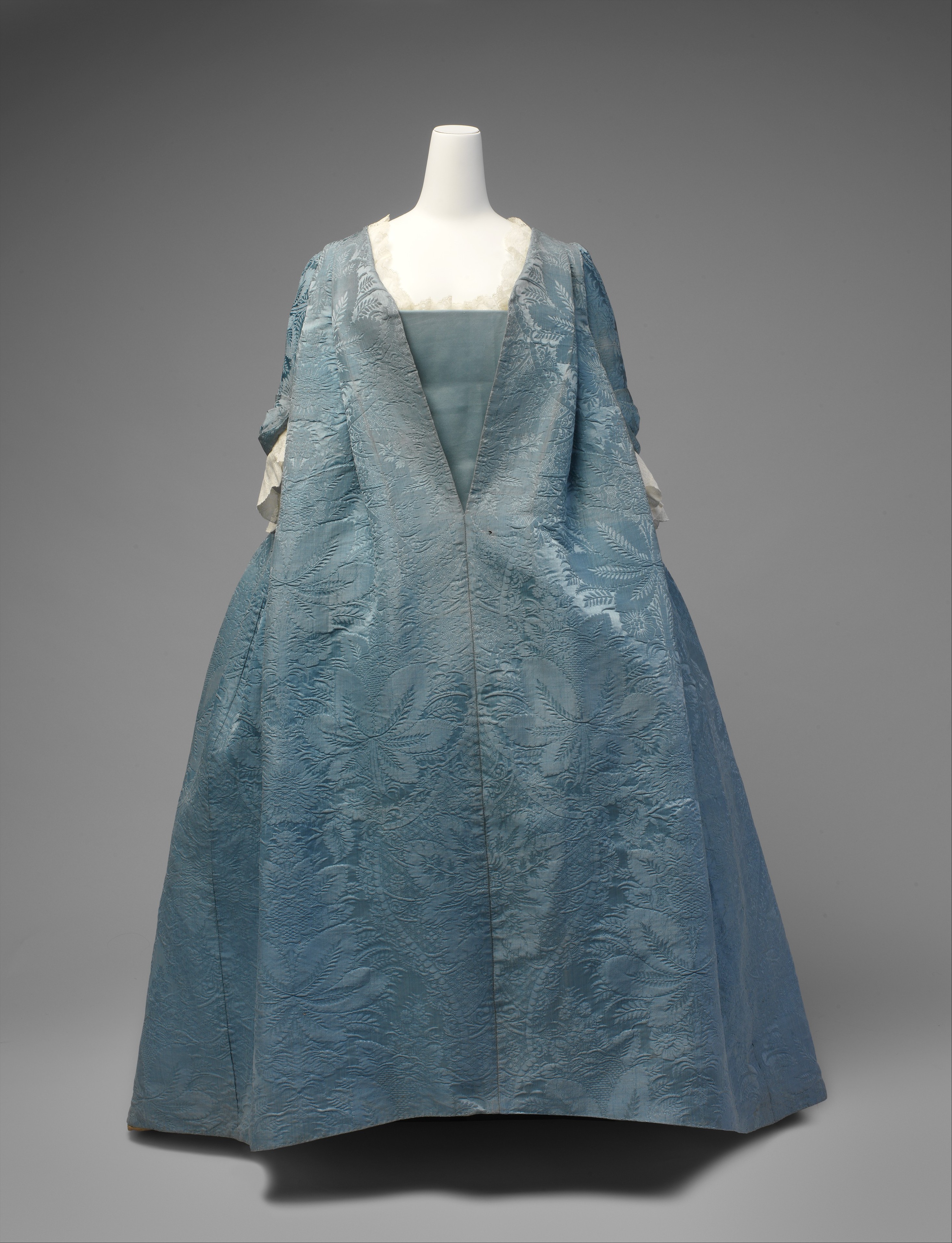
The Robe Volante: A Study in Silken Subversion at Katherine Fashion Lab
Within the hallowed archives of Katherine Fashion Lab, the Robe Volante emerges not merely as a garment, but as a profound architectural statement in silk. Originating from the salons of late 17th-century France, this silhouette—often translated as “the flying gown”—represents a deliberate rupture from the rigid, corseted forms that dominated aristocratic dress. In our standalone analysis, we dissect the Robe Volante as a masterclass in material intelligence, where the very fluidity of silk becomes a tool for both aesthetic rebellion and structural innovation.
Deconstructing the Silhouette: The Physics of Freedom
At first glance, the Robe Volante appears deceptively simple: a gown that falls from the shoulders in generous, unbroken folds. Yet this simplicity belies a sophisticated engineering of volume and movement. Unlike the mantua or the later robe à la française, the Volante eliminates the rigid bodice and tight stomacher, allowing the fabric to cascade freely from a point of suspension at the shoulders. The result is a garment that breathes with the wearer—a literal embodiment of its name.
The key to this liberation lies in the unstructured back. Where contemporary fashion relied on boning and lacing to shape the torso, the Volante uses gravity and the inherent drape of silk to create its form. The fabric is pleated or gathered at the back, then allowed to fall in a sweeping train. This construction not only permits unprecedented ease of movement but also creates a dynamic, ever-changing silhouette that shifts with each gesture. The wearer is no longer a static mannequin but a living sculpture.
Silk as a Strategic Medium: Drape, Luster, and Weight
In our material analysis at Katherine Fashion Lab, we emphasize that the Robe Volante would be inconceivable without silk. The choice of fiber is not decorative but functional. Silk’s unique combination of tensile strength, natural luster, and fluid drape makes it the only textile capable of realizing the Volante’s architectural ambitions. A heavier silk, such as a duchesse satin, would resist the required flow; a lighter silk, like organdy, would lack the necessary weight to fall in graceful, uninterrupted lines.
The weight of the silk is critical. A medium-weight silk taffeta or a fine silk velvet provides the perfect balance: enough body to hold the structure of the pleats and folds, yet sufficient suppleness to ripple with the body’s motion. The luster of silk further amplifies this effect. As light plays across the surface of the gown, it accentuates the depth of the folds, creating a chiaroscuro effect that transforms the garment into a living canvas. This is not a passive fabric; it is a dynamic participant in the visual narrative of the dress.
The Politics of Unstructured Luxury: A Silent Rebellion
To understand the Robe Volante is to understand its historical context. In the court of Louis XIV, dress was a language of power. The rigid grand habit signified submission to the social order, with its whalebone corsets and heavy brocades enforcing a posture of disciplined hierarchy. The Volante, by contrast, was a whisper of dissent. Its loose, flowing lines suggested a rejection of the artificial constraints of courtly life—a preference for comfort and natural form over enforced spectacle.
This was not merely a fashion choice but a political statement. Worn initially by women of the intellectual and artistic circles—the précieuses and salonnières—the Volante became a symbol of intellectual freedom and personal autonomy. The absence of a structured bodice was a visible metaphor for the rejection of societal corseting. In the hands of these women, the gown became a tool of quiet subversion, a fabric manifesto for the right to move, think, and exist without rigid constraint.
Construction and Craft: The Engineer’s Approach to Draping
From a technical standpoint, the Robe Volante demands a mastery of draping over pattern-making. Unlike tailored garments that rely on precise measurements and seams, the Volante is built through manipulation of the fabric on the body. The key construction points include:
- Shoulder Suspension: The gown is anchored at the shoulders, often with narrow straps or a yoke, allowing the rest of the fabric to fall free.
- Back Pleating: Deep, knife-edge or box pleats are sewn into the back panel, creating controlled volume that radiates outward.
- Side Seams (Minimal): The side seams are either minimal or absent, relying on the continuous width of the silk to wrap the body.
- Train Integration: The train is not an add-on but a natural extension of the back pleats, requiring precise calculation of fabric length to avoid dragging or pooling.
In our lab, we have recreated this process using a silk charmeuse with a 4% stretch. The challenge lies in achieving the perfect balance between volume and weight. Too much fabric at the back, and the gown becomes cumbersome; too little, and the signature “flying” effect is lost. The solution lies in the grain line: by cutting the back panels on the bias, we introduce a subtle diagonal tension that allows the silk to twist and fall with greater fluidity.
The Modern Relevance: Reclaiming the Silhouette
Why study the Robe Volante today? In an era of athleisure and deconstructed tailoring, this 17th-century gown offers a prescient lesson in functional luxury. The Volante anticipates the modern desire for clothing that moves with the body, not against it. It is a precursor to the bias-cut gowns of Madeleine Vionnet and the unstructured draping of Issey Miyake. At Katherine Fashion Lab, we view the Volante as a foundational text in the language of draping—a reminder that freedom of movement is not antithetical to elegance but is, in fact, its highest expression.
Furthermore, the Volante challenges the contemporary obsession with perfect fit. It celebrates the beauty of the unconstrained, the allure of the un-tailored. In a market saturated with body-con dresses and structured jackets, the Volante whispers a different truth: that true luxury lies not in how a garment constrains the body, but in how it allows the body to express itself.
Conclusion: The Flying Gown as a Living Philosophy
The Robe Volante, in its silken glory, is more than a historical artifact. It is a philosophical statement encoded in fabric—a testament to the power of material, the intelligence of construction, and the enduring human desire for freedom. At Katherine Fashion Lab, we do not merely study this garment; we engage with it as a living dialogue between past and present, between constraint and liberation. In every pleat and every fall of silk, the Volante reminds us that the most revolutionary acts in fashion are often the quietest, and the most beautiful forms are those that move with the grace of the unbound.