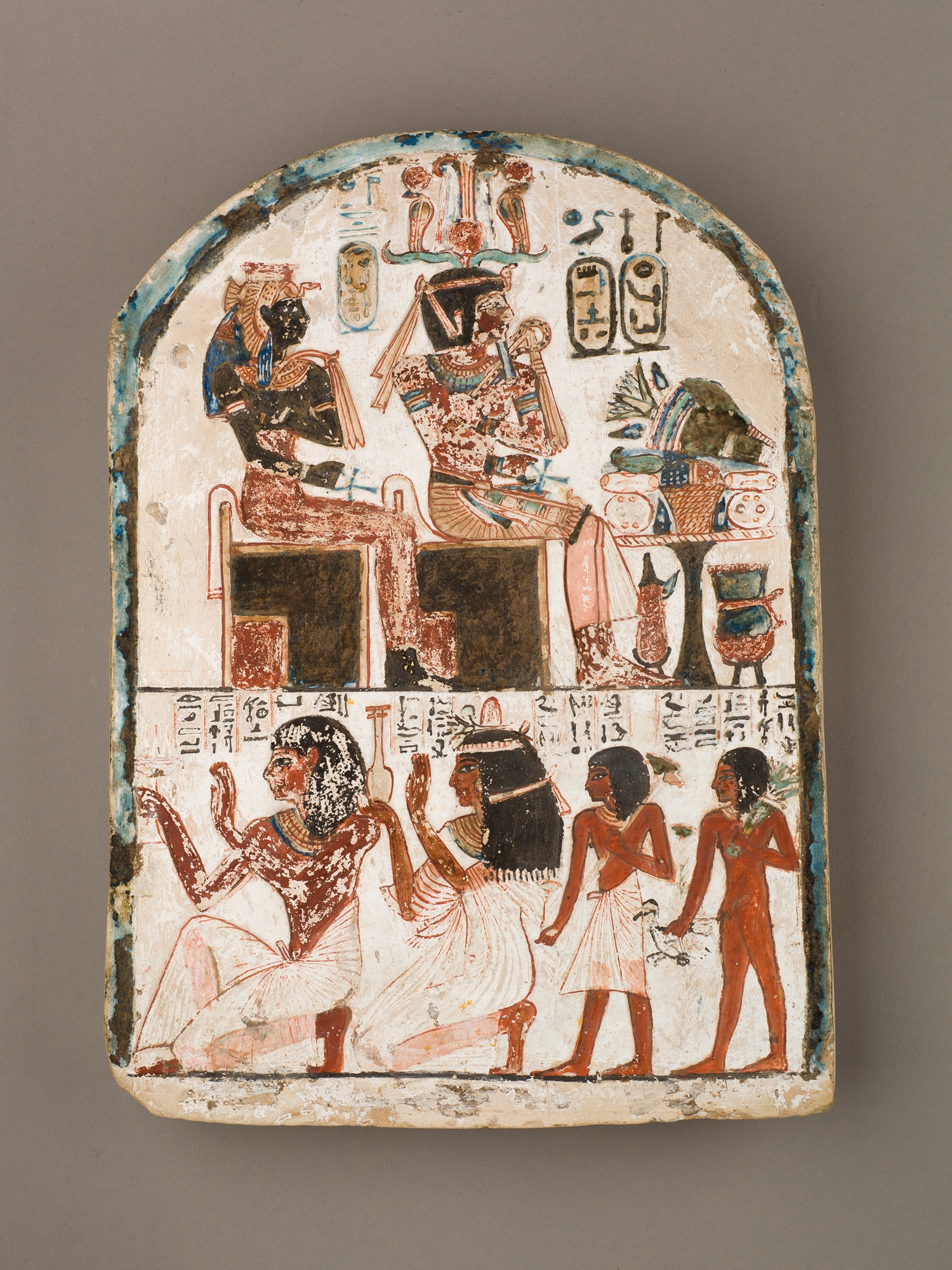
Heritage Analysis: The Stela of Qen and Its Strategic Implications for 2026 Luxury Design
As Lead Heritage Curator at Katherine Fashion Lab, I present this comprehensive analysis of the Stela of the Sculptor Qen worshipping Amenhotep I and Ahmose-Nefertari. This limestone and painted artifact, originating from the ancient Egyptian civilization circa 1550–1295 BCE, offers profound insights into symbolic power, historical adornment, and spiritual meaning. For a high-end luxury brand targeting 2026, this stela serves as a strategic wellspring of aesthetic and cultural capital, demanding a nuanced interpretation that bridges antiquity with contemporary exclusivity.
Symbolic Power and Hierarchical Adornment
Visual Language of Authority
The stela depicts Qen, a royal sculptor, in an act of worship before the deified Pharaoh Amenhotep I and his mother, Queen Ahmose-Nefertari. The composition is a masterclass in symbolic hierarchy: the divine figures are rendered larger, elevated, and adorned with regalia that distinguishes them from the mortal Qen. For luxury strategy, this visual stratification mirrors the fundamental principle of brand exclusivity. In 2026, Katherine Fashion Lab could leverage this by designing collections that emphasize proportional distinction—where the wearer’s status is encoded through scale, silhouette, or ornamentation, much like the larger-than-life depiction of royalty. This is not mere decoration; it is a semiotic system of power that can be translated into limited-edition pieces that signal belonging to an elite echelon.
Adornment as Political and Spiritual Currency
Queen Ahmose-Nefertari is shown wearing a modius crown, a tightly fitted cap often adorned with uraei (sacred cobras) and solar disks. This headdress, combined with a broad collar necklace of multiple rows, signifies both earthly sovereignty and divine favor. The historical adornment here is not aesthetic alone; it is a store of spiritual and political value. For a 2026 luxury line, this suggests that accessories—particularly headwear and neckpieces—should be reimagined as talismanic objects. A Katherine Fashion Lab collection could feature collar necklaces with layered, gem-studded rows that evoke the protective and status-conferring qualities of Ahmose-Nefertari’s jewelry. The uraeus motif, a symbol of protection and royal authority, could be abstracted into golden serpentine clasps or embroidered patterns on evening wear, embedding the wearer with an aura of invincibility.
Spiritual Meaning and Ritualistic Aesthetics
The Stela as a Threshold Object
This stela functioned as a votive offering, placed in a tomb or temple to facilitate Qen’s eternal access to the gods. The act of worship, frozen in limestone, is a ritualistic performance. For luxury branding, this introduces the concept of the garment as a threshold—a piece that allows the wearer to transcend the mundane and enter a state of elevated being. In 2026, Katherine Fashion Lab could develop a “Ritual Collection” inspired by the stela’s composition. Each garment could be designed with intentional asymmetry, mimicking Qen’s submissive yet reverent posture. Colors like deep lapis lazuli blue, representing the heavens, and ochre, symbolizing the earth, would ground the collection in spiritual duality. The use of limestone-textured fabrics—such as raw silk or matte linen—would evoke the stela’s materiality, creating a tactile connection to antiquity.
Deification Through Dress
Amenhotep I and Ahmose-Nefertari were worshipped as patron deities of the Deir el-Medina workmen’s community, to which Qen belonged. Their deified status is reinforced by their attire: the pharaoh wears the khat headdress and a shendyt kilt, while the queen’s dress is sheer and form-fitting, a marker of divine femininity. For a high-end strategy, this suggests that dress can be a vehicle for apotheosis. Katherine Fashion Lab could introduce a “Deified Silhouette” line for 2026, featuring translucent overlays, metallic threadwork, and structured headpieces that mimic the khat. The goal is to transform the wearer into a living icon, much like the stela’s subjects. This aligns with the luxury market’s growing demand for experiential and identity-defining fashion.
Strategic Application for 2026 High-End Luxury
Cultural Capital as Brand Equity
The stela is a repository of ancient cultural capital. In a 2026 market saturated with digital and ephemeral trends, owning a piece of history—even symbolically—becomes a luxury differentiator. Katherine Fashion Lab should position itself as a curator of heritage narratives. This can be achieved through limited collaborations with Egyptologists, producing a capsule collection that includes replica-inspired accessories (e.g., scarab brooches, lotus pendants) and bespoke garments that reference the stela’s color palette. Each piece would come with a certificate of cultural provenance, detailing the symbolic meaning of its motifs. This strategy builds brand authority and appeals to ultra-high-net-worth clients who seek authenticity and depth.
Materiality and Craftsmanship as Spiritual Practice
The stela’s medium—limestone and paint—speaks to the permanence of craft. For luxury, this translates into a commitment to artisanal production. In 2026, Katherine Fashion Lab could partner with master stone carvers to create limestone-embedded buttons or brooches, while painters could hand-finish silk scarves with pigments derived from natural ochres and lapis. The spiritual meaning of the stela—eternal worship—can be reframed as eternal quality. A garment that takes months to produce, with hand-painted details, becomes a modern votive offering to the wearer’s own legacy. This aligns with the slow luxury movement, which prioritizes durability and meaning over seasonal cycles.
Narrative-Driven Marketing
The stela tells a story: a sculptor’s devotion to his patrons. For 2026, Katherine Fashion Lab can adopt a narrative-first marketing approach. Campaigns could be staged as tableaux vivants, recreating the stela’s scene with models in the collection. Digital lookbooks could include interactive annotations explaining the symbolism of each element—the lotus, the sun disk, the uraeus. This transforms the purchasing decision into an educational and emotional journey, reinforcing the brand’s position as a custodian of ancient wisdom. The target clientele, likely Gen X and older millennials with high disposable income, will value this intellectual engagement.
Conclusion
The Stela of the Sculptor Qen is more than an archaeological artifact; it is a strategic blueprint for luxury design that merges power, adornment, and spirituality. By translating its hierarchical composition, ritualistic aesthetics, and material permanence into a 2026 collection, Katherine Fashion Lab can capture a market niche that craves meaningful exclusivity. The stela teaches us that luxury is not merely about opulence—it is about encoding identity through symbols that transcend time. As we move toward 2026, this heritage analysis provides the cultural scaffolding for a brand that dares to dress its clients as modern deities.