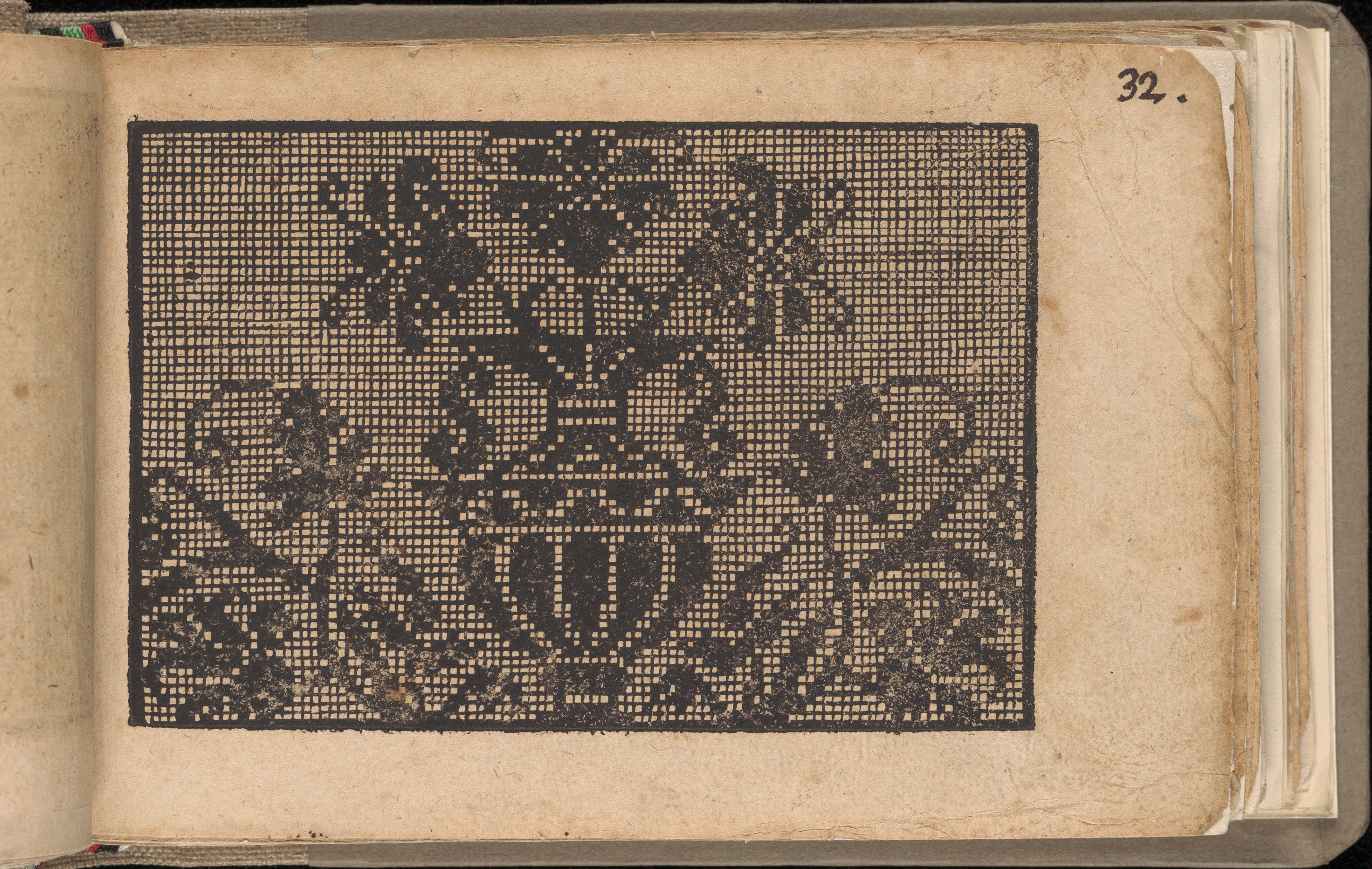
Decoding the Threads of Time: A Couture Analysis of Schön newes Modelbuch (Page 32r)
In the vast archive of fashion history, few documents offer as intimate a glimpse into the sartorial psyche of the late Renaissance as the Schön newes Modelbuch (1608). As the Lead Curator for Katherine Fashion Lab, I have the privilege of dissecting Page 32r of this seminal work—a woodcut print that transcends its functional origins as a pattern book to become a standalone study in global heritage, technical mastery, and the enduring dialogue between art and apparel. This analysis positions the page not merely as a historical artifact but as a living couture document, one that speaks to the foundational principles of silhouette, construction, and cultural exchange that continue to inform high fashion today.
The Materiality of the Medium: Woodcut as Couture Blueprint
To appreciate Page 32r, one must first understand its medium. The woodcut is not a passive illustration; it is an act of deliberate abstraction. The artist, working in reverse on a block of wood, carved away negative space to leave raised lines that, when inked and pressed, transfer a design onto paper. This process demands a rigorous economy of line—every stroke must convey drape, structure, and ornament without the luxury of color or texture. On Page 32r, this constraint becomes a strength. The figures are rendered with a precision that anticipates the technical drawings of modern ateliers. The sharp, unyielding lines of the bodice contrast with the flowing, almost calligraphic curves of the skirt, creating a visual rhythm that mirrors the tension between corsetry and movement in actual garments.
From a couture perspective, the woodcut functions as a prototype. It is a pattern, a mood board, and a finished presentation all at once. The absence of color forces the viewer to focus on structure: the high waistline, the geometric neckline, the placement of slashes and puffs that reveal underlayers. These are not decorative flourishes but engineering decisions. The slashes, for instance, are not merely aesthetic; they allowed for the display of expensive linings and facilitated movement in an era of rigid fabrics. This interplay of form and function is the bedrock of haute couture, where every seam serves a dual purpose of beauty and utility.
Silhouette and Social Semiotics: The Language of the Body
Page 32r depicts a female figure in a state of poised formality, her body encased in a structured bodice that elongates the torso and flattens the bust—a hallmark of early 17th-century Northern European fashion. This silhouette is not arbitrary; it is a social text. The conical shape, achieved through boning and stiffened fabrics, signals status, discipline, and adherence to courtly norms. The waist is cinched high, just below the bust, creating a long, unbroken line that emphasizes verticality. This is a deliberate departure from the softer, rounder forms of the preceding Elizabethan era, reflecting a shift toward a more austere, Protestant aesthetic in regions like Germany and the Netherlands.
The global heritage of this silhouette is often overlooked. While the woodcut is distinctly European, its construction techniques owe debts to Middle Eastern and Asian textile traditions. The use of quilting, visible in the skirt’s subtle diamond patterns, echoes the padded garments of Ottoman court dress, which were introduced to Europe through trade routes and diplomatic gifts. Similarly, the slashed sleeves, which reveal a contrasting fabric beneath, have origins in the Landsknecht mercenary uniforms of the 15th century, themselves influenced by Balkan and Hungarian dress. Page 32r, therefore, is a node in a global network of sartorial exchange—a reminder that even the most localized fashion artifacts are products of cross-cultural pollination.
The Art of Ornament: Pattern as Power
What distinguishes Page 32r from a mere technical diagram is its ornamental complexity. The woodcut is dense with pattern: the bodice is covered in a repeat motif of stylized flowers and vines, while the skirt features a geometric grid interspersed with heraldic-like emblems. This is not decoration for its own sake; it is a visual language of power and identity. In the early 17th century, pattern was a marker of wealth, as it required skilled labor and expensive materials like silk thread or metallic embroidery. By including these patterns in a modelbuch, the publisher—likely the renowned Christoph Weigel or a similar Nuremberg artisan—was offering a template for social aspiration. A seamstress or tailor could replicate these designs using local materials, effectively democratizing noble aesthetics.
From a couture analysis standpoint, the pattern on Page 32r functions as a branding device. Just as a modern fashion house uses a signature print or motif, the woodcut’s repeated elements create a cohesive visual identity. The floral motifs, for instance, are not random; they include the carnation, a symbol of betrothal and fidelity, and the pomegranate, a motif of fertility and abundance borrowed from Persian textiles. This layering of meaning transforms the garment into a narrative—a wearable story of status, virtue, and global awareness. In the context of Katherine Fashion Lab’s mission to bridge historical and contemporary design, this page serves as a masterclass in how ornament can communicate without words.
Construction and Craft: The Invisible Architecture
Beneath the surface of the woodcut lies a sophisticated understanding of garment construction. The figure’s sleeves, for example, are set into the bodice with a deep armhole, allowing for a full range of motion despite the rigid bodice. The skirt is gathered at the waist, with the folds indicated by parallel lines that suggest a cartridge pleat—a technique still used in haute couture to distribute volume evenly. The neckline is low and square, framed by a standing collar that would have been supported by a wire or starch—a precursor to the Elizabethan ruff, but more restrained.
What is not shown is equally instructive. The woodcut omits the understructures—the farthingale, the bum roll, the corset—that would have been necessary to achieve this shape. This omission is a deliberate choice, focusing the viewer’s attention on the outer garment as a finished product. Yet for the couture analyst, the invisible architecture is paramount. The farthingale, a hoop skirt made of whalebone or cane, would have created the bell-like shape of the skirt. The corset, laced tightly at the back, would have compressed the torso into the desired cone. These elements are the skeleton of the garment, and their absence in the woodcut underscores the modelbuch’s role as a pattern book rather than a construction manual. It assumes a reader who already possesses the technical knowledge to build the underlying structure—a tacit acknowledgment of the skilled artisans who formed the book’s primary audience.
Global Heritage and the Future of Couture
Page 32r of the Schön newes Modelbuch is more than a historical curiosity; it is a blueprint for contemporary design thinking. Its global heritage—a fusion of European tailoring, Ottoman quilting, Persian motifs, and Asian textile techniques—challenges the notion of fashion as a purely Western enterprise. For Katherine Fashion Lab, this page offers a case study in sustainable innovation. The woodcut’s emphasis on pattern, structure, and reusability aligns with modern principles of zero-waste design. The slashing technique, which uses fabric cutouts to create visual interest, can be reinterpreted as a method for repurposing offcuts. The modular nature of the garment—separate bodice, sleeves, and skirt—anticipates contemporary capsule wardrobes.
In conclusion, Page 32r stands as a testament to the enduring power of the couture document. It captures a moment in time when fashion was both a craft and a global conversation, a blend of technical precision and artistic expression. As we at Katherine Fashion Lab continue to explore the intersections of heritage and modernity, this woodcut reminds us that the most innovative designs are often those that look backward to move forward. The threads of the past are not merely to be admired; they are to be rewoven, reimagined, and restructured for the future of fashion.