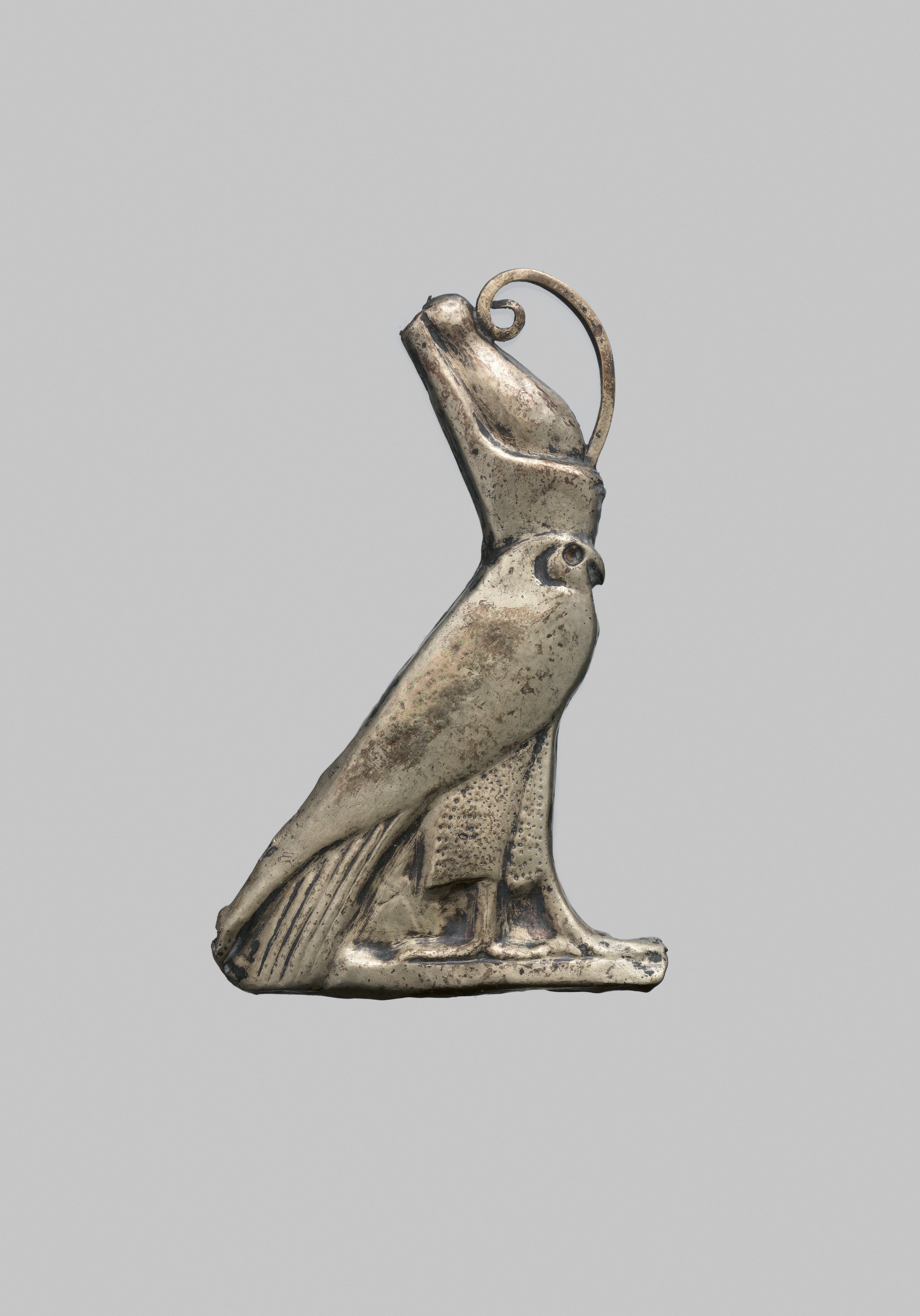
Heritage Analysis: The Pendant of Horus Wearing the Double Crown
Subject: Pendant of Horus Wearing the Double Crown
Origin/Culture: Ancient Egyptian Civilization (c. 2686–2181 BCE, Old Kingdom to Ptolemaic Period)
Medium: Electrum over plaster
Research Context: Strategic Standalone Research for Katherine Fashion Lab, 2026 High-End Luxury Strategy
This paper presents a comprehensive heritage analysis of the Pendant of Horus wearing the Double Crown, an artifact of profound symbolic power and historical adornment. As Lead Heritage Curator for Katherine Fashion Lab, I examine this piece through the dual lenses of ancient spiritual meaning and contemporary luxury brand strategy. The analysis aims to distill timeless principles of authority, protection, and exclusivity that can inform a 2026 high-end luxury collection, ensuring that Katherine Fashion Lab remains at the vanguard of culturally resonant, heritage-driven design.
Symbolic Power: The Falcon God and the Crown of Unification
The pendant depicts Horus, the falcon-headed god of the sky, war, and kingship, adorned with the Double Crown (Pschent). This crown combines the White Crown of Upper Egypt (Hedjet) and the Red Crown of Lower Egypt (Deshret), symbolizing the unification of the Two Lands under a single divine ruler. In ancient Egyptian cosmology, Horus was the living embodiment of pharaonic authority; every pharaoh was considered the "Living Horus" on earth. The Double Crown thus represented not merely political dominion, but cosmic order (Ma'at)—the balance between chaos and creation.
For Katherine Fashion Lab, this symbolism offers a powerful narrative for a 2026 luxury line: unification as strength. The pendant becomes a metaphor for merging heritage with modernity, tradition with innovation. A high-end jewelry or accessory collection could explore dualities—masculine and feminine, ancient and futuristic, organic and geometric—using the Double Crown as a visual anchor. The strategic value lies in positioning the brand as a unifier of cultures, eras, and aesthetics, appealing to an elite clientele seeking meaning beyond mere materialism.
Historical Adornment: Electrum and the Art of Divine Craftsmanship
The medium of electrum over plaster is itself a statement of historical and material significance. Electrum, a natural alloy of gold and silver, was prized in ancient Egypt for its radiant, pale-gold sheen that evoked the sun's life-giving light. It was often used for sacred objects, royal regalia, and temple offerings, as it was believed to contain the essence of the gods. The plaster core suggests a lightweight, wearable form—likely a pectoral or pendant worn by a high priest or pharaoh during ritual ceremonies. This technique demonstrates sophisticated craftsmanship: the plaster provided a stable base, while the electrum sheet was hammered and burnished to a mirror-like finish, reflecting the wearer's divine status.
From a luxury strategy perspective, electrum represents exclusivity and rarity. Modern high-end consumers increasingly value materials with historical provenance and unique aesthetic properties. Katherine Fashion Lab could consider reintroducing electrum—or a proprietary modern alloy inspired by it—in limited-edition pieces. The "plaster core" technique can be reinterpreted using lightweight, sustainable composites (e.g., bio-resin or recycled metals) that reduce weight while maintaining structural integrity. This aligns with 2026 luxury trends emphasizing craftsmanship storytelling and sustainable heritage. Each piece would carry a certificate of cultural provenance, linking the buyer to an unbroken lineage of divine adornment.
Spiritual Meaning: The Eye of Horus and Protective Adornment
Beyond its political symbolism, the pendant of Horus wearing the Double Crown is imbued with deep spiritual meaning. Horus is also associated with the Eye of Horus (Wedjat), a symbol of protection, royal power, and good health. The falcon's gaze, combined with the crown, was believed to ward off evil spirits and ensure the wearer's safe passage through the afterlife. In funerary contexts, such pendants were placed on mummies to guard the deceased's soul (Ba). This protective function elevated adornment from mere decoration to a talismanic object, a conduit between the mortal and divine realms.
For Katherine Fashion Lab's 2026 strategy, this spiritual dimension offers a compelling emotional value proposition. High-net-worth individuals increasingly seek objects that provide psychological comfort, empowerment, and a sense of protection in an uncertain world. A collection inspired by the Horus pendant could incorporate hidden symbols—such as engraved Eyes of Horus on clasps, or double-crown motifs on linings—that only the wearer knows. Marketing narratives should emphasize inner strength and resilience, positioning each piece as a personal amulet for the modern warrior. This taps into the 2026 luxury trend of mindful consumption, where objects are chosen for their spiritual resonance, not just their aesthetic appeal.
2026 High-End Luxury Strategy: From Ancient Artifact to Brand Icon
To translate this heritage analysis into a actionable strategy for Katherine Fashion Lab, I propose a three-pillar framework: Mythos, Materiality, and Modernity.
Mythos: Crafting a Narrative of Power and Protection
The pendant's story must be distilled into a brand narrative that resonates with 2026 luxury consumers. This narrative should emphasize divine authority (the pharaoh's power), protective guardianship (the Eye of Horus), and unification (the Double Crown). Katherine Fashion Lab can launch a "Horus Legacy" capsule collection, featuring limited-edition pendants, cufflinks, and brooches that echo the original design. Each piece should be accompanied by a digital heritage passport—a blockchain-verified document detailing the artifact's history, materials, and symbolic meaning. This appeals to the growing demand for authenticity and traceability in luxury goods.
Materiality: Elevating Electrum and Plaster for Modern Wear
Reinterpret the electrum-over-plaster technique using advanced materials. For example, a forged carbon fiber core (lightweight, durable) overlaid with a 24-karat gold and palladium alloy (mimicking electrum's color) can achieve the same visual impact while meeting modern performance standards. Alternatively, use recycled white gold with a matte finish to evoke the ancient patina. The plaster core can be replaced with sintered porcelain or ceramic composite, offering a similar tactile experience but with greater resilience. These material innovations allow Katherine Fashion Lab to claim technical mastery while honoring tradition.
Modernity: Positioning the Collection in 2026 Luxury Trends
The 2026 luxury market is defined by experiential value, cultural intelligence, and quiet opulence. The Horus pendant collection should be launched through a curated, invitation-only exhibition at a major global capital (e.g., London, Dubai, or Shanghai), featuring immersive holographic recreations of ancient Egyptian temples. VIP clients can participate in a virtual reality ritual that "activates" the protective power of the pendant. Price points should reflect exclusivity: starting at $15,000 for small pendants and reaching $150,000 for bespoke, one-of-a-kind pieces with custom gemstone inlays (e.g., lapis lazuli, carnelian, or turquoise, all sacred to ancient Egypt).
To ensure long-term brand equity, Katherine Fashion Lab should partner with a leading Egyptological institution (e.g., the Egyptian Museum in Cairo or the British Museum) for co-branded research and authentication. This partnership adds scholarly credibility and positions the brand as a cultural custodian, not just a commercial entity. The collection's profits could fund archaeological preservation, aligning with ESG (Environmental, Social, and Governance) goals increasingly demanded by luxury investors.
Conclusion: The Eternal Resonance of Horus
The Pendant of Horus wearing the Double Crown is far more than an ancient artifact; it is a blueprint for enduring luxury. Its symbolic power—unification, protection, and divine authority—offers a rich narrative for 2026 high-end consumers seeking meaning, status, and spiritual resonance. Its materiality—electrum over plaster—challenges modern craftsmanship to innovate while respecting tradition. By weaving these elements into a cohesive strategy, Katherine Fashion Lab can create a collection that transcends fashion, becoming a statement of cultural leadership and timeless sophistication. The falcon god's gaze, once fixed on the pharaoh's soul, now turns toward the future of luxury—and it sees no limits.