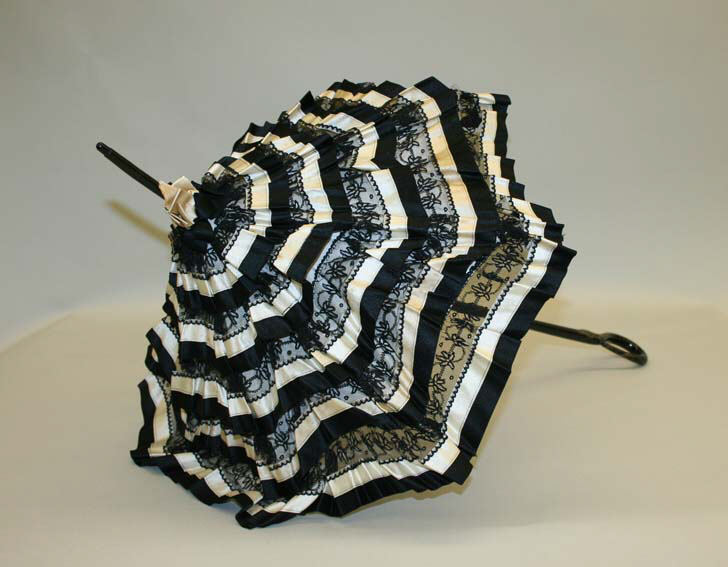
The Parasol: An Architectural Study in Textile and Structure at Katherine Fashion Lab
The parasol, often relegated to the periphery of fashion history as a mere accessory of sun protection or social signaling, emerges as a profound object of couture analysis under the lens of Katherine Fashion Lab. In this standalone study, we deconstruct the parasol not as a passive implement, but as a dynamic, architectural garment—a mobile canopy that negotiates space, light, and identity. Rooted in both American and European traditions, the parasol’s material composition of wood, metal, silk, and cotton reveals a sophisticated dialogue between structural engineering and textile artistry. This analysis elevates the parasol from a quaint relic to a masterclass in functional sculpture, where every component serves a dual purpose: aesthetic expression and environmental mediation.
Material Dialectics: Wood, Metal, Silk, and Cotton
The parasol’s anatomy is a testament to the tension between rigidity and fluidity. The wooden shaft, often carved from mahogany, ash, or ebony, provides the foundational spine. In European couture, this element is frequently hand-polished to a high gloss, its grain accentuated to mimic the organic curves of a tree branch. American interpretations, by contrast, favor sturdier, utilitarian woods like oak or hickory, reflecting a pragmatic frontier ethos. The shaft’s length—typically 30 to 40 inches—dictates the parasol’s scale and the bearer’s posture; a longer shaft demands a regal, upright carriage, while a shorter one invites intimate, conversational angles.
The metal framework—often brass, steel, or silver-plated alloys—serves as the parasol’s skeletal system. European artisans historically favored intricate, hand-hammered ribs that radiate from a central hub, each rib meticulously articulated to create a perfect parabolic dome. The ribs are not merely functional; they are a display of metallurgical precision. In American designs, the metalwork is more robust, with brass hinges and locking mechanisms that prioritize durability over ornamentation. Yet, both traditions converge on a critical point: the metal must counterbalance the tensile forces exerted by the canopy, ensuring the parasol remains taut even in a gentle breeze. This engineering is a hidden couture—a silent choreography of stress and support.
The silk canopy is the parasol’s most luxurious element. In European couture, silk is often hand-dyed in deep jewel tones—emerald, sapphire, or burgundy—and embroidered with floral motifs using metallic threads. The silk’s lightweight, lustrous quality allows it to ripple like water, casting dappled shadows that transform the wearer’s skin into a living canvas. American silk parasols, while equally opulent, lean toward larger-scale patterns—stripes, checks, or patriotic motifs—that reflect a more democratic aesthetic. The silk’s weave is critical: a tight, high-thread-count fabric provides superior UV protection, while a looser weave allows light to filter through, creating a soft, diffused glow. This interplay of opacity and translucency is a deliberate couture choice, balancing modesty with allure.
Cotton enters the composition as a contrasting element. In many parasols, cotton is used for the inner lining or as a secondary layer for the canopy. Its matte, breathable texture grounds the silk’s sheen, preventing the parasol from appearing overly saccharine. Cotton also introduces a tactile humility; where silk whispers of aristocracy, cotton speaks of practicality. In American parasols, cotton is often dyed in muted earth tones—cream, taupe, or sage—and embroidered with simple geometric patterns. This pairing of silk and cotton creates a material dialogue: the former represents the ideal, the latter the real. Together, they form a canopy that is both aspirational and accessible.
Structural Poetics: The Canopy as a Mobile Architecture
The parasol’s shape is not arbitrary; it is a deliberate architectural form. The dome, when fully opened, approximates a hemisphere, a shape that distributes both weight and wind resistance evenly. The curvature is calculated to maximize shade coverage while minimizing drag. European parasols often feature a pronounced, almost bell-shaped silhouette, with a deep scalloped edge that echoes the flounces of a ball gown. American parasols, in contrast, favor a flatter, more functional profile, with a scalloped edge that is less pronounced. This difference reflects divergent cultural priorities: European design emphasizes visual drama; American design emphasizes utility.
The ribs are the parasol’s load-bearing beams. Each rib is a slender metal or wood rod that extends from the central hub to the canopy’s edge. The number of ribs—typically eight to twelve—determines the canopy’s tautness. Fewer ribs create a softer, more organic drape, while more ribs yield a crisp, architectural tension. The spacing of the ribs also affects the parasol’s silhouette; widely spaced ribs produce a segmented, almost umbrella-like appearance, while closely spaced ribs create a seamless, spherical form. This engineering detail is a couture signature, as each rib must be individually shaped and attached to ensure perfect symmetry.
The handle is the parasol’s final architectural element. Carved from wood or cast in metal, the handle often takes the form of a crook, a ball, or an ornamental figure—a bird, a flower, or a human hand. The handle’s ergonomics are paramount; it must fit the palm’s curve, allowing the bearer to hold the parasol for extended periods without fatigue. In European couture, the handle is often a showcase for virtuoso carving, with intricate details that reward close inspection. In American designs, the handle is simpler, often a smooth, rounded shape that prioritizes comfort over ornament. Yet, even here, there is a hidden couture: the handle’s weight must balance the parasol’s overall mass, preventing it from tipping forward or backward.
Cultural Semiotics: The Parasol as a Social Textile
Beyond its material and structural analysis, the parasol is a potent signifier of social status and gender performance. In 19th-century Europe, the parasol was an essential accessory for women of means, signaling leisure and refinement. The silk canopy and ornate handle were markers of wealth, while the act of carrying a parasol demonstrated a woman’s exemption from manual labor. In America, the parasol took on additional meanings: it was a symbol of gentility in the rapidly industrializing North, and a marker of Southern plantation culture in the antebellum South. The choice of material—silk versus cotton—could indicate not only economic standing but also regional identity.
The parasol’s color also carried semiotic weight. Black parasols were associated with mourning or formality; white parasols with purity and youth; and brightly colored parasols with vivacity and flirtation. In European courts, a parasol’s color could signal allegiance to a political faction or a romantic interest. In America, parasols in red, white, and blue were used to express patriotism during the Centennial and later World Fairs. This color coding is a form of non-verbal communication, a textile language that the wearer and viewer both understand.
Conclusion: The Parasol as a Couture Artifact
At Katherine Fashion Lab, the parasol is not a relic but a living artifact—a testament to the convergence of engineering, textile art, and social ritual. Its wood and metal structure provides a rigid armature for the silk and cotton canopy, creating a mobile architecture that mediates light and space. The parasol’s material dialectics—the tension between opulence and utility, between European ornament and American pragmatism—reveal a sophisticated couture that is both functional and symbolic. This analysis demonstrates that the parasol is far more than a sunshade; it is a wearable sculpture, a social signifier, and a masterwork of fashion engineering. In deconstructing its components, we uncover a hidden narrative of craftsmanship, culture, and identity—a narrative that deserves a prominent place in the canon of couture studies.