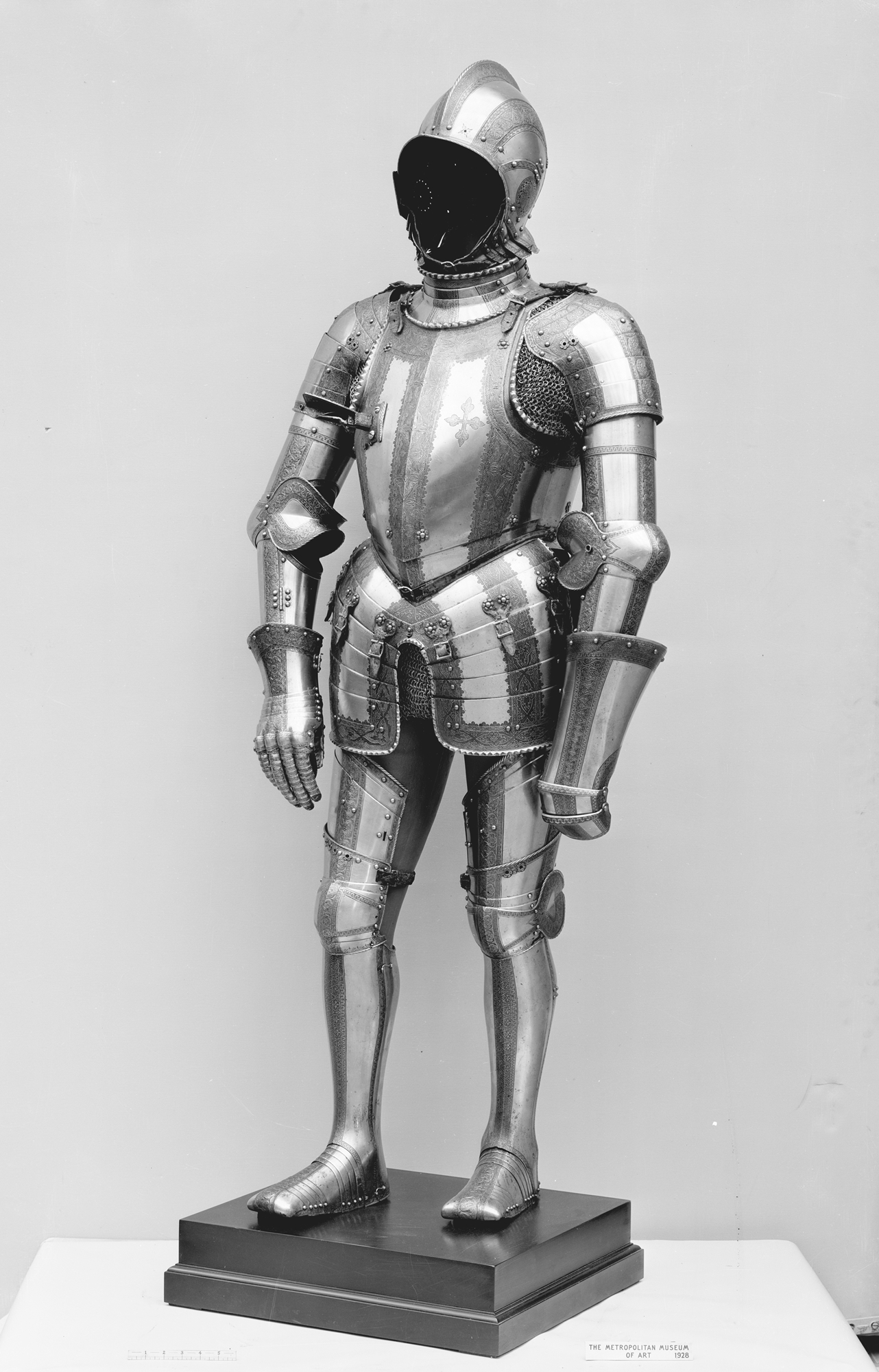
Heritage Analysis: The Composed Armor of Landshut and Augsburg
Introduction: The Armor as a Nexus of Power and Identity
The Composed Armor, a masterwork originating from the German cities of Landshut and Augsburg, with a gorget of Italian provenance, represents a pinnacle of Renaissance-era craftsmanship and symbolic communication. For Katherine Fashion Lab, this artifact—crafted from steel, gold, leather, textile, and copper alloy—offers a strategic blueprint for 2026 high-end luxury. Its heritage transcends mere protection; it embodies a sophisticated language of status, spirituality, and territorial dominion. This analysis deconstructs the armor’s symbolic power, historical adornment, spiritual meaning, and translates these elements into a forward-facing luxury strategy for a discerning clientele.
Symbolic Power: The Embodied Authority of the Knightly Class
The Composed Armor was not solely a utilitarian object; it was a mobile throne. In the courts of Landshut and Augsburg, armor signified not just martial capability but also governance. The use of gold inlay and copper alloy detailing on the steel surface was a deliberate display of wealth and access to rare materials. These metals, sourced through extensive trade networks, communicated the wearer’s economic reach. For a modern luxury brand, this translates to the strategic use of exclusive materials—uncommon alloys, ethically sourced precious metals, or proprietary textiles—as markers of elite status. The armor’s composition, a blend of German and Italian elements, also signals a curated, transnational identity, a concept highly relevant for a global luxury audience seeking authenticity through cultural fusion.
Historical Adornment: The Armor as a Canvas for Craftsmanship
The decorative program of the Composed Armor reveals a deep investment in narrative adornment. The steel surfaces were etched and gilded with motifs ranging from classical mythology to Christian iconography. This was not mere ornament; it was a biographical and aspirational statement. The gorget, of Italian origin, introduces a contrasting aesthetic—perhaps more fluid in line or different in metallurgical technique—which speaks to the Renaissance practice of commissioning components from specialized workshops. For Katherine Fashion Lab, this suggests a 2026 strategy of modular luxury: pieces that can be combined from different collections or eras, each telling a part of the wearer’s story. The integration of leather and textile within the armor’s structure also highlights the importance of textural contrast—hard and soft, cold and warm—as a design principle that enhances sensory experience and perceived value.
Spiritual Meaning: The Armor as a Reliquary of the Soul
Beyond its physical function, the Composed Armor served as a spiritual shield. In the German principalities, armor was often blessed in religious ceremonies, transforming it into a sacred object that protected the wearer’s soul as much as their body. The gold elements, associated with divine light, and the steel, representing earthly strength, created a dialectic of the mortal and the eternal. This spiritual dimension is critical for 2026 luxury strategy, where consumers increasingly seek meaningful objects that offer psychological protection or existential comfort. Katherine Fashion Lab can leverage this by incorporating ritualistic design elements—inscribed blessings, symbolic motifs (such as the cross or the lion), or materials believed to hold protective properties (e.g., specific gemstones or metals). The armor’s ability to confer a sense of invincibility is a powerful emotional benefit to market.
Strategic Translation for 2026 High-End Luxury
The Composed Armor provides a robust framework for Katherine Fashion Lab’s 2026 collection. The key strategic pillars are as follows:
Pillar 1: Material Provenance and Narrative
Just as the armor’s steel from Landshut and Augsburg told a story of regional excellence, Katherine Fashion Lab should emphasize the origin stories of its materials. Each piece of steel, leather, or textile must be traceable to a specific artisan or region. The Italian gorget component exemplifies the value of cross-cultural collaboration. For 2026, consider limited-edition pieces that blend, for example, Japanese steel with Italian leather, creating a new narrative of global craftsmanship. This approach commands premium pricing and builds a brand mythology.
Pillar 2: The Armor as a Modular System
The historical practice of composing armor from different sources is a direct precedent for modular luxury design. Katherine Fashion Lab can develop a collection of “armor pieces” for the modern wardrobe—structured jackets, gauntlet-like gloves, and gorget-inspired necklaces—that can be worn individually or layered. This creates a system of ownership that encourages repeat purchases and personalization, aligning with the 2026 trend of conscious consumption through versatile, enduring design.
Pillar 3: Symbolic Embellishment as Brand Language
The gold and copper alloy inlay on the armor was a form of branding before the term existed. For Katherine Fashion Lab, develop a proprietary symbolic alphabet—a set of motifs (e.g., a stylized lion for courage, a geometric pattern for protection) that are etched or embedded into hardware and textile prints. These symbols should be exclusive to the brand and carry a known meaning, adding a layer of intellectual and emotional value to the product. This transforms a purchase into an acquisition of talismanic power.
Pillar 4: Ritual and Experience in Retail
The spiritual dimension of the armor suggests a ritualized retail experience. For the 2026 launch, consider a private event where clients “receive” their armor piece in a ceremony that includes a blessing or a narrative activation. This could be a digital or physical ritual, perhaps involving a certificate of provenance that includes the symbolic meaning of the materials. This elevates the transaction from commerce to initiation, fostering deep brand loyalty and word-of-mouth advocacy.
Conclusion: Forging a Future from the Past
The Composed Armor of Landshut and Augsburg is more than a historical artifact; it is a strategic repository of enduring principles for luxury branding. Its power lies in the seamless integration of material excellence, symbolic narrative, and spiritual resonance. For Katherine Fashion Lab, the path to 2026 luxury leadership is clear: embrace the armor’s ethos of composed strength. Design objects that protect, adorn, and empower. Build a brand that is not just worn, but inhabited—a modern armor for the soul, crafted with the same reverence for materials and meaning as the master smiths of Augsburg and Landshut. This heritage analysis provides the foundational blueprint for a collection that will define the next era of high-end luxury.