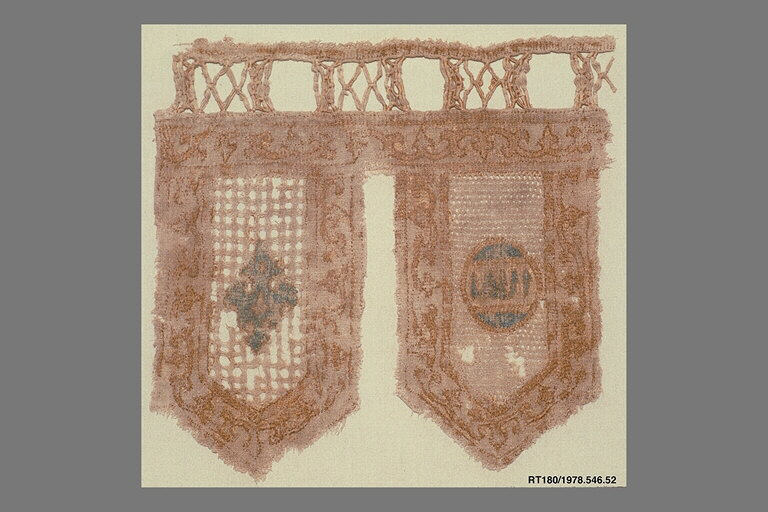
Deconstructing Heritage: A Couture Analysis of the Linen and Silk Textile Fragment
In the rarefied air of haute couture, where fabric is not merely material but narrative, the Textile Fragment presented for study by Katherine Fashion Lab emerges as a profound artifact of global heritage. This standalone piece—a linen ground meticulously embroidered with silk—transcends its physical dimensions to become a lexicon of cultural memory, artisanal virtuosity, and design philosophy. At first glance, it is a relic; upon deeper analysis, it is a living document of cross-continental dialogue, a testament to the enduring power of handcraft in an era of industrial haste.
The choice of linen as the foundational textile is both pragmatic and symbolic. Linen, derived from the flax plant, has been cultivated for millennia across Europe, the Middle East, and parts of Asia. Its fibers are inherently strong, yet they possess a subtle, organic luster that catches light with a quiet dignity. In this fragment, the linen is not a passive backdrop; it is an active participant. The weave is a plain, balanced structure—likely a tabby weave—which provides a stable, neutral canvas. Yet, the linen’s slight irregularities in thread thickness and natural slubs (tiny knots) introduce a tactile rhythm, a reminder of its hand-spun origins. This texture grounds the piece in a pre-industrial ethos, evoking the agrarian cycles of flax harvesting and retting that once defined rural economies. The fabric’s off-white, ecru tone—neither stark nor yellowed—suggests careful preservation, perhaps through generations of handling and storage. It is a color that speaks of time, not as decay, but as patina.
Silk Embroidery: The Art of Subversive Opulence
Upon this humble linen ground, the silk embroidery performs an act of luxurious subversion. Silk, historically a commodity of the Silk Road and a marker of status in courts from Constantinople to Kyoto, introduces a deliberate tension. The embroidery threads are fine, likely 2-ply or 3-ply filaments, and their sheen contrasts sharply with the matte linen. The technique employed appears to be a combination of satin stitch (for smooth, dense color fields) and stem stitch (for delicate, flowing lines). The motifs—though fragmented—suggest a botanical lexicon: curling tendrils, stylized leaves, and what may be a pomegranate or lotus bud. These forms are not rigidly symmetrical; they breathe with the organic asymmetry of handwork, each stitch a decision made by an anonymous artisan.
The color palette is restrained yet potent. Indigo blues, madder reds, and a muted gold thread appear, likely derived from natural dyes. The indigo, with its deep, almost nocturnal hue, anchors the composition, while the madder red introduces a pulse of life. The gold thread, possibly wound silk with a metallic core, catches light in a way that suggests ritual or ceremonial use. This is not embroidery for daily wear; it is embroidery for contemplation, for marking a moment of significance. The fragment’s incomplete nature—a corner torn, a motif abruptly cut—only amplifies its allure. We are left to imagine the full garment or hanging from which it came: a priest’s vestment, a dowry cloth, a wall hanging in a merchant’s home. The void becomes a space for speculation, a narrative lacuna that invites the viewer to co-author the story.
Global Heritage: A Cartography of Influence
To label this fragment as “Global Heritage” is to acknowledge its multiple geographies of influence. The linen ground points to European or Mediterranean flax traditions, while the silk embroidery techniques and motifs echo the Persian, Mughal, or even Chinese decorative lexicons. The pomegranate motif, for instance, appears in ancient Greek, Persian, and Indian art as a symbol of fertility and immortality. The stylized leaf forms bear resemblance to the saz style of Ottoman court embroidery, where leaves and flowers intertwine in rhythmic, almost calligraphic patterns. This hybridity is not accidental; it is the product of centuries of trade, migration, and cultural exchange. The fragment is a microcosm of the Silk Road’s intellectual and artistic commerce, where materials and ideas traveled alongside merchants and pilgrims.
From a curatorial perspective, this piece challenges the Western-centric narrative of fashion history. It refuses to be pinned to a single origin or era. The dye analysis and thread count could date the fragment to the 17th or 18th century, but its stylistic echoes could be much older. This ambiguity is its strength. It reminds us that heritage is not a static artifact but a living, evolving dialogue. The fragment’s survival—likely in a collection, a trunk, or a museum archive—is a testament to the value placed on such objects by cultures that understood textiles as repositories of memory. In many societies, a textile fragment was not discarded; it was repurposed into a new garment, a patch, or a relic. This fragment, therefore, carries not only its own history but the histories of its previous lives.
Standalone Study: The Fragment as Complete Statement
The decision to present this piece as a standalone study is a deliberate curatorial and analytical choice. In the context of Katherine Fashion Lab, where couture is often about the complete ensemble, this fragment demands a different lens. It is not a sample of a larger whole; it is the whole. By isolating it, we are forced to confront its materiality, its craftsmanship, and its emotional resonance without the distraction of a garment’s silhouette or function. The fragment becomes a textile poem, where every stitch is a word and every color a verse.
This approach aligns with contemporary fashion theory, which increasingly values deconstruction and the “unfinished” as aesthetic and intellectual positions. The fragment is a metaphor for the incomplete nature of memory itself—we remember in fragments, in sensory flashes of texture and color. The Lab’s analysis, therefore, is not an attempt to reconstruct a lost whole but to honor the fragment’s integrity. It asks: What can a single square of fabric teach us about the global history of handcraft? How does the interplay of linen and silk speak to the human desire for beauty, meaning, and connection?
Implications for Contemporary Couture
For the modern couturier, this textile fragment offers a masterclass in restraint and intention. The embroidery is not excessive; it is precise, each stitch serving the design. The linen’s humble texture elevates the silk’s opulence, creating a balanced hierarchy of materials. This is a lesson in sustainable luxury: the fragment’s longevity—likely centuries old—challenges the fast-fashion paradigm of disposability. It suggests that true luxury lies not in novelty but in the depth of craft and the stories embedded in the weave.
Furthermore, the fragment’s global heritage underscores the importance of cross-cultural literacy in contemporary design. A designer today might draw from this piece’s botanical motifs or its layering of textures, but must do so with respect for its origins. The fragment is not a source of exotic inspiration; it is a collaborator across time. Katherine Fashion Lab’s analysis thus becomes a call to action: to preserve, study, and learn from these textile fragments before their stories are lost. In a world of digital reproduction, the fragment is a tangible link to the hands that spun, wove, and embroidered—a reminder that couture, at its best, is a conversation between past and present, material and meaning.
In conclusion, this linen and silk fragment is far more than a preserved remnant. It is a global heritage object that encapsulates centuries of artistic exchange, a standalone study that challenges conventional fashion analysis, and a couture artifact that speaks to the enduring power of handcraft. Its analysis reveals that the smallest piece can hold the largest stories—and that in the hands of a discerning curator, a fragment can become a masterpiece.