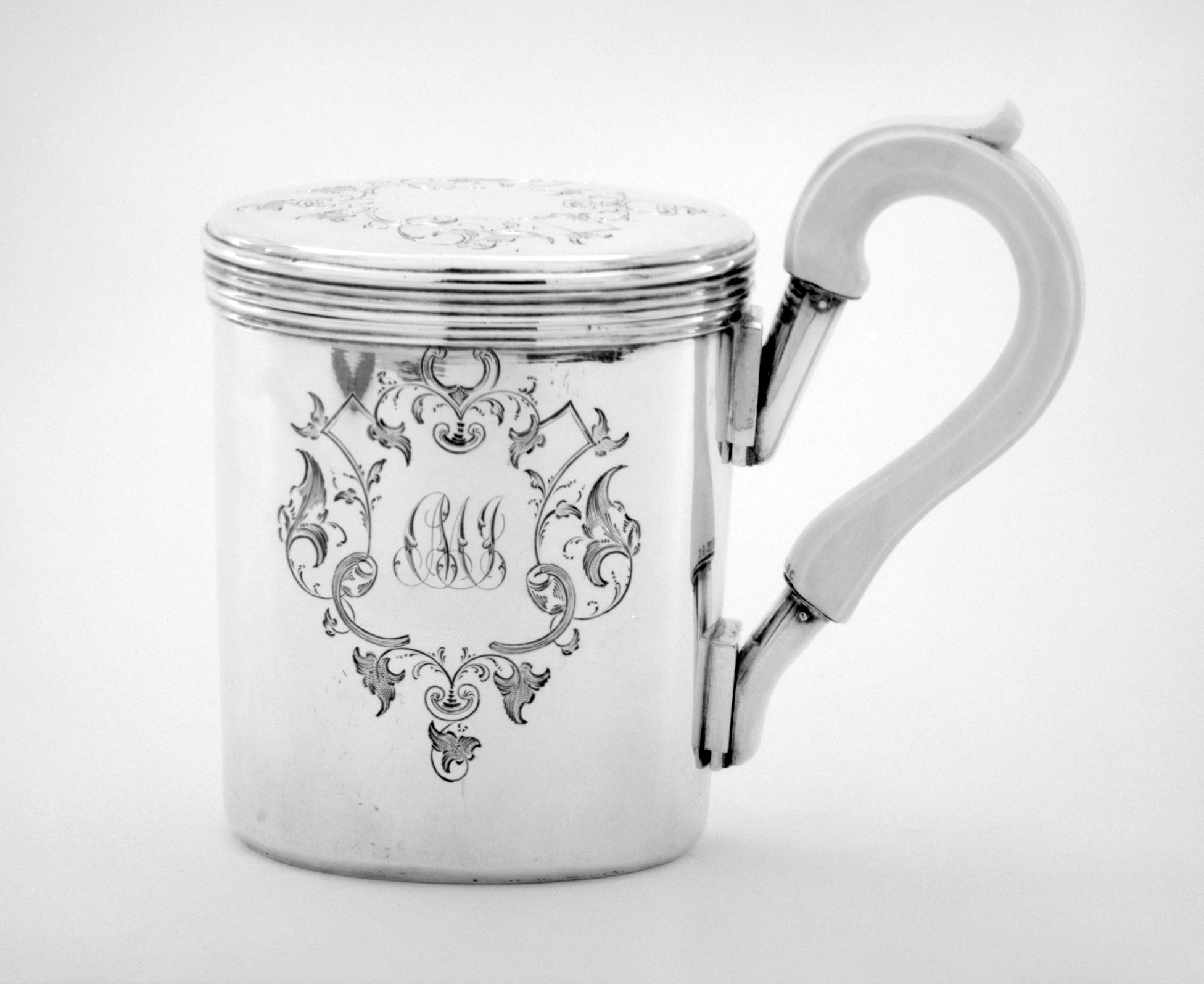
Deconstructing the Ritual: A Couture Analysis of the Silver Shaving Set
At first glance, a silver shaving cup and soap dish might seem an incongruous subject for the atelier of Katherine Fashion Lab, a realm dedicated to the avant-garde and the future of form. Yet, it is precisely within this seemingly mundane object—this artifact of a daily ritual—that we find a profound concentration of the principles that define true couture: meticulous craftsmanship, a dialogue between material and function, the elevation of the personal ritual, and the silent communication of status and identity. This standalone study of a globally-sourced heritage piece reveals it not as a mere grooming accessory, but as a precursor to the bespoke, an emblem of disciplined elegance, and a case study in sustainable material intelligence.
The Silhouette and Structure: Architecture for the Bath
Consider the formal architecture of the set. The cup, with its handle and cover, and the accompanying soap dish, are not arbitrary forms. They constitute a micro-collection, a coordinated ensemble where each piece plays a distinct role within a unified aesthetic vision. This is the very essence of a couture collection, where a jacket, a skirt, and a blouse converse in the same material and design language. The handle, often ergonomically curved yet ornately detailed, speaks to the intersection of utility and adornment—much like the engineered sleeve head of a master tailor that allows for both movement and a flawless line. The cover, a seemingly superfluous addition, is a critical couture statement. It performs a practical function (preserving the lather, protecting the soap) while simultaneously transforming the object from an open vessel into a sealed, sculptural entity. It introduces an element of ceremonial unveiling, elevating the act of shaving from a chore to a curated performance. The soap dish, often with its pierced or channeled base, addresses the pragmatic need for drainage while adding a layer of textural contrast, mirroring the way a couturier might pair a heavy silk jacquard with a delicate chiffon.
Material Alchemy: Silver, Ivory, and the Ethics of Opulence
The material specification—silver, and silver with ivory—is a masterclass in historical materiality and its complex legacy. Sterling silver is not chosen merely for its lustre. It is a living material; it reacts, it requires care, it develops a patina. This inherent dialogue between the user and the object mirrors the relationship between a couture client and a garment crafted from a delicate, precious textile. Both demand a certain reverence and understanding, promising beauty in return for conscientious stewardship. The use of ivory, now ethically untenable, is a stark historical footnote that cannot be ignored. It forces a critical examination of heritage itself. In its time, ivory represented the pinnacle of exotic luxury, a symbol of global trade and conquest. Its inclusion speaks to an era of opulence without modern constraint. For the contemporary couture mind, this presents a direct challenge: how do we reinterpret the concept of the precious? Do we seek modern alternatives—tagua nut, fossilized mammoth ivory, advanced bio-resins—that evoke the same tactile and visual luxury without the ethical burden? This set, therefore, becomes a catalyst for a vital discussion on material provenance and innovation, a core tenet of responsible future-facing design.
The Ritual as Performance: Bespoke Grooming and the Couture Client
Couture is, at its heart, the customization of an experience for a singular body and sensibility. This shaving set is the epitome of bespoke grooming. It was not a mass-produced commodity but an object commissioned or selected by an individual for his personal toilette. Its use entailed a specific, repeated sequence: filling the cup with hot water, loading the soap brush, working the lather under the cover, applying it with deliberate strokes. This ritualistic process is analogous to the careful dressing required by a complex couture garment—the fastening of hidden closures, the arrangement of a drape, the adjustment of a structure. Both are performative acts that demand time, attention, and skill, creating a mindful separation from the mundane. The set, therefore, functioned as a tool for self-composition. In the same way a Haute Couture suit constructs the public silhouette, this set facilitated the construction of the gentleman's prepared face, a canvas of smooth, controlled appearance. It privatized the act of becoming presentable, making the very preparation a private luxury.
Heritage as a Pattern Library: Reinterpreting the Codes
For Katherine Fashion Lab, such an object is not a relic to be replicated, but a pattern library of codes to be deconstructed and re-engineered. The formal duality of the covered cup—concealed yet functional—could inspire a garment with a transformative element, a hood that becomes a collar, a clutch that unfolds into a bag. The textural interplay between polished silver, matte ivory, and the potential organic matter of soap lather invites experimentation with hybrid materiality in textiles. The very notion of a "set" or a "capsule" for a specific ritual can be translated into a modern wardrobe system: a curated ensemble of garments and accessories designed for a singular, intentional purpose, be it a diplomatic meeting or an evening soiree. The global heritage of the piece reminds us that luxury and ritual are universal languages, yet their expressions are wonderfully diverse. This invites a cross-cultural exploration of grooming and adornment rituals, potentially inspiring new forms, fastenings, and fabric treatments rooted in a wider, more inclusive understanding of heritage.
In conclusion, this silver shaving set stands as a quiet monument to the principles that govern the highest echelons of fashion creation. It demonstrates that couture thinking transcends the garment alone, residing in the philosophy of making and using. It is an object that dignifies ritual, champions material integrity (within its historical context), and communicates identity through disciplined elegance. By subjecting it to a rigorous couture analysis, we extract not a style, but a methodology—one that values intention, honors craft, and seeks to design not just objects, but elevated experiences for the human form and spirit. It is a testament to the fact that true luxury, whether in 1820 or 2120, is always personal, considered, and beautifully made.