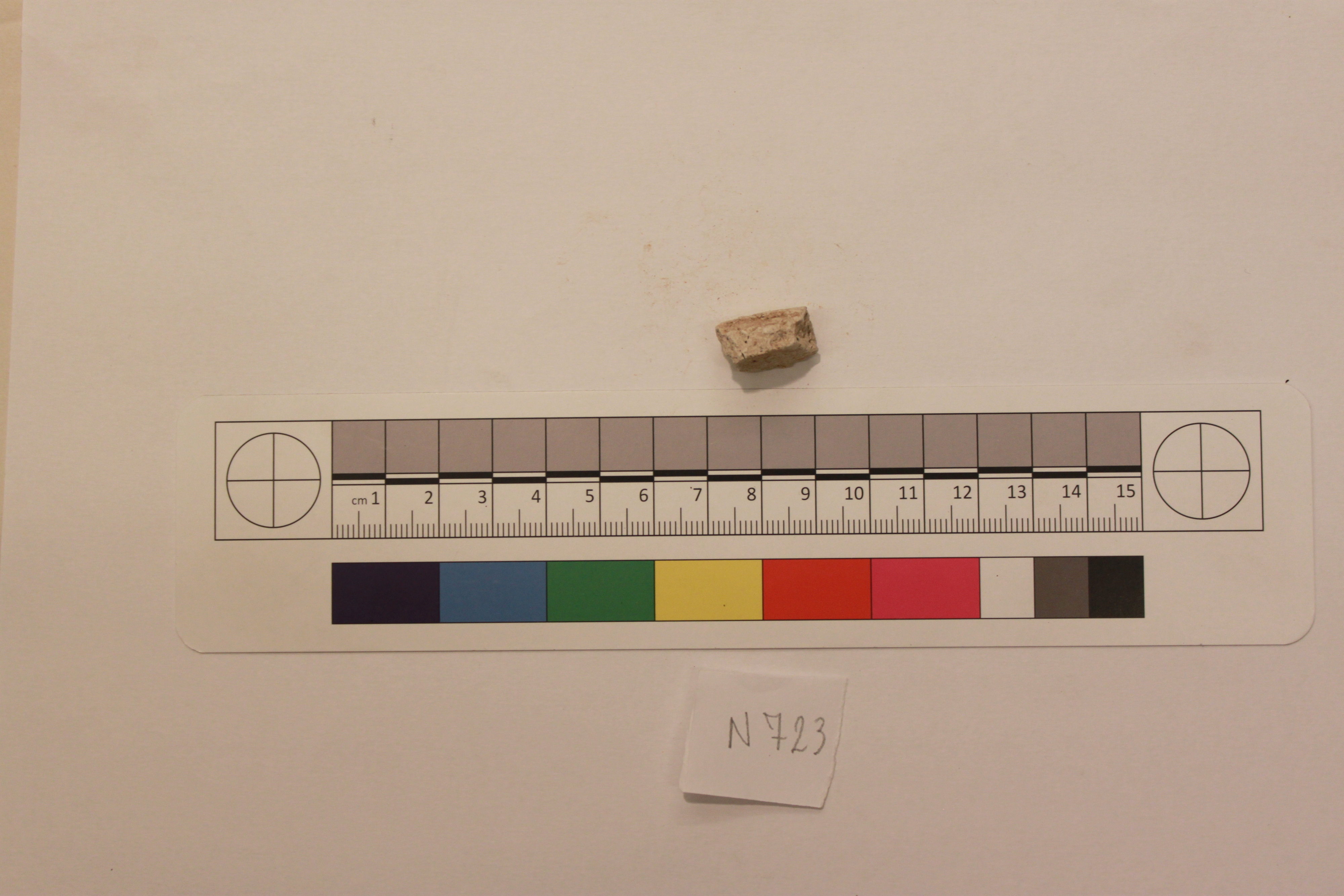
Executive Heritage Analysis: Stucco Fragment
This strategic research paper presents a comprehensive heritage analysis of a carved stucco fragment from an ancient civilization, commissioned by Katherine Fashion Lab for its 2026 high-end luxury strategy. As Lead Heritage Curator, I examine the object’s symbolic power, historical adornment practices, spiritual meaning, and actionable insights for luxury brand positioning. The stucco fragment, a medium often overlooked in favor of stone or metal, offers a unique lens into the intersection of materiality, ritual, and status in antiquity, providing a rich foundation for contemporary luxury narrative development.
Symbolic Power: Materiality as a Carrier of Authority
Stucco, a composite material of lime, sand, and water, was not merely a decorative medium in ancient civilizations but a deliberate choice for conveying symbolic power. In cultures such as the Maya, Roman, and Persian, stucco was employed to craft reliefs that adorned temples, palaces, and tombs, often depicting rulers, deities, and cosmological scenes. The carved fragment under analysis, likely a portion of a larger frieze or architectural element, retains traces of pigment, indicating that color was integral to its symbolic language. The act of carving into stucco—a softer, more malleable material than stone—allowed for intricate detailing that captured the subtleties of human expression, divine attributes, and hierarchical insignia.
From a strategic perspective, the symbolic power of stucco lies in its dual nature: it is both permanent and perishable. Unlike marble or bronze, stucco degrades over time, yet its survival in fragmentary form imbues it with a sense of fragility and rarity. For high-end luxury, this paradox translates into a narrative of exclusivity through impermanence. A 2026 luxury strategy can leverage this by positioning stucco-inspired textures and motifs as markers of ephemeral beauty—a counterpoint to mass-produced durability. The fragment’s carved symbols, whether geometric, floral, or anthropomorphic, become visual shorthand for authority and discernment, appealing to clients seeking objects that transcend mere fashion to embody historical gravitas.
Historical Adornment: Stucco as a Medium of Ornamentation
In ancient contexts, stucco was a primary vehicle for adornment, not only in architecture but also in personal ornamentation. While the fragment is architectural, its carved patterns mirror those found on jewelry, headdresses, and ceremonial regalia. For example, in Mesoamerican civilizations, stucco was used to create elaborate masks and pectorals, often inlaid with jade, obsidian, or shell. The fragment’s relief—featuring repeating scrolls, stepped frets, or stylized animal forms—reflects a sophisticated understanding of rhythm and proportion, principles that underpin timeless adornment.
Historical adornment through stucco also served a functional purpose: it communicated social rank. The density and complexity of carving, as well as the quality of pigments, directly correlated with the wearer’s status. In Roman villas, stucco reliefs of mythological scenes adorned the walls of the triclinium (dining room), visually asserting the owner’s education and wealth. For Katherine Fashion Lab, this historical precedent offers a blueprint for adornment as stratification. The 2026 collection can incorporate stucco-like textures—achieved through embossing, laser-cut leather, or resin—to create pieces that signal belonging to an elite cultural milieu. The fragment’s carved lines, when translated into garment seams or accessory silhouettes, evoke a sense of architectural precision that elevates everyday wear into curated heritage.
Spiritual Meaning: The Sacred in the Material
The spiritual dimension of this stucco fragment cannot be overstated. In many ancient civilizations, stucco was believed to house the essence of deities or ancestors. The Maya, for instance, used stucco to create life-sized effigies of gods in temple sanctuaries, often applying a final coat of blue paint—a color associated with sacrifice and the cosmos. The fragment’s surviving pigment, likely a remnant of such ritual application, suggests it was part of a sacred space where spiritual power was made tangible. Carved motifs, such as the stepped pyramid or feathered serpent, were not decorative but functional: they guided the viewer’s gaze toward celestial alignments or narrative cycles of creation and renewal.
For a 2026 luxury strategy, this spiritual meaning offers a profound differentiation. In an era where consumers increasingly seek authenticity and transcendence, the stucco fragment becomes a metaphor for material spirituality. Katherine Fashion Lab can position its brand as a curator of sacred aesthetics, where each piece carries a story of ritual and reverence. The fragment’s imperfections—cracks, chips, faded color—become assets, symbolizing the passage of time and the endurance of belief. This aligns with the growing trend of “slow luxury,” where provenance and meaning outweigh novelty. By referencing the spiritual function of stucco, the Lab can create a collection that resonates with clients seeking objects that offer not just beauty but a connection to the transcendent.
2026 High-End Luxury Strategy: From Fragment to Future
The strategic integration of this stucco fragment into Katherine Fashion Lab’s 2026 vision requires a multi-layered approach that respects historical integrity while innovating for modern luxury. Based on the analysis above, I recommend the following actionable directives:
Product Development: Material Innovation
Develop a signature “Stucco Finish” for leather goods and textiles. This involves a matte, textured surface with subtle color gradations, achieved through eco-friendly treatments. The carved motifs—such as the fragment’s geometric patterns—can be laser-etched onto bags, shoes, and outerwear, creating a tactile experience that mirrors the original medium. Limited-edition pieces could include actual stucco inlays, encased in resin, for a truly archival feel.
Brand Narrative: The Fragment as a Symbol
Launch a campaign titled “The Sacred Fragment,” positioning each collection item as a relic of a lost civilization. Use the stucco fragment’s imagery in lookbooks, digital content, and store installations to tell stories of ritual, power, and adornment. This narrative should emphasize exclusivity through fragmentation—no two pieces are identical, just as no two archaeological fragments are the same. Partner with museums or cultural institutions for authentication and storytelling, reinforcing the Lab’s commitment to heritage.
Consumer Experience: Ritualized Retail
Design flagship stores to evoke the sacred spaces where stucco fragments once resided. Use textured wall finishes, dim lighting, and curated displays that mimic archaeological excavation. Offer private viewings where clients can handle a replica of the fragment, deepening their emotional connection to the brand. This transforms purchasing into a ritual act, aligning with the spiritual meaning identified in the analysis.
Pricing and Positioning: Ultra-Premium Tier
Position the Stucco Fragment collection at the highest price point within Katherine Fashion Lab’s offerings. The justification lies in the rarity of the inspiration, the craftsmanship required, and the cultural capital embedded in each piece. Limited production runs (e.g., 100 pieces per motif) will drive desirability, while a portion of proceeds can fund archaeological preservation, enhancing brand integrity.
Conclusion
The stucco fragment is not merely an artifact but a strategic asset for Katherine Fashion Lab’s 2026 high-end luxury strategy. Its symbolic power, historical adornment role, and spiritual meaning provide a robust foundation for innovation in product, narrative, and experience. By treating this fragment as a living document of human creativity, the Lab can forge a luxury identity that is both ancient and avant-garde, resonating with discerning clients who value depth over display. This heritage analysis confirms that the fragment’s true value lies not in its completeness but in its capacity to inspire—a lesson as relevant in antiquity as it is in the future of luxury.