The Art of Memory: Deconstructing Souvenir Through Couture
In the rarefied world of haute couture, where garments transcend mere clothing to become artifacts of cultural dialogue, Katherine Fashion Lab’s latest standalone study, Souvenir, emerges as a profound meditation on memory, heritage, and materiality. Drawing from the lexicon of global heritage, the collection transforms the ephemeral concept of a keepsake into a tangible, wearable narrative. At its core, Souvenir interrogates how we preserve the intangible—travel, tradition, and time—through the alchemy of gold, enamel, and mother-of-pearl. This analysis dissects the collection’s conceptual framework, material choices, and structural innovations, revealing a masterclass in couture as cultural archaeology.
Conceptual Foundations: The Souvenir as a Global Archive
The term “souvenir” originates from the French souvenir, meaning “to remember.” Yet Katherine Fashion Lab expands this definition beyond the trinket or postcard, positioning the garment as a vessel for collective memory. The collection draws on global heritage—not as a superficial mash-up of motifs, but as a rigorous study of how cultures encode identity through adornment. From the intricate filigree of Ottoman jewelry to the symbolic enamelwork of Chinese cloisonné, each piece references a specific geographic or historical tradition, yet refuses to be confined by it. Instead, Souvenir synthesizes these influences into a universal language of commemoration.
The standalone nature of this study is critical. Unlike seasonal collections driven by commercial calendars, Souvenir exists as a self-contained thesis, allowing for deeper exploration of its themes. The garments are not meant to be worn in succession but contemplated individually—each a chapter in a global narrative. This structure mirrors the souvenir itself: a fragment that stands for the whole, a single object that evokes an entire journey.
Materiality as Meaning: Gold, Enamel, and Mother-of-Pearl
The triumvirate of materials—gold, enamel, and mother-of-pearl—is not arbitrary but meticulously chosen for their symbolic resonance and technical demands. Gold, the most enduring of metals, represents permanence and value. In couture terms, it is often used as thread or leaf, but here it appears as structural scaffolding: gilded wire forms the armature of a corset, while beaten gold panels create a cuirass that mimics the weight of memory. The material’s reflective quality also invites the viewer to see themselves within the garment, blurring the line between observer and artifact.
Enamel introduces color and narrative. Through techniques such as plique-à-jour (where enamel is suspended like stained glass) and champlevé (carved cells filled with pigment), the collection depicts scenes of cultural exchange: a Mughal garden, a Venetian canal, a Japanese temple gate. These are not literal reproductions but impressionistic fragments, their edges softened to evoke the haziness of recollection. The enamel’s vitreous finish also suggests preservation—a glossy shield against the erosion of time.
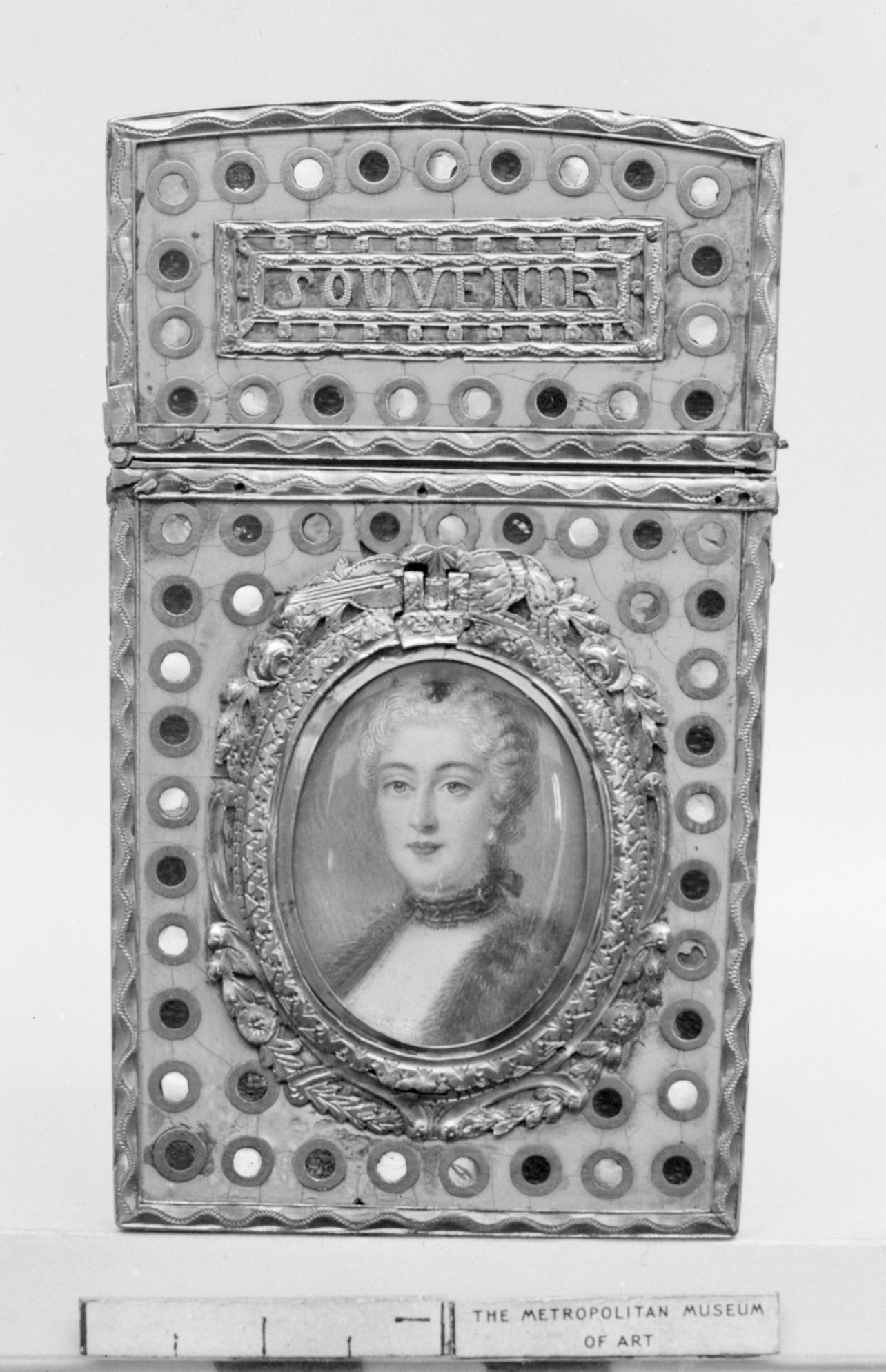
Mother-of-pearl, with its iridescent luminescence, serves as the collection’s emotional core. Harvested from mollusk shells, it is a material of organic origin, carrying within it the memory of the sea. In Souvenir, it appears as inlaid plaques on bodices, as delicate paillettes on skirts, and as carved cameos that catch light like fleeting moments. Its fragility is intentional; mother-of-pearl chips and scratches with wear, reminding us that memory is not static but subject to decay and reinterpretation.
Structural Innovations: The Architecture of Remembrance
The silhouettes in Souvenir defy conventional couture norms. Rather than emphasizing the female form through draping or tailoring, the garments prioritize structural containment. Jackets are constructed with internal boning that mimics the rigid frames of antique shadow boxes, while skirts are built with tiered, petal-like layers that evoke the strata of archaeological digs. This architecture is not merely aesthetic; it physically enacts the process of preservation. The wearer becomes a living museum, their body the gallery for these precious relics.
A standout piece, titled “The Cartographer’s Vest”, exemplifies this approach. Crafted from gold mesh over a base of black silk, it features enamel cartouches of continents, interconnected by mother-of-pearl rivulets representing trade routes. The vest is asymmetrical, with one side heavily embellished and the other bare—a deliberate imbalance that speaks to the incompleteness of memory. We remember some details vividly while others fade. The garment’s fastenings, too, are unconventional: instead of buttons or zippers, it closes with tiny gold clasps shaped like locks, reinforcing the idea of memory as something to be secured.
Cultural Synthesis: Beyond Appropriation
In an era where cultural appropriation is a constant risk, Katherine Fashion Lab navigates the terrain with intellectual rigor. The collection does not claim to represent any single culture authentically but instead uses global heritage as a lexicon—a shared vocabulary of human experience. For instance, a gown inspired by Indian zardozi embroidery is reimagined through Japanese shibori resist-dyeing techniques, with mother-of-pearl disks replacing traditional metal sequins. The result is a hybrid that honors both traditions while creating something entirely new.
The studio’s research process is equally meticulous. Each piece is accompanied by a “souvenir card”—a small, enameled plaque attached to the garment that lists its cultural references and the craftspeople who contributed. This transparency transforms the garment into a pedagogical tool, inviting the wearer to engage with its origins. It also counters the erasure often inherent in luxury fashion, where labor and heritage are obscured for the sake of mystique.
Wearability and the Gaze of Time
Critics may question the wearability of such heavily embellished pieces. Yet Souvenir challenges the notion that couture must be practical. These garments are designed for what the studio terms “ritual occasions”—moments of significance that demand a physical manifestation of memory. A bride might wear the “Memory Corset” (gold-wire lattice with enamel forget-me-nots) to her wedding, not as a fashion statement but as a wearable heirloom. A gallerist might don the “Archivist’s Coat” (mother-of-pearl scales over gold thread) for an exhibition opening, the piece itself becoming part of the archive.
The collection also plays with temporality through its materials. Gold tarnishes, enamel cracks, and mother-of-pearl yellows with age. Rather than viewing this as degradation, Katherine Fashion Lab embraces it as patina—the beauty of objects that have lived. The garments are thus designed to evolve, their surfaces recording the passage of time like a diary. This is a radical departure from the fashion industry’s obsession with the new, positioning Souvenir as a counter-narrative to disposability.
Conclusion: The Couture of Continuity
Souvenir by Katherine Fashion Lab is more than a collection; it is a philosophical inquiry into how we carry the past into the future. By marrying the permanence of gold with the fragility of mother-of-pearl, and the vividness of enamel with the abstraction of memory, the studio creates garments that are at once timeless and transient. They remind us that souvenirs are not objects but relationships—between cultures, between materials, and between the maker and the wearer. In an industry increasingly driven by speed and spectacle, this standalone study stands as a testament to the power of slow, deliberate, and deeply researched couture. It invites us to remember not just what we have seen, but what we have become.