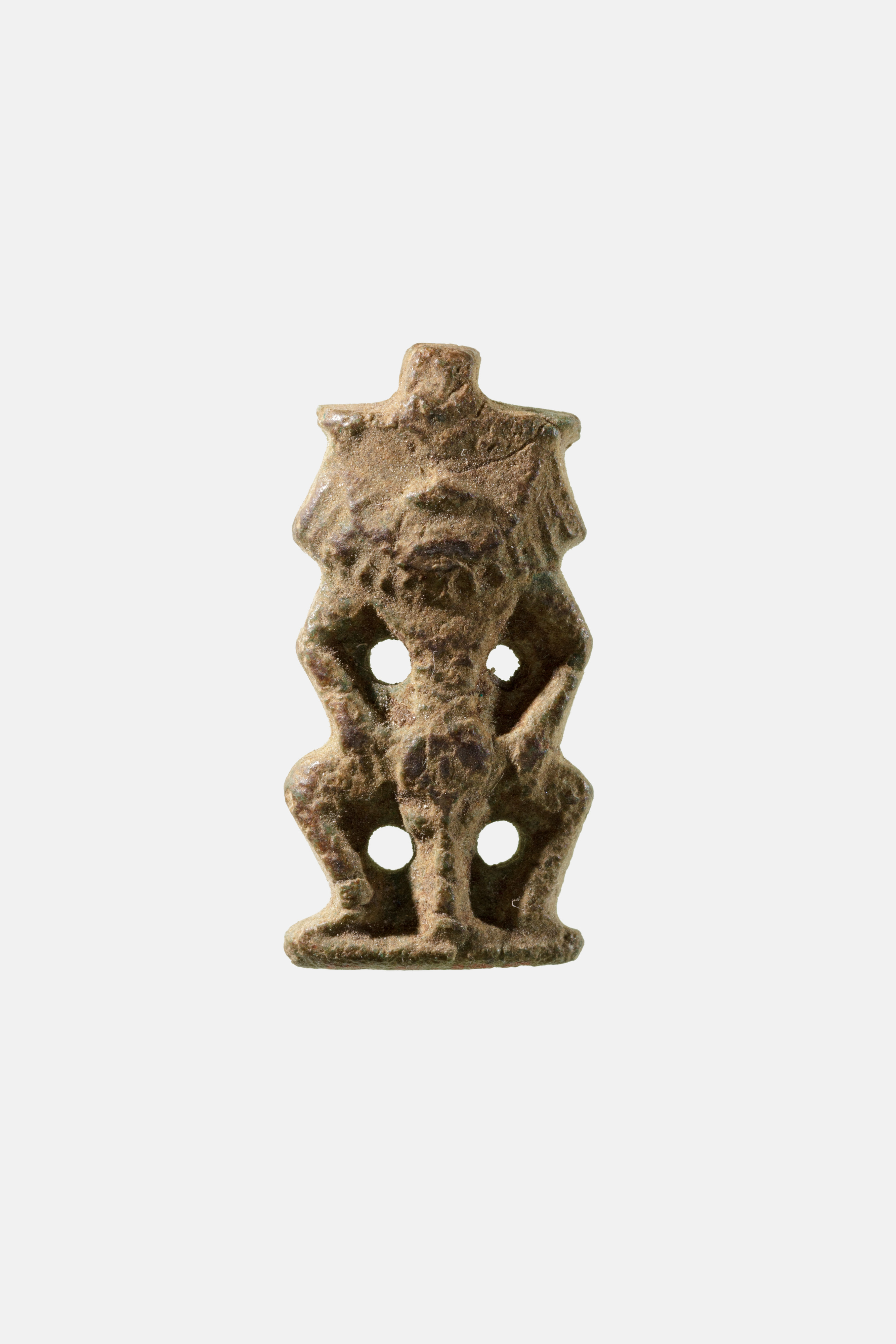
Executive Heritage Analysis: The Bes Amulet in Faience
This strategic research paper examines the Bes amulet, a distinctive artifact from ancient Egyptian civilization, crafted in faience. As Lead Heritage Curator for Katherine Fashion Lab, this analysis decodes the symbolic power, historical adornment practices, and spiritual meaning of the Bes amulet, culminating in a forward-looking luxury strategy for the 2026 high-end market. The Bes amulet, representing the dwarf god of protection, music, and childbirth, offers a unique intersection of apotropaic function and aesthetic appeal, making it a potent asset for contemporary luxury branding.
Symbolic Power: The Apotropaic and Generative Essence of Bes
The symbolic power of the Bes amulet resides in its dual role as a protector and a generative force. Unlike many Egyptian deities associated with cosmic order or the afterlife, Bes was a household god, intimately connected with the daily lives of ancient Egyptians. His iconography—a bearded, dwarf-like figure with leonine features, a protruding tongue, and a plumed headdress—was deliberately grotesque. This ugliness was not a flaw but a functional attribute: it was believed to scare away malevolent spirits, particularly those threatening women during childbirth, infants, and the sleeping.
Apotropaic Function and Domestic Sanctity
In ancient Egyptian belief, the home was a vulnerable space, permeable to demons and evil influences. Bes amulets, often worn as pendants or placed in domestic settings, served as sentinels. The god’s fierce expression and musical instruments—such as the tambourine or drum—were meant to ward off chaos through both visual intimidation and the power of sound. This apotropaic function is crucial for understanding the amulet’s enduring appeal: it represents active protection, a concept that resonates deeply with modern consumers seeking security in an uncertain world.
Generative and Life-Affirming Symbolism
Beyond protection, Bes was a symbol of fertility, joy, and the life force. He was associated with music, dance, and sexual potency, often depicted in scenes of celebration. For pregnant women, wearing a Bes amulet was a ritual act to ensure a safe delivery and a healthy child. This generative aspect—linking the amulet to creation, vitality, and the continuity of life—elevates it from mere charm to a profound spiritual tool. In a luxury context, this symbolism can be reinterpreted as a talisman for creative energy, resilience, and personal renewal.
Historical Adornment: Faience as a Medium of Status and Accessibility
The choice of faience as the medium for Bes amulets is historically significant. Faience, a non-clay ceramic material made from crushed quartz or sand, was often called “the Egyptian blue” for its vibrant turquoise or blue-green glazes. This material was not merely decorative; it carried deep symbolic and practical meanings in ancient adornment.
Material Significance: Faience as a Symbol of Rebirth
Faience’s bright blue-green color was associated with the Nile, water, and the sky—elements of life, regeneration, and the divine. In funerary contexts, faience amulets were placed on mummies to ensure rebirth in the afterlife. However, for living wearers, faience Bes amulets served as daily reminders of vitality and protection. The material’s durability and luminous quality also denoted status. While faience was more accessible than precious stones or metals, its production required skilled craftsmanship, making it a marker of refined taste rather than raw wealth. This positions faience as a democratic luxury—a material that bridges the sacred and the everyday.
Adornment Practices: From Necklace to Household Shrine
Historical evidence shows that Bes amulets were integrated into various forms of adornment. They were strung on necklaces, often alongside other protective symbols like the Eye of Horus or the Ankh. They were also attached to girdles, bracelets, and headdresses, worn by both men and women. In household settings, small faience figurines of Bes were placed in shrines or hung on walls. This versatility—from personal jewelry to domestic decor—demonstrates the amulet’s role as a flexible luxury object, adaptable to different contexts while retaining its core meaning.
Spiritual Meaning: The Bes Amulet as a Bridge Between Worlds
The spiritual meaning of the Bes amulet transcends its protective function. It represents a tangible connection between the human and the divine, the mundane and the sacred. For the ancient Egyptians, the amulet was not a passive object but an active agent infused with magical properties.
Ritual Activation and Intent
Bes amulets were often consecrated through rituals, including incantations and offerings, to activate their protective powers. The wearer’s intent—whether for safety, fertility, or joy—was as important as the amulet’s physical form. This concept of intentional adornment aligns with contemporary spiritual practices, where jewelry is chosen for its energetic or symbolic resonance. The Bes amulet, therefore, offers a blueprint for modern luxury products that serve as personal talismans, not just aesthetic accessories.
Integration of the Grotesque and the Sacred
Bes’s unusual appearance—a blend of human and animal features, with a grotesque yet benevolent expression—challenges conventional notions of beauty. In ancient Egyptian spirituality, this hybridity symbolized the god’s ability to navigate different realms: the human, the animal, and the divine. For a luxury brand, embracing such complexity can signal sophistication and depth, appealing to consumers who seek meaning beyond surface aesthetics. The Bes amulet teaches that true luxury often lies in the unconventional.
2026 High-End Luxury Strategy: Translating the Bes Amulet for Modern Markets
For Katherine Fashion Lab, the Bes amulet in faience offers a rich foundation for a 2026 luxury strategy centered on heritage, spirituality, and exclusivity. The following strategic recommendations are designed to position the brand at the intersection of historical authenticity and contemporary desire.
Product Line: The “Guardian of Joy” Collection
Develop a capsule collection of faience-inspired jewelry and accessories that reinterpret the Bes amulet for modern wear. Key pieces could include:
- Faience Pendants in turquoise, lapis-lazuli, and malachite glazes, each engraved with a stylized Bes motif.
- Bracelets and Anklets featuring miniature Bes figures, echoing the ancient practice of protective adornment.
- Home Decor Objects such as decorative plaques or small sculptures, positioned as “domestic talismans” for contemporary living spaces.
Each piece should be accompanied by a certificate of heritage detailing the amulet’s historical significance and the specific protective intent (e.g., for creativity, for safe travel, for family harmony). This adds narrative value and justifies premium pricing.
Material Innovation: Modern Faience and Sustainable Luxury
Partner with artisans to produce a modern version of faience using sustainable materials and techniques. The goal is to replicate the luminous, glass-like finish of ancient faience while reducing environmental impact. Offer limited-edition pieces with hand-painted glazes, emphasizing the artisanal process and the uniqueness of each item. This aligns with the growing demand for slow luxury and craftsmanship storytelling.
Marketing Narrative: Protection, Joy, and Personal Power
Craft a marketing campaign that frames the Bes amulet as a luxury talisman for the modern age. Key messaging pillars:
- Protection: Position the amulet as a shield against digital overwhelm, stress, and negativity—a spiritual anchor in a fast-paced world.
- Joy: Emphasize Bes’s association with music, dance, and celebration. Use visuals of the amulet in joyful contexts—at a concert, a family gathering, or a personal milestone.
- Empowerment: Highlight the amulet’s role in fertility and creation, reinterpreted as a symbol of creative and professional rebirth.
Collaborate with contemporary artists, musicians, or wellness influencers to embody these themes, creating a cultural resonance that bridges ancient wisdom and modern aspiration.
Exclusivity and Ritual: The Bes Experience
Introduce a “Ritual of Activation” service for high-net-worth clients. When purchasing a Bes amulet, clients are invited to a private session where a curator explains the amulet’s history and guides them through a personal intention-setting ritual. This experience could be offered at flagship stores or through exclusive events, reinforcing the brand’s commitment to meaningful luxury and client intimacy.
Strategic Partnerships: Museums and Cultural Institutions
Forge partnerships with institutions holding significant Egyptian collections, such as the British Museum or the Louvre, to co-create limited-edition pieces or host exclusive exhibitions. This not only lends authenticity but also positions Katherine Fashion Lab as a custodian of cultural heritage, appealing to discerning collectors and connoisseurs.
Conclusion: The Bes Amulet as a Strategic Asset for 2026
The Bes amulet in faience is far more than an ancient artifact; it is a repository of symbolic power, historical adornment, and spiritual meaning. Its apotropaic function, generative symbolism, and material versatility make it an ideal candidate for high-end luxury reinterpretation. By strategically translating its core attributes—protection, joy, and craftsmanship—into a 2026 collection, Katherine Fashion Lab can offer clients not just jewelry, but a connection to a timeless narrative. The Bes amulet reminds us that true luxury protects, empowers, and delights—a message as relevant today as it was in the sands of ancient Egypt.