Executive Summary: The Shu Amulet as a Strategic Heritage Archetype
This strategic standalone research paper, prepared for the leadership of Katherine Fashion Lab, analyzes the ancient Egyptian Shu amulet as a potent heritage archetype with direct applicability to a 2026 high-end luxury strategy. Crafted predominantly in faience, the Shu amulet transcends its original function as a protective charm to embody a complex narrative of symbolic power, spiritual architecture, and enduring material innovation. This analysis deconstructs these elements to propose a framework for translating primordial symbolic capital into contemporary luxury codes, positioning KFL not merely as a fashion house, but as a curator of myth and a purveyor of modern talismans.
Historical and Cultural Context: The Architecture of Air
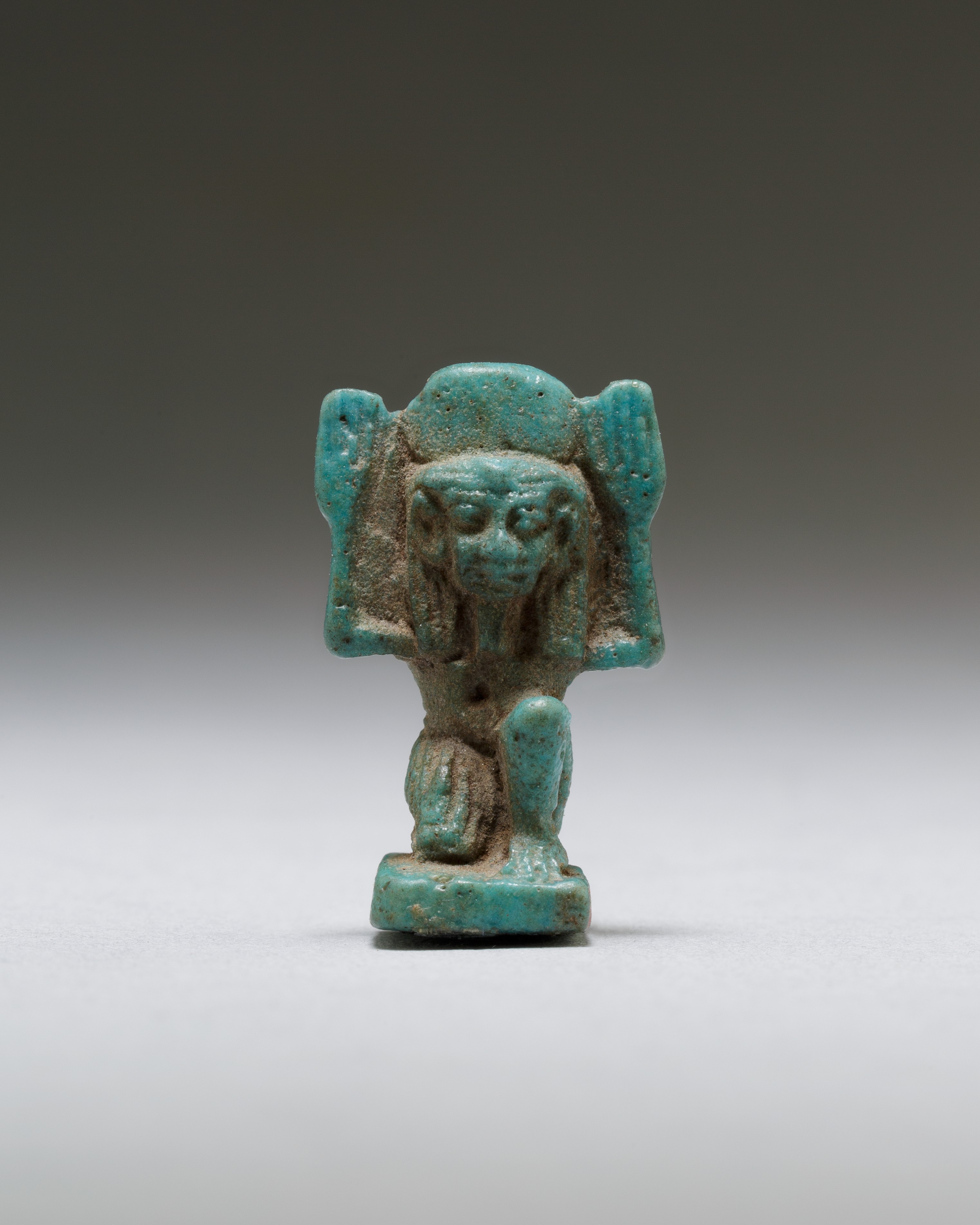
Originating in the New Kingdom of ancient Egypt (c. 1550–1070 BCE) and persisting through the Late Period, the Shu amulet represents one of the civilization's most philosophically sophisticated adornments. It is a direct representation of Shu, the primordial god of air, light, and the space between heaven and earth. His primary mythological role was to separate his children, the sky goddess Nut from the earth god Geb, thereby creating the ordered cosmos (ma'at) from chaos (isfet). The amulet itself typically depicts Shu in human form, kneeling with one arm raised and the other lowered, often holding feathers (symbols of air and truth) or supporting the sky. This iconography is not decorative; it is a diagram of cosmic function. To wear Shu was to wear the principle of separation, breath, life-force, and the very medium that allows light to travel. It was an amulet of existential necessity, believed to grant the bearer clarity, vitality, and protection from suffocation—both literal and metaphysical.
Medium as Message: The Alchemy of Faience
The predominant use of faience—a sintered-quartz ceramic with a vitreous, often turquoise-colored glaze—is critical to understanding its symbolic power. Faience was more than an affordable substitute for precious stone; it was a technological and alchemical achievement. Its bright blue-green hue was consciously associated with life, fertility, and the waters of the Nile. The material’s shimmering surface was seen as inherently magical, capturing and reflecting light in a way that evoked celestial radiance and immortality. The manufacturing process, involving the transformation of common earth into a luminous object through fire, mirrored the Egyptian concepts of regeneration and rebirth. Therefore, the Shu amulet in faience was a triple-layered artifact: its form depicted the god of air, its color represented life-giving water, and its very substance embodied transformative, eternal light. This synthesis of form, color, and material science represents a pinnacle of intentional adornment where medium and message are indivisible.
Deconstructing Symbolic Power for Contemporary Luxury
For Katherine Fashion Lab, the Shu amulet offers a masterclass in embedded narrative, providing a non-literal yet deeply resonant lexicon for a 2026 collection. The strategic translation moves from archaeological artifact to emotional archetype.
From Spiritual Meaning to Modern Ethos
The core spiritual meaning—separation, space, breath, and life-giving light—holds profound contemporary relevance. In a 2026 context characterized by digital saturation, environmental concerns, and a collective search for clarity and wellness, these ancient principles become a powerful brand ethos. "Creating space" can translate to designs that emphasize architectural purity, clean lines, and intelligent negative space. "The breath of life" can inform fluid, unrestrictive silhouettes and textiles that interact with the body’s movement and environment. The amulet’s protective function evolves into a narrative of empowerment and personal boundary-setting—luxury as an armor of self-possession and clarity.
Historical Adornment as Wearable Architecture
The amulet’s function as historical adornment was talismanic, not merely aesthetic. It was worn to effect change in the wearer’s condition and destiny. KFL can elevate this concept by designing pieces that are wearable architecture. Consider structural elements that echo Shu’s kneeling, sky-supporting pose: asymmetric shoulder constructions, pieces that play with tension and support, or jewelry that creates a palpable sense of space around the body. The use of feathers in the original iconography can inspire intricate laser-cut leather, layered organza, or featherlight metallics that capture and play with light and air.
Strategic Integration: A 2026 High-End Luxury Proposal
The launch of a "Shu Collection" for 2026 must be a holistic exercise in world-building, aligning product, narrative, and experience to command a premium position.
Product Strategy & Material Innovation
Move beyond literal reproduction. Develop a proprietary material story inspired by faience. Partner with advanced material labs to create a modern composite—perhaps a biopolymer or reformed mineral composite—with a unique, luminous finish that changes with light and body heat. Color palettes should be rooted in the Egyptian symbolic lexicon: not just turquoise, but the deep blues of the night sky (Nut), earthy terracottas (Geb), and the gold of sunlight. Key pieces could include structured yet fluid outerwear that embodies "separation" (a modern mantle), minimalist jewelry with hidden architectural complexity, and bags featuring clasp mechanisms that reference the amulet's form.
Narrative & Experiential Marketing
The campaign must articulate the philosophy, not just the product. Key messaging should revolve around "The Architecture of Air," "Luxury as a Sacred Space," and "Modern Talismans for Clarity." Collaborations should be with artists known for work with light, space, and breath (e.g., installation artists, avant-garde perfumers creating "air" scents). Launch events should be immersive, sensory experiences emphasizing atmosphere, light quality, and open space, directly invoking the myth of Shu. Client communications should include curated content on the history of adornment, the science of materials, and the philosophy of creating personal space.
Brand Positioning & Value Proposition
This strategy positions Katherine Fashion Lab at the intersection of cultural intelligence, material innovation, and philosophical depth. The value proposition shifts from selling accessories to offering instrumental objects—pieces designed with intentionality to empower the wearer’s mindset and presence. This aligns with the highest echelons of luxury, where value is derived from unique narrative, exceptional craftsmanship, and the ability to embody the customer’s aspirational identity. The Shu amulet provides the authentic, deep-rooted story upon which this elevated positioning can be confidently built.
Conclusion: From Ancient Amulet to Modern Mandate
The Shu amulet, a masterwork of symbolic thought rendered in innovative faience, provides Katherine Fashion Lab with a profound strategic asset. Its narrative of creating order, space, and breath is acutely relevant to the modern condition. By deconstructing its layered meanings—cosmological, material, and protective—KFL can engineer a 2026 luxury strategy that transcends seasonal trends. The goal is to create not a pastiche of antiquity, but a contemporary lineage: transforming the ancient amulet’s function into a modern mandate for luxury that builds personal ma'at (order/balance) for its wearer. This approach secures differentiation, commands premium pricing, and establishes the brand as a thoughtful leader in the future of meaningful adornment.