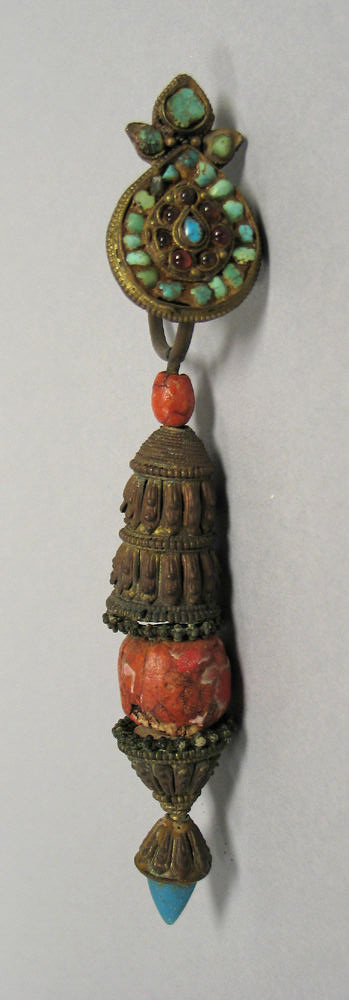
Heritage Analysis: The Eastern Tibetan Gold Earring
Introduction: The Artifact as a Conduit of Power and Identity
The earring from Eastern Tibet, crafted in gold and adorned with precious and semi-precious stones, is far more than a piece of jewelry. Within the context of Katherine Fashion Lab’s strategic standalone research, this artifact represents a sophisticated convergence of symbolic power, historical adornment, and spiritual meaning. For a 2026 high-end luxury strategy, understanding this earring’s cultural DNA is essential. It offers a blueprint for how luxury brands can transcend mere aesthetics to embody authority, protection, and transcendence—qualities that resonate deeply with the contemporary elite seeking authenticity and meaning in their acquisitions.
Symbolic Power: The Language of Metal and Gemstone
In Eastern Tibetan culture, gold is not merely a precious metal; it is a materialization of solar energy, immortality, and divine kingship. The earring’s gold base signifies an unbroken lineage of power, often associated with the region’s historical chieftains and religious leaders. The selection of stones—likely including turquoise, coral, and lapis lazuli—is deliberate. Turquoise, revered as a “sky stone,” bridges the earthly and celestial realms, offering protection to the wearer. Coral, often imported from the Mediterranean via ancient trade routes, symbolizes life force and blood energy, while lapis lazuli evokes wisdom and spiritual vision.
For the modern luxury consumer, this symbolic architecture translates into a product that communicates status without ostentation. The earring’s power lies in its ability to signal the wearer’s connection to ancestral wisdom and cosmic order—a subtle yet profound assertion of identity in a market saturated with transient trends. In 2026, Katherine Fashion Lab can leverage this by positioning the earring as a “talisman of authority,” appealing to clients who value heritage as a form of cultural capital.
Historical Adornment: The Earring as a Marker of Social and Spiritual Hierarchy
Historically, earrings in Eastern Tibet served dual functions: as markers of social rank and as spiritual tools. The size, weight, and material composition of an earring directly correlated with the wearer’s status. Nobility and high-ranking lamas wore large, elaborate earrings crafted from the finest gold and rarest stones, while commoners used simpler alloys. This hierarchy was not arbitrary; it was a visual language that reinforced the social order and the interconnectedness of secular and religious power.
The earring’s placement on the ear—a site of both hearing and balance—holds symbolic resonance. In Tibetan Buddhism, the ear is a gateway to knowledge and enlightenment. Adorning it with gold and stones was believed to enhance the wearer’s ability to receive and transmit sacred teachings. This historical context offers Katherine Fashion Lab a narrative of “adorned wisdom,” a concept that aligns with the 2026 luxury trend toward intellectualism and mindfulness. By framing the earring as a tool for personal and spiritual growth, the brand can attract clients who see luxury as an extension of their inner journey.
Spiritual Meaning: The Earring as a Protective and Transformative Object
Beyond social status, the earring held profound spiritual significance. In Eastern Tibetan traditions, jewelry was often consecrated by lamas, imbuing it with protective mantras and blessings. The earring thus functioned as a portable shrine, a constant source of spiritual energy that shielded the wearer from harm and negative influences. The specific arrangement of stones—often set in geometric patterns—mirrored mandalas, representing the universe’s order and the path to enlightenment.
This spiritual dimension is particularly relevant for the 2026 luxury market, where consumers increasingly seek objects that offer solace and meaning in a chaotic world. The earring’s protective qualities can be reinterpreted as a “sanctuary accessory,” appealing to high-net-worth individuals who prioritize mental well-being alongside material wealth. Katherine Fashion Lab can enhance this by incorporating subtle, modernized references to Tibetan geomantic principles in the design, such as using stone arrangements that align with feng shui or Vastu shastra, thereby creating a product that is both aesthetically exquisite and energetically potent.
2026 High-End Luxury Strategy: From Artifact to Brand Icon
Integrating the Eastern Tibetan earring into a 2026 luxury strategy requires a nuanced approach that respects its origins while adapting to contemporary tastes. The following strategic pillars are recommended:
1. Heritage as a Differentiator: In an era of globalized luxury, authenticity is the ultimate currency. Katherine Fashion Lab should position the earring as a “living artifact,” each piece accompanied by a provenance certificate detailing the origin of its gold and stones, as well as the cultural significance of its design. This transparency builds trust and justifies a premium price point.
2. Limited Edition and Customization: To maintain exclusivity, the earring should be produced in limited editions, with each piece incorporating stones sourced from specific, ethically mined regions of Tibet or the Himalayas. Offering clients the option to choose stones based on their personal spiritual needs (e.g., turquoise for protection, coral for vitality) adds a bespoke layer that aligns with the 2026 trend toward personalized luxury.
3. Narrative-Driven Marketing: The marketing campaign should focus on the earring’s story rather than its material value. Short films or immersive digital experiences can transport clients to the Tibetan plateau, showcasing the rituals and craftsmanship behind each piece. This narrative approach appeals to the “conscious consumer” who values experience and education over mere possession.
4. Collaborative Co-Creation: Partnering with contemporary Tibetan artists or spiritual leaders can lend credibility and depth to the collection. Such collaborations can result in limited-edition pieces that blend traditional symbolism with modern design language, creating a bridge between past and future.
5. Sustainability and Ethical Sourcing: Given the environmental and ethical concerns surrounding gemstone mining, Katherine Fashion Lab must commit to traceable, conflict-free sourcing. This not only aligns with global luxury standards but also honors the Tibetan reverence for the earth as a sacred entity. A portion of proceeds can be directed toward preserving Tibetan cultural heritage, further embedding the brand in a narrative of reciprocity and respect.
Conclusion: The Earring as a Strategic Asset
The Eastern Tibetan gold earring, when analyzed through the lenses of symbolic power, historical adornment, and spiritual meaning, reveals itself as a strategic asset for Katherine Fashion Lab’s 2026 high-end luxury strategy. It is not merely a product but a repository of cultural memory and spiritual intention—a rarity in the modern luxury landscape. By honoring its origins and reinterpreting its essence for contemporary clients, Katherine Fashion Lab can create a line that stands as a testament to the enduring power of heritage. In doing so, the brand will not only capture market share but also contribute to the preservation and appreciation of one of the world’s most profound adornment traditions.