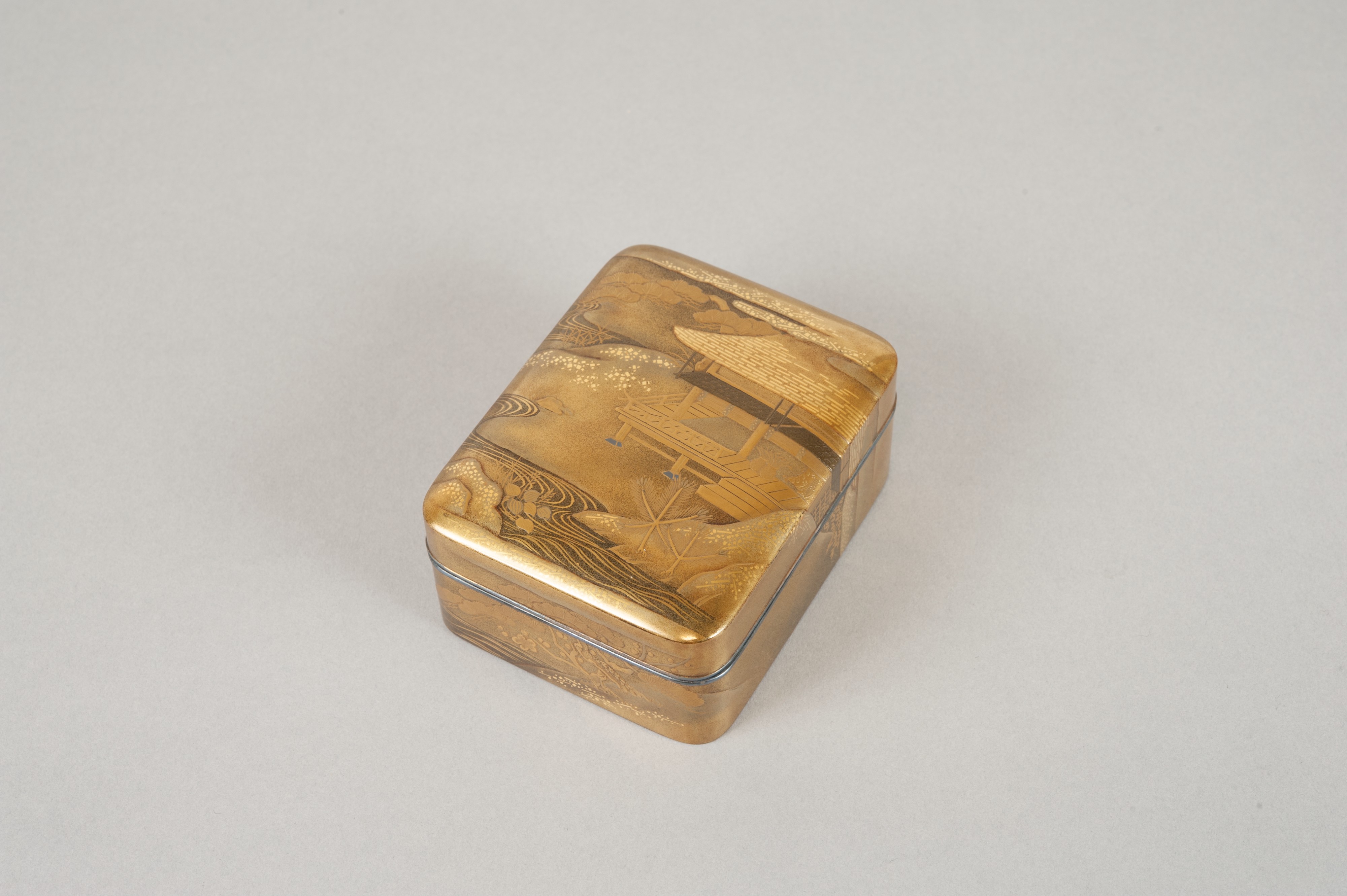
Heritage Analysis: The Japanese Incense Container as a Strategic Luxury Archetype
In the realm of high-end luxury, the most potent artifacts are those that transcend mere utility to become vessels of symbolic power. The Japanese incense container—crafted from lacquer on wood and adorned with sprinkled gold powder (maki-e)—represents a pinnacle of this principle. For Katherine Fashion Lab, this object offers a profound strategic blueprint for the 2026 luxury landscape. This analysis deconstructs the incense container’s heritage, focusing on its symbolic power, historical adornment, and spiritual meaning, before translating these elements into a forward-looking luxury strategy.
Symbolic Power: The Container as a Microcosm of Status and Transience
The incense container, known as kōgō in Japanese, is far more than a storage vessel. Its symbolic power derives from its role in the intricate Japanese tea ceremony (chanoyu) and incense appreciation (kōdō). Within these ritualized contexts, the container holds not just aromatic wood or resin, but the very essence of impermanence—a core tenet of Zen Buddhism. The act of opening the container, releasing a fleeting fragrance, and then closing it again mirrors the cycle of life, death, and rebirth. This imbues the object with a quiet, profound authority.
Historically, the kōgō was a marker of elite status. During the Muromachi (1336–1573) and Edo (1603–1868) periods, the selection, commissioning, and gifting of incense containers were acts of political and social negotiation. A daimyo (feudal lord) might present a maki-e container to a shogun as a token of allegiance, with the gold dust symbolizing both wealth and the eternal, unchanging nature of the giver’s loyalty. The container’s symbolic power thus lies in its duality: it is both an intimate, personal object and a public declaration of rank, taste, and spiritual awareness.
For Katherine Fashion Lab, this suggests that luxury in 2026 must reclaim the concept of the ritual object. A high-end item should not merely be seen but experienced through a series of deliberate, meaningful interactions. The symbolic power of the kōgō teaches that true luxury resides in the pause—the moment of anticipation before the fragrance is released. Strategic application: design products that require a ritual of engagement, where the user’s status is affirmed not by display, but by the depth of their participation.
Historical Adornment: The Art of Maki-e and the Economics of Patina
The medium of the incense container—lacquer on wood with sprinkled gold powder—is a testament to the Japanese mastery of adornment as a form of storytelling. Maki-e (literally “sprinkled picture”) is a labor-intensive technique where fine gold or silver powder is dusted onto wet lacquer to create intricate, often narrative, designs. This process requires immense patience: a single container might take months to complete, with each layer of lacquer requiring days to cure. The resulting surface is not flat but possesses a subtle, three-dimensional texture that catches light differently from every angle.
Historical adornment in this context is not about gilding for ostentation. Instead, it is about depth through layering. The gold is not applied as a thick sheet but as a whisper, allowing the dark, almost black lacquer beneath to show through. This creates a tension between light and shadow, opulence and restraint. Over centuries, the container develops a patina—a soft, warm glow from handling—that enhances its value. This is the opposite of modern disposability; it is an object designed to age gracefully, accumulating history with each use.
For a 2026 high-end luxury strategy, this principle of slow adornment is critical. The contemporary market is saturated with fast-fashion and rapid product cycles. Katherine Fashion Lab can differentiate by championing maki-e-inspired craftsmanship that celebrates imperfection (wabi-sabi) and the beauty of time. Strategic recommendation: launch a limited-edition collection where each piece is hand-finished using a proprietary “Katherine Gold Dust” technique, with visible brushstrokes and subtle irregularities that authenticate its handmade origin. The narrative should emphasize that the item becomes more valuable as it ages, countering the industry’s obsession with the new.
Spiritual Meaning: The Container as a Bridge to the Invisible
At its core, the incense container is a spiritual object. In Shinto and Buddhist traditions, incense purifies the space, elevates the mind, and facilitates communication with the divine. The container, therefore, is not a mere accessory but a sacred vessel. Its design often incorporates motifs from nature—cherry blossoms, pine branches, cranes—each carrying specific auspicious meanings. The cherry blossom (sakura) reminds the user of life’s brevity; the pine (matsu) symbolizes longevity and resilience. The gold powder, in this context, is not just decoration but a representation of the sun, of enlightenment, of the pure, incorruptible spirit.
The spiritual meaning is intimately tied to the concept of kū (emptiness) and mu (nothingness). The container’s interior is empty, yet that emptiness is the source of its purpose. It holds potential, not possession. This philosophical grounding elevates the object from a commodity to a talisman. For the user, handling the kōgō becomes a meditative act, a moment of grounding in a chaotic world.
For Katherine Fashion Lab, this spiritual dimension offers a powerful counter-narrative to the materialism of modern luxury. In 2026, consumers—especially Gen Z and Millennials—are increasingly seeking meaning over stuff. The incense container suggests that a luxury item can function as a personal sanctuary. Strategic application: develop a “Ritual Objects” line that includes not just incense containers but also scent diffusers, meditation pillows, and journal sets, all designed with the same lacquer-and-gold aesthetic. Each item should be accompanied by a booklet explaining its symbolic meaning and a suggested ritual for use. This transforms the purchase from a transaction into an initiation into a philosophy.
2026 High-End Luxury Strategy: The Katherine Fashion Lab Synthesis
Integrating the insights from the Japanese incense container, a cohesive 2026 strategy for Katherine Fashion Lab emerges. The brand must position itself as an arbiter of slow luxury, ritual engagement, and spiritual depth. The following strategic pillars are recommended:
Pillar 1: The Ritual Product Architecture
Design all high-end offerings to require a sequence of deliberate actions. For example, a handbag might feature a hidden compartment that requires a specific gesture to open, releasing a subtle, branded scent. The unboxing experience should be multi-layered, with each layer revealing a new symbolic motif (e.g., a gold-dusted card explaining the meaning of the pattern). This creates a sense of discovery and personal connection, mirroring the kōgō’s unveiling of fragrance.
Pillar 2: The Imperfection Premium
Embrace wabi-sabi as a core aesthetic and pricing strategy. Items with visible handcrafting marks, asymmetrical designs, or intentional “flaws” should be positioned as the highest-value pieces. The marketing narrative should celebrate the artisan’s hand, not the machine’s precision. This appeals to the discerning collector who values authenticity over perfection. Pricing should reflect the time investment (e.g., a “100-hour” collection with documented craftsmanship hours).
Pillar 3: The Spiritual Ecosystem
Expand beyond fashion into lifestyle and wellness. Launch a “Katherine Ritual” line that includes incense containers, aromatic oils, and ceremonial tools, all using the lacquer-and-gold technique. Host exclusive, invitation-only “Scent and Soul” workshops in flagship stores, where clients learn the history of kōdō and create their own personalized scent blends. This builds a community around the brand’s spiritual ethos, fostering loyalty and repeat engagement.
Pillar 4: Patina as a Value Metric
Introduce a “Patina Program” where clients can return their items for re-lacquering or gold-dust touch-ups, with the cost increasing as the piece ages. Alternatively, offer a trade-in system where older pieces are accepted at a premium toward new purchases, with the old pieces resold as “vintage patina” editions. This creates a secondary market and reinforces the idea that the item’s value appreciates over time, not depreciates.
Conclusion: The Container as a Compass
The Japanese incense container, with its lacquered surface and sprinkled gold, is not a relic of the past but a compass for the future of luxury. It teaches that symbolic power arises from ritual, historical adornment from patience, and spiritual meaning from emptiness. For Katherine Fashion Lab, the path to 2026 leadership lies not in faster production or louder branding, but in the quiet authority of an object that demands to be understood. By embodying the principles of the kōgō, the brand can offer a luxury that is not just owned, but lived.