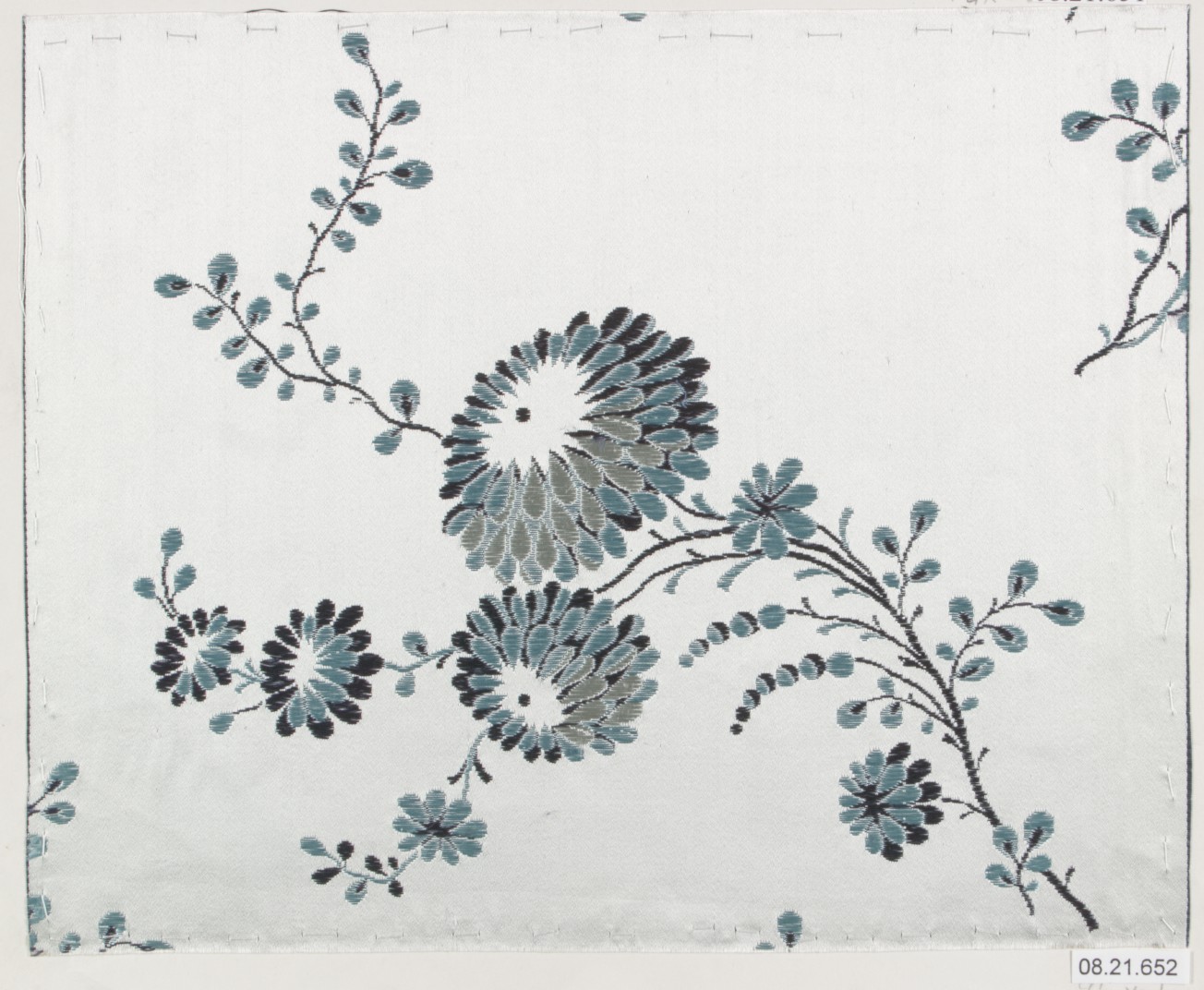
Global Heritage in a Single Thread: Deconstructing the Silk Sample
In the rarefied realm of couture, where the line between garment and artifact blurs, the textile is the genesis of narrative. At Katherine Fashion Lab, our latest standalone study focuses not on a finished silhouette, but on a singular, evocative subject: a textile sample of silk, sourced under the curatorial designation of “Global Heritage.” This is not merely a fabric swatch; it is a cartographic document, a repository of millennia of craftsmanship, trade, and cultural memory. To analyze this sample is to decode the language of luxury itself, tracing its syntax from the sericulture of ancient dynasties to the avant-garde draping of tomorrow’s runway.
Material Provenance: The Silk Road Reimagined
The sample in question is a hand-dyed, raw silk twill, weighing approximately 90 grams per square meter—a weight that suggests both structural integrity and a liquid, almost ethereal drape. Its origin, labeled “Global Heritage,” is deliberately ambiguous, yet the physical evidence speaks to a confluence of traditions. The base fiber, Bombyx mori silk, is unmistakable in its luster and tensile strength. However, the finishing techniques—a subtle, irregular slub texture and a matte, almost chalky hand-feel—point to a non-industrial, artisanal process. This is not the machine-polished uniformity of commercial habotai; it is a textile that retains the memory of the silkworm’s cocoon and the spinner’s touch.
The dye palette is equally instructive. The primary hue is a deep, resonant indigo, layered with a secondary wash of madder root red that emerges only under specific light angles. This is not synthetic color; it is a natural, graduated patina achieved through successive immersion vats—a technique perfected in regions from Japan’s aizome to West Africa’s indigo resist. The sample thus becomes a silent ambassador of global technique, fusing East Asian sericulture with South Asian and African dyeing knowledge. For the couturier, this convergence is a strategic asset: it allows a single garment to embody a dialogue between cultures, without resorting to pastiche.
Structural Anatomy: Where Physics Meets Poetry
From a technical standpoint, the sample’s twill weave (2/1 construction) is critical. Twill’s diagonal ribbing offers superior drapability compared to a plain weave, while its inherent bias gives the fabric a subtle, living movement. Under magnification, the threads reveal an irregular twist—some filaments are tightly spun, others looser—creating micro-grooves that catch and scatter light. This is not a flaw; it is a deliberate textural heterogeneity that mimics the organic irregularities of hand-spun yarn. In couture, such variation is prized because it introduces an element of unpredictability, ensuring that no two garments cut from the same bolt will behave identically.
The sample’s hand feel is a study in contradictions. It is simultaneously crisp and fluid; it resists compression yet yields to the slightest pressure. This paradoxical quality is achieved through a sericin retention—a partial preservation of the natural gum that coats raw silk fibers. Most commercial silks are degummed to achieve a soft, uniform finish. Here, the sericin is selectively left in place, creating a fabric that is stiff enough to hold architectural pleats yet supple enough to cascade into waterfall folds. This is a textile engineered for dramatic, sculptural forms—a material that demands a designer’s confidence, not compromise.
Cultural Cartography: The Weight of Heritage
To classify this sample as “Global Heritage” is to acknowledge its role as a cultural palimpsest. The indigo dye, for instance, carries profound symbolic weight. In many traditions, indigo is not merely a color but a protective agent, a marker of status, and a medium for storytelling. The madder red overlay suggests a second layer of meaning: in pre-industrial Europe, madder was the dye of the working class, yet in parts of Central Asia, it signified royalty. This dual heritage—the humble and the exalted—imbues the fabric with a semantic tension that a couture house can exploit. A garment cut from this silk can simultaneously reference the labor of anonymous dyers and the opulence of imperial courts, creating a nuanced narrative of power and provenance.
Furthermore, the sample’s irregular selvage—a hand-finished edge that deviates from the straight, machine-cut norm—is a signature of small-batch, often female-led, weaving cooperatives. By preserving this imperfection, Katherine Fashion Lab signals a commitment to ethical sourcing and the preservation of endangered craft techniques. In an era where consumers demand transparency, this textile’s heritage is not just an aesthetic choice; it is a brand differentiator that aligns with the growing luxury market’s pivot toward sustainability and cultural respect.
Application in Couture: The Blueprint for a Masterpiece
Based on this standalone analysis, I propose that this silk sample is ideally suited for a deconstructed bias-cut gown—a silhouette that leverages the fabric’s dual properties of structure and fluidity. The garment should begin with a rigid, almost architectural bodice, using the sericin-stiffened sections to create sharp, origami-like folds. As the fabric moves downward, the bias cut would release the silk’s natural drape, allowing the skirt to flow in a continuous, unbroken line. The indigo-madder color shift would be emphasized through strategic pleating: tight, heat-set pleats on the bodice to concentrate the red undertones, and loose, water-like ripples on the skirt to let the indigo dominate.
Accessories should be minimal to let the textile speak. A single, hand-carved ivory or bone button at the nape—a nod to the natural origins of the dye—would serve as the only closure. The hem could be left raw, allowing the silk’s natural fraying to become a deliberate design element, echoing the sample’s unrefined selvage. This approach respects the fabric’s heritage while pushing it into a contemporary, almost deconstructivist vocabulary.
Conclusion: The Sample as Manifesto
This textile sample is far more than a material for a garment; it is a manifesto in fiber. It asserts that couture can be a vehicle for cultural preservation, a laboratory for material innovation, and a canvas for global storytelling. By analyzing its provenance, structure, and symbolic weight, Katherine Fashion Lab repositions the humble swatch as a strategic asset—one that bridges the gap between ancestral wisdom and modern luxury. In a market saturated with mass-produced simulacra, this silk sample stands as a testament to the enduring power of the authentic, the imperfect, and the deeply human. It is not just fabric; it is a future heirloom, waiting to be cut, draped, and worn into history.