Executive Summary: The Preaching Buddha as a Strategic Heritage Asset
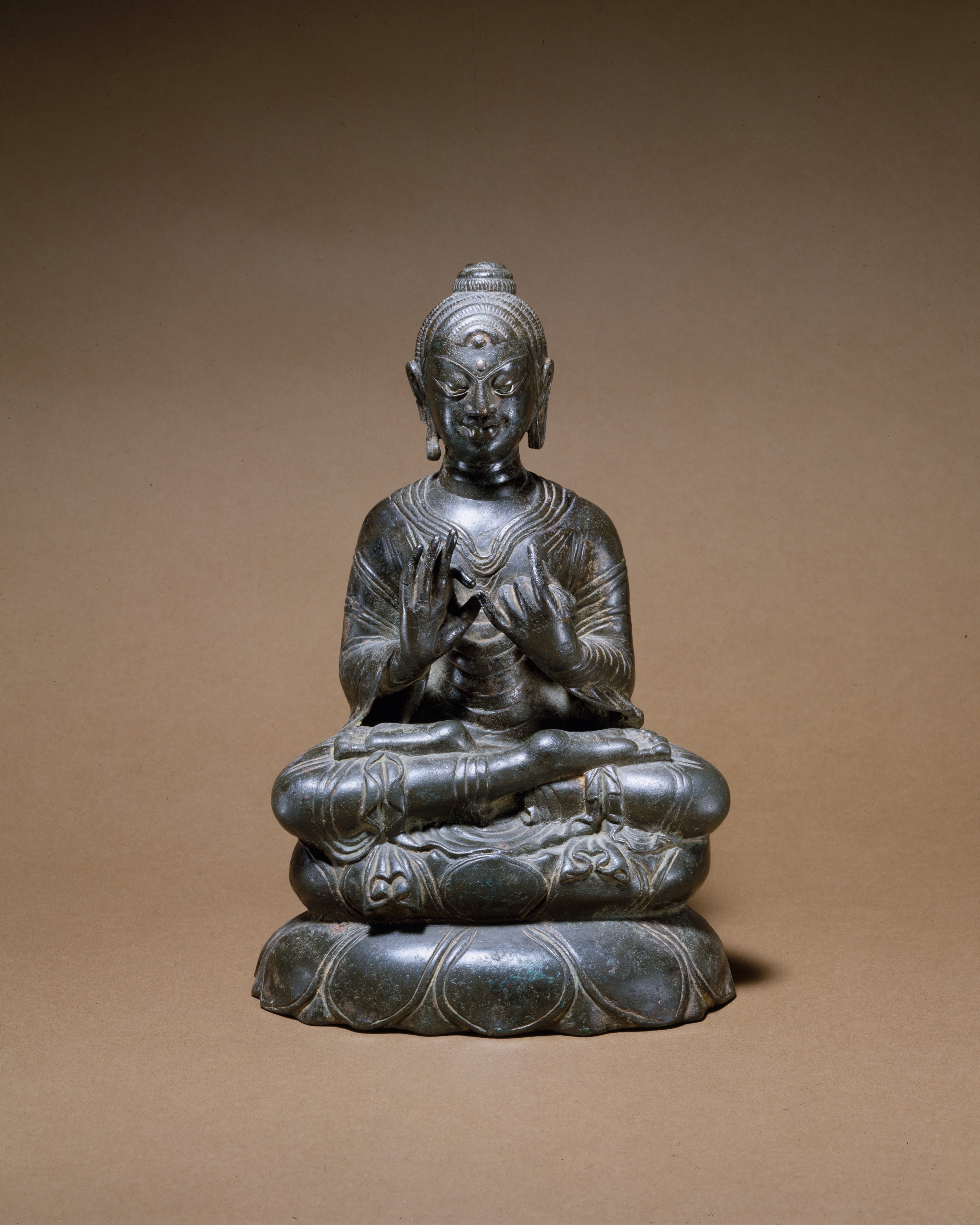
This strategic standalone research paper analyzes a specific artifact—a Preaching Buddha sculpture from the ancient kingdom of Kashmir (circa 7th-8th century CE, bronze with silver inlay)—to decode its multidimensional symbolic power. For Katherine Fashion Lab, this object is not merely an antiquarian reference but a foundational cipher for a 2026 high-end luxury strategy. The analysis excavates four core pillars: the transcendent symbolism of the Dharmachakrapravartana Mudra (teaching gesture), the sophisticated material language of historical adornment, the deep spiritual narrative of enlightenment, and the actionable translation of these elements into a contemporary luxury paradigm. This synthesis positions KFL to architect collections that move beyond aesthetic homage to embody a philosophy, creating resonant, high-value brand narratives in an increasingly meaning-driven market.
I. Decoding the Symbolic Power: The Gesture as Foundational Code
The Preaching Buddha, specifically depicting the moment of the first sermon in Sarnath, is governed by the Dharmachakrapravartana Mudra. This is not a passive pose but a dynamic, architectonic gesture of cosmic communication. The hands are positioned before the chest, the right palm facing outward, fingers forming a circle, often touching the fingertips of the left hand. This iconography represents the "turning of the Wheel of Dharma"—the initiation of spiritual law and order. For a luxury strategy, this is a masterclass in non-verbal communication and symbolic density. The gesture is a self-contained system of meaning: it speaks of initiation, transmission, and the establishment of a timeless code.
Strategic Brand Translation
Katherine Fashion Lab can internalize this principle by treating core design elements—a specific fold, a signature closure, the drape of a fabric—as modern mudras. These become recognizable, non-verbal brand signatures that carry inherent meaning, "turning the wheel" of the KFL philosophy. Each collection can be framed as a "sermon" or discourse on a specific theme (e.g., silence, resilience, clarity), with the garments acting as the medium for transmitting that idea, much like the Buddha’s gesture transmits Dharma. This elevates product from seasonal commodity to chapter in an ongoing philosophical narrative.
II. The Language of Historical Adornment: Material Alchemy and Status
The chosen medium—bronze with silver inlay—is a critical data point in understanding historical luxury codes. Kashmir was a nexus of trade and artistic innovation, renowned for its metalwork. The use of bronze, an alloy, signifies both earthly substance and artistic alchemy. The strategic application of silver inlay (likely in the eyes, urna, and hemlines of the robe) is a deliberate act of illumination. It draws the viewer’s gaze to the points of spiritual and intellectual awakening: the eyes that see truth, the dot of wisdom, the defined form of the monastic robe. This is adornment not for embellishment, but for emphasis and sacred hierarchy.
Strategic Brand Translation
This approach directly informs a 2026 luxury materials strategy. It advocates for the "inlay principle": the intelligent, sparing use of a exalted material (e.g., reclaimed silver threads, ethically sourced precious stones, innovative luminous textiles) to highlight pivotal structural points of a garment—a seam, a cuff, a neckline. It champions the beauty of patinated, textured base materials (like bronze) reinterpreted through organic, deeply textured fabrics (raw silks, hand-loomed wools, vegetable-tanned leathers) that gain character with time. The contrast between base and highlight becomes a narrative of discernment and intentionality, mirroring the artifact’s sacred material grammar.
III. Spiritual Meaning and the Luxury of Inner Space
The Preaching Buddha’s ultimate "product" is not the sculpture itself, but the transformative knowledge it offers: the path to enlightenment. The figure’s serene composure, inward gaze, and balanced posture embody a state of perfect self-possession and realized potential. In a contemporary context saturated with noise and excess, this represents the ultimate luxury: clarity, peace, and self-mastery. The artifact is an object that points beyond itself to an interior state, making it a powerful vessel for aspiration.
Strategic Brand Translation
Katherine Fashion Lab’s 2026 strategy can pivot from selling external validation to facilitating internal grace. The brand narrative should frame garments as "tools for being," not just for appearing. This involves:
Design for Composure: Architecting silhouettes that provide ease, dignity, and a sense of centeredness—weighted hems, ergonomic cutting, monastic minimalism that allows the wearer’s presence to dominate.
The Ritual of Craft: Emphasizing the meditative, time-intensive processes behind each piece (hand-stitching, natural dyeing), connecting the product to a philosophy of mindful creation.
Narrative of Transformation: Aligning the brand with modern pathways to "enlightenment"—silent retreats, patronage of contemplative arts, dialogues on mindful consumption—positioning KFL as the uniform for a conscious, purposeful life.
IV. Synthesis: The 2026 High-End Luxury Strategy Blueprint
Integrating these insights, Katherine Fashion Lab’s strategic positioning for 2026 can be crystallized as "Archetypal Modernism: Wearable Philosophy from an Ancient Code."
Collection Architecture
Launch a cornerstone "Mudra" line, featuring iconic, gesture-inspired pieces built on the principles of symbolic detail and material alchemy. This is supported by seasonal "Discourse" collections that explore specific thematic interpretations of the core philosophy (e.g., a collection on "The Luxury of Silence" using sound-absorbing textures and muted, inlay-like highlights).
Product Ecosystem & Experience
Extend beyond apparel into objects for cultivated living: bronze-and-silver incense holders, meditation cushions in proprietary textiles, limited artist collaborations on small bronze sculptures. Client experiences should mirror the journey to Sarnath: intimate, immersive salons featuring philosophical discussions, private viewings of Himalayan art, and customization ceremonies where clients select the "inlay" points on their garment.
Brand Communication
Visual campaigns should evoke the serene power and focused illumination of the artifact. Copywriting should employ the lexicon of philosophy, archeology, and metaphysics—"excavating form," "the inlay of intention," "turning the wheel of style." The brand voice becomes that of a curator and translator, not a trend announcer.
Conclusion: From Artifact to Armature
The Preaching Buddha from Kashmir is a complete strategic document cast in bronze. Its symbolic gesture provides a framework for brand identity, its material treatment informs a luxury materials doctrine, its spiritual core addresses the contemporary hunger for meaning, and its serene authority offers an aspirational emotional register. For Katherine Fashion Lab, a deep, non-appropriative engagement with this heritage allows for the creation of a luxury proposition that is intellectually rigorous, emotionally profound, and culturally elevated. By treating this artifact as the armature for its 2026 strategy, KFL can build collections that are not merely worn but understood, fostering a loyal community that invests in the brand’s philosophy as much as in its products. This is the path to achieving not just market presence, but legacy.