Deconstructing the Sacred: A Couture Analysis of the Buddhist Kesa from a Noh Karaori
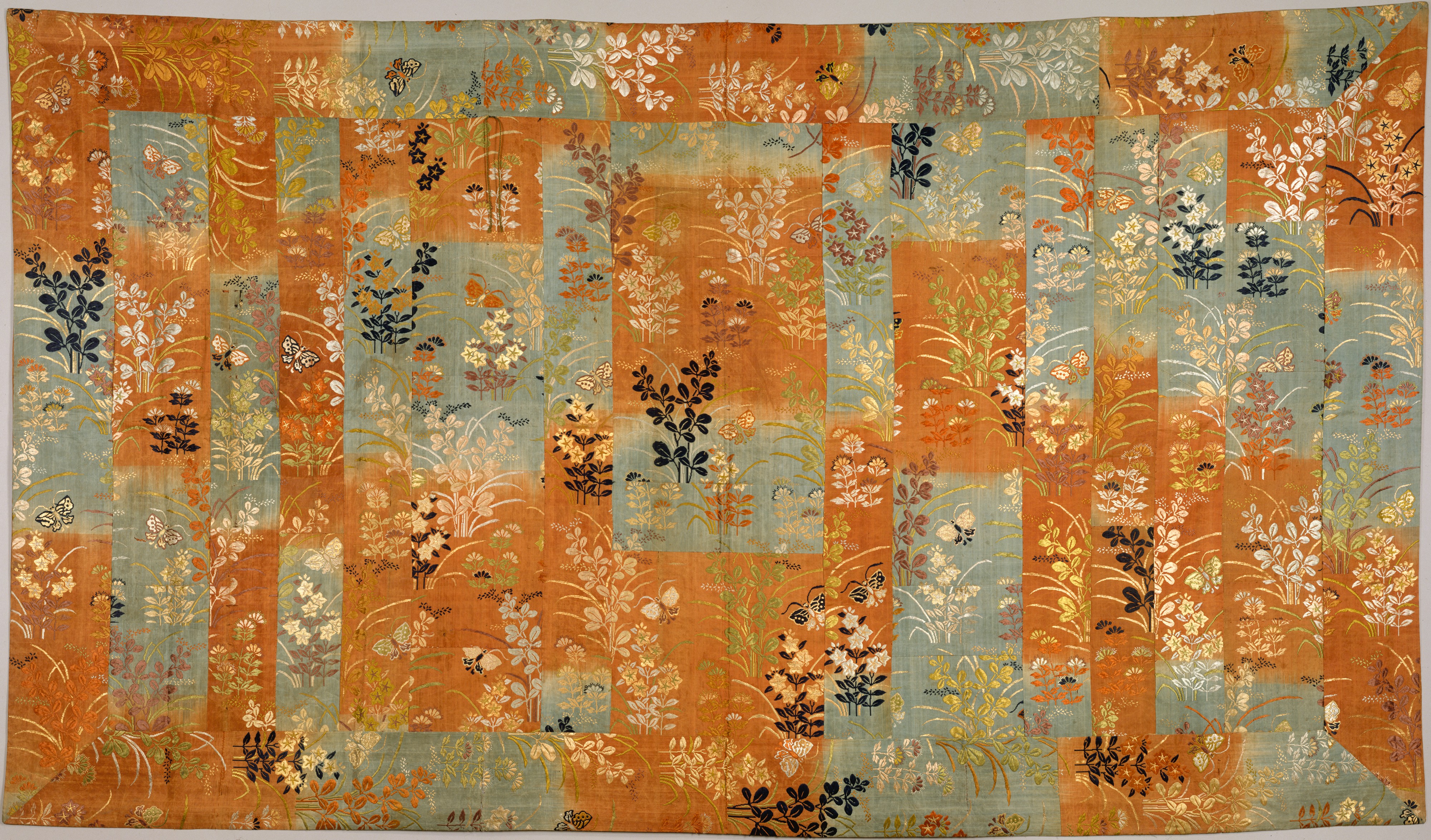
In the rarefied intersection of liturgical vestment and theatrical costume lies a singular artifact: a Buddhist kesa (monastic robe) meticulously reassembled from a Noh karaori (a type of Noh costume) depicting autumn grasses and butterflies. This object, originating from Japan and crafted from twill-weave silk brocaded with silk and metallic thread, transcends mere garment to become a profound text of material culture. For Katherine Fashion Lab, this piece is not simply a historical curiosity; it is a masterclass in the alchemy of transformation, where the profane stage of Noh theater is sublimated into the sacred domain of Buddhist practice. The analysis that follows deconstructs the garment’s materiality, iconography, and structural logic to reveal its enduring relevance for contemporary couture.
Materiality as Metaphor: Twill, Brocade, and the Golden Thread
The foundation of this kesa is a twill-weave silk, a structure that itself speaks to a philosophy of resilience and depth. Twill’s characteristic diagonal ribbing, created by offsetting the weft threads over multiple warp ends, imparts a subtle, directional sheen. This is not the flat, static surface of a plain weave; it is a fabric that moves with light, suggesting the impermanence (mujo) central to Buddhist thought. The diagonal lines, when viewed at different angles, create an optical shimmer that mimics the fleeting nature of autumn light—a perfect prelude to the iconographic program of grasses and butterflies.
The brocading technique elevates the garment from functional textile to narrative tapestry. Here, supplementary wefts of silk and metallic thread are introduced selectively, creating raised, textured motifs that stand in relief against the twill ground. The metallic thread, likely a core of silk wrapped in gilded paper or flattened gold leaf (makkin), catches ambient light with a brilliance that is both opulent and austere. In the context of a Noh costume, this metallic shimmer would have signified the supernatural or aristocratic status of a character. In the kesa, however, the same metallic thread is repurposed to evoke the dharmakaya—the formless, radiant body of the Buddha. The gold is not decoration; it is a visual metaphor for enlightenment, a thread of transcendent truth woven through the fabric of the mundane.
The choice of silk itself is deeply symbolic. Silk, produced by the silkworm’s transformative process from larva to cocoon to thread, is a natural emblem of rebirth and cyclical existence (samsara). A kesa made from silk—especially one repurposed from a theatrical garment—embodies the Buddhist ideal of using the material world as a vehicle for spiritual awakening. The twill weave’s durability further underscores the garment’s intended longevity, meant to withstand the rigors of monastic life while remaining a vessel for meditation.
Iconographic Resonance: Autumn Grasses and Butterflies
The decorative program of this kesa—autumn grasses (susuki, hagi, kuzu) and butterflies (kocho)—is drawn directly from the Noh repertoire, yet its reinterpretation within a Buddhist context adds layers of meaning. In Noh theater, autumn grasses are often associated with mono no aware, the poignant awareness of transience. They evoke the melancholy beauty of decay, the fading of summer into the inevitable stillness of winter. Butterflies, meanwhile, are agents of transformation, flitting between the worlds of the living and the dead, the real and the illusory.
Within the kesa, these motifs undergo a semantic shift. The autumn grasses, with their slender, bending stalks, become visual analogues for the practitioner’s mind—flexible, resilient, and responsive to the winds of karma. The butterflies, no longer mere theatrical props, symbolize the liberation of consciousness from the cocoon of ego. Their erratic flight patterns, captured in brocaded thread, mirror the unpredictable path of spiritual awakening, where insight can alight suddenly and just as quickly vanish.
The arrangement of these motifs across the kesa’s panels is not random. The butterflies are often positioned near the lower hem, as if rising from the grasses, suggesting an ascension from the material to the spiritual. The gold metallic thread used for their wings creates a visual staccato, catching light in bursts that mimic the insect’s erratic motion. This is not a static tableau; it is a dynamic, living composition that changes with the wearer’s movement and the ambient light, reinforcing the Buddhist teaching that all phenomena are impermanent and interdependent.
Structural Logic: The Patchwork of Devotion
The kesa’s construction—a patchwork of rectangular panels sewn together—is its most distinctive structural feature. This is not a single piece of fabric but a composition of fragments, each panel originally part of a larger Noh costume. The seams, often reinforced with a contrasting thread, are not hidden; they are celebrated as markers of the garment’s history and the monk’s humility. In Buddhist tradition, the kesa is said to be modeled after the robe of the historical Buddha, who wore a patchwork of discarded cloth. This kesa, however, takes that concept a step further: the “discarded cloth” is itself a precious artifact, a Noh costume that once adorned a performer.
The act of deconstructing a karaori and reassembling it into a kesa is a profound statement of renunciation and recontextualization. The Noh costume, with its associations of worldly fame, illusion, and aesthetic pleasure, is literally cut apart and re-sewn into a garment of spiritual discipline. The seams become sutures of transformation, binding the theatrical to the liturgical. The resulting kesa is neither fully Noh nor fully monastic; it is a hybrid object that occupies a liminal space, a testament to the fluidity of meaning in material culture.
The garment’s dimensions are also significant. Unlike a Western vestment, the kesa is not tailored to the body but is draped, wrapped, and secured with a cord. This lack of fitted structure forces the wearer into a relationship of negotiation with the garment, requiring constant adjustment and awareness. The metallic brocade, while beautiful, adds weight and stiffness, making the kesa a physical burden that mirrors the spiritual burden of monastic discipline. The autumn grasses and butterflies, once playful motifs on a stage costume, now become objects of contemplation, their beauty a reminder of the emptiness (shunyata) that underlies all form.
Implications for Contemporary Couture
For Katherine Fashion Lab, this kesa offers several critical lessons. First, it demonstrates that sustainability is not a modern invention. The repurposing of a Noh costume into a monastic vestment is an act of radical upcycling, where the original object’s value is not diminished but elevated through transformation. Second, the kesa challenges the Western obsession with the “original” garment. Here, the garment’s history is layered and palimpsestic; its meaning is not fixed but accreted over time. Third, the kesa’s use of material and motif as carriers of spiritual meaning offers a model for how contemporary designers can imbue their work with depth beyond the visual.
In an era of fast fashion and disposable luxury, the Buddhist kesa made from a Noh karaori stands as a counterpoint: a garment that is slow, sacred, and deeply considered. It is a reminder that the most profound couture is not about novelty but about transformation—of materials, of meaning, and of the wearer. The autumn grasses and butterflies, once woven for a theatrical moment, now flutter eternally across the robe of a monk, a silent sermon on the beauty of impermanence and the possibility of rebirth.