Deconstructing the Corner: Bobbin Lace as a Global Heritage Statement
In the rarefied world of haute couture, the corner piece occupies a paradoxical space: it is both a structural necessity and a canvas for radical artistic expression. At Katherine Fashion Lab, the standalone study of a corner piece crafted from bobbin lace transcends mere garment construction. It becomes a meditation on global heritage, a dialogue between the hand and the machine, and a redefinition of what constitutes luxury in the 21st century. This analysis unpacks the technical, cultural, and conceptual layers of this singular artifact, revealing how a single corner—whether of a shawl, a collar, or a geometric panel—can encapsulate centuries of craftsmanship and a forward-looking design philosophy.
The Materiality of Bobbin Lace: A Global Tapestry
Bobbin lace, at its core, is a textile of patience and precision. Originating in 16th-century Europe—with Flemish, Italian, and French traditions each contributing distinct patterns and techniques—it has since been adopted and adapted across continents. In Latin America, for instance, the encaje de bolillos of Mexico and the renda de bilros of Brazil carry indigenous motifs fused with colonial influences. In Asia, lace-making communities in India and the Philippines have reinterpreted European designs through local silk and cotton fibers. Katherine Fashion Lab’s choice of bobbin lace for a corner piece is thus not an arbitrary aesthetic decision; it is a deliberate invocation of this global heritage. The lab’s artisans source threads from regions known for their lace traditions—Belgian flax for its crispness, Indian mulberry silk for its luster, and Brazilian cotton for its durability—creating a material palimpsest that honors multiple lineages.
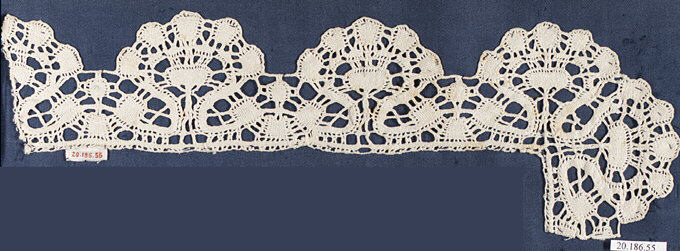
The corner piece itself is not a full garment but a fragment, a synecdoche for the whole. This approach aligns with contemporary couture’s fascination with the incomplete and the deconstructed. By isolating the corner—the point where two edges meet—the lab forces the viewer to confront the structural logic of lace. Bobbin lace is inherently a network of intersections: threads cross, twist, and pin to form openwork patterns. The corner, then, is the site of maximum tension and resolution. In this piece, the lace is not merely decorative; it is load-bearing. The corner must hold its shape, whether draped over a shoulder or suspended as a standalone sculpture. The lab achieves this through a hybrid technique: hand-bobbining for the intricate floral motifs (a nod to the Flemish point de gaze) and a digital pre-programming of the foundation grid using a modified jacquard loom. This marriage of hand and machine is not a compromise but a strategic elevation of heritage—preserving the soul of the craft while embracing the precision of modernity.
Structural Analysis: The Geometry of the Corner
From a structural perspective, the corner piece challenges conventional notions of drape and support. Bobbin lace, despite its delicate appearance, can be remarkably rigid when constructed with dense stitching and multiple layers. Katherine Fashion Lab’s corner piece employs a triangular gusset at the apex, where the tension is highest. The gusset is reinforced with a subtle, hand-stitched corded edge—a technique borrowed from 18th-century French dentelle à la main—which prevents fraying and distortion. The lace pattern itself is asymmetrical: one side features a series of open, fan-like scallops (reminiscent of Spanish puntilla), while the other is a dense, geometric honeycomb (inspired by the torchon style of Flanders). This asymmetry is deliberate. It creates a visual and tactile dialogue between lightness and density, transparency and opacity, tradition and innovation.
The corner’s function is also reimagined. Traditionally, a corner piece might serve as a shawl’s endpoint or a collar’s focal point. Here, it is presented as a standalone study—mounted on a minimalist black frame, suspended in mid-air, or pinned to a mannequin in a way that emphasizes its three-dimensionality. The lab’s design team has calculated the optimal thread count (36 threads per inch in the warp, 48 in the weft) to ensure the lace holds its shape without sagging. The result is a piece that feels both architectural and ethereal, a paradox that defines high couture. The corner becomes a microcosm of the entire design process: each thread’s path is a decision, each knot a commitment.
Cultural Resonance: Heritage as a Living Language
In an era where fashion often cycles through cultural appropriation, Katherine Fashion Lab’s approach to global heritage is notably respectful and scholarly. The bobbin lace corner piece is not a pastiche of disparate traditions but a synthesis that acknowledges provenance. The lab’s research team collaborated with lace museums in Bruges, Oaxaca, and Kolkata to document original patterns, which were then reinterpreted without direct copying. For example, the corner’s central motif—a stylized lotus—is a nod to Indian chikan embroidery, but executed in bobbin lace rather than thread. This cross-pollination is not merely aesthetic; it is a statement about the fluidity of heritage. Lace, like culture, travels, adapts, and evolves. By placing a lotus in a European lace structure, the lab challenges the notion of “pure” traditions, suggesting instead that global heritage is a web of influences—a corner piece that connects rather than divides.
The standalone study format further amplifies this message. Without a full garment context, the corner piece becomes an object of contemplation, akin to a museum artifact. The lab’s accompanying documentation—available in digital form via QR code—details the specific regional techniques used, the names of the artisans, and the historical significance of each motif. This transparency is a form of ethical curation, ensuring that the heritage is not commodified but celebrated. The corner piece thus functions as an educational tool, inviting the viewer to look beyond the surface and engage with the labor and lineage embedded in every loop.
Conceptual Implications: The Corner as a Starting Point
Finally, the corner piece’s standalone status invites a broader conceptual reading. In design, the corner is often an afterthought—a place where seams meet and edges end. Katherine Fashion Lab reverses this hierarchy, making the corner the protagonist. This inversion mirrors a shift in contemporary couture toward the fragmentary and the incomplete. In a world saturated with fast fashion and disposable garments, the single, meticulously crafted corner piece demands attention. It asks: What if luxury were not about volume but about intensity? What if a single, perfect corner could communicate more than an entire collection?
The bobbin lace corner piece also speaks to sustainability. By focusing on a small, high-craft element, the lab reduces material waste while maximizing artisanal value. The piece is designed to be modular—it can be attached to a garment, framed as art, or worn as a standalone accessory. This versatility challenges the traditional lifecycle of a couture item, which often ends in a closet or archive. Here, the corner piece is a perpetual starting point, adaptable to new contexts and interpretations.
In conclusion, Katherine Fashion Lab’s corner piece in bobbin lace is a masterclass in couture analysis. It weaves together global heritage, structural ingenuity, and conceptual depth into a single, resonant form. The corner is no longer a margin; it is the center. And through this lens, we see that the most profound statements in fashion often emerge not from the whole, but from the fragment—the thread, the knot, the point where two edges meet and become one.