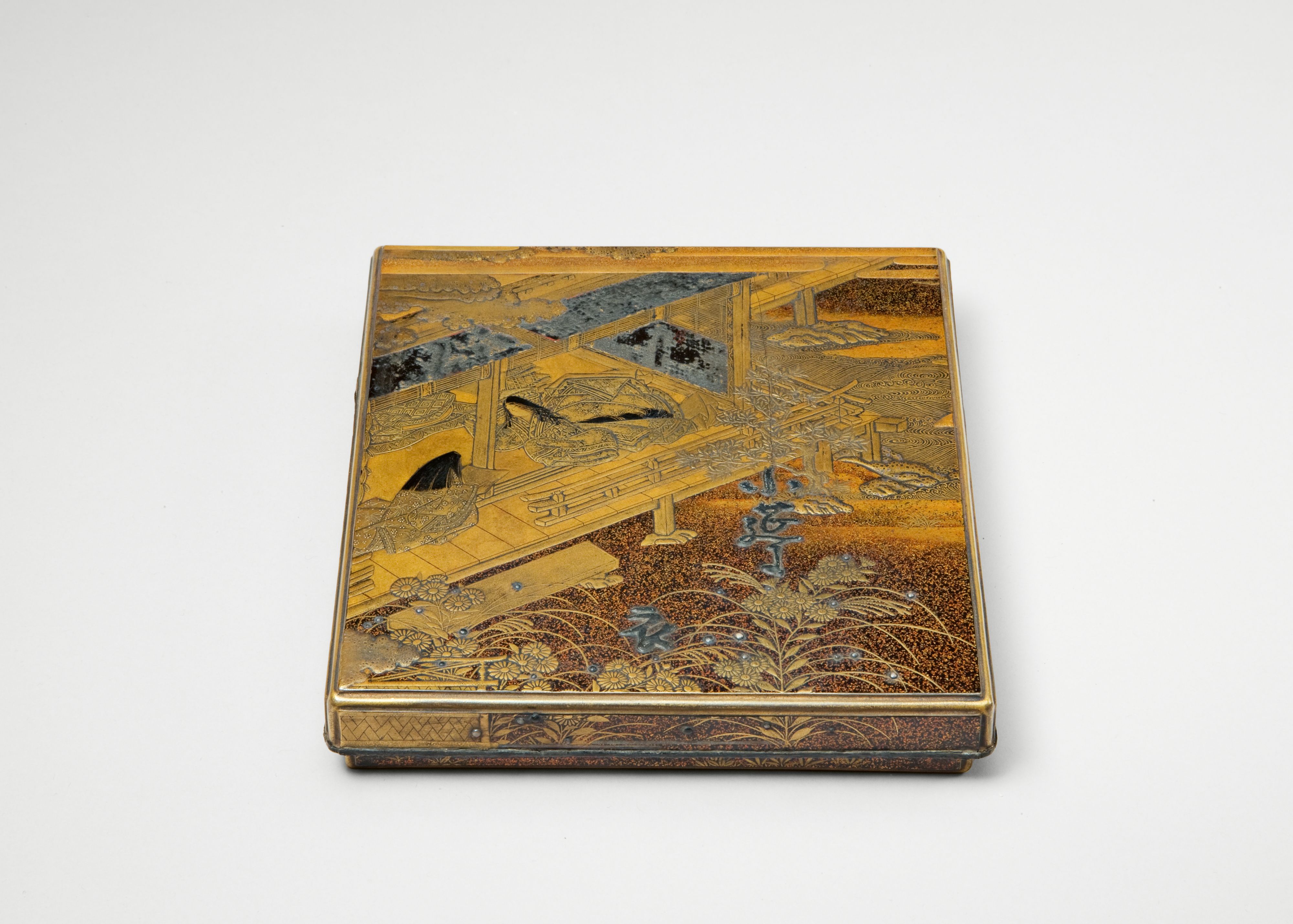
Heritage Analysis: Writing Box (Suzuribako) with “The Lady of the Bridge” Design
Subject: Writing Box (Suzuribako) with “The Lady of the Bridge” Design
Origin/Culture: Japan, Edo period (circa 17th–19th century)
Medium: Lacquered wood with gold and silver takamaki-e (high-relief sprinkled picture) and hiramaki-e (flat sprinkled picture), with silver inlay on gold nashiji (“pear-skin”) ground.
Research Context: Strategic Standalone Research for Katherine Fashion Lab
Introduction: The Object as a Cultural Artifact
The Suzuribako, or writing box, is a quintessentially Japanese luxury object that transcends mere functionality. Designed to hold an inkstone, water dropper, and brushes, it served as a portable stationery kit for the literate elite—poets, scholars, and courtiers—during the Edo period. This particular specimen, adorned with “The Lady of the Bridge” design, is not merely a container but a repository of symbolic power, historical adornment, and spiritual meaning. For Katherine Fashion Lab, understanding this object’s layered heritage offers a strategic blueprint for crafting high-end luxury narratives in 2026. This analysis will deconstruct the box’s symbolic, aesthetic, and spiritual dimensions, then translate these insights into actionable luxury strategies.
Symbolic Power: The Lady of the Bridge as an Archetype
Narrative of Transience and Devotion
The “Lady of the Bridge” motif draws from classical Japanese literature, most notably The Tale of Genji and Noh theater. The bridge (hashi) symbolizes a liminal space—a threshold between the mundane and the spiritual, the human and the divine. The lady, often depicted in flowing courtly robes, represents unwavering devotion and ephemeral beauty. In the context of the writing box, this imagery reinforces the act of writing as a bridge between thought and expression, intention and legacy. For a luxury brand, this symbolism translates into a narrative of transitional elegance: the client is not merely purchasing an object but investing in a story of transformation and enduring grace.
Hierarchy and Status
The writing box itself was a marker of social standing. Ownership signified literacy, refinement, and access to the imperial court’s cultural capital. The use of nashiji (gold pear-skin ground) and takamaki-e techniques—reserved for the highest echelons—elevates the box from a utilitarian item to a symbol of aristocratic authority. In a 2026 luxury context, this reinforces the value of exclusivity through craft mastery. The brand must position its products as artifacts of status, where the consumer’s identity is enhanced by association with centuries-old hierarchies of taste.
Historical Adornment: The Art of Maki-e and Inlay
Takamaki-e and Hiramaki-e: Dimensions of Luxury
The maki-e technique—literally “sprinkled picture”—involves applying gold or silver powder onto wet lacquer to create intricate designs. Takamaki-e (high-relief) uses a mixture of lacquer and charcoal or clay to build raised surfaces, while hiramaki-e (flat relief) remains flush with the surface. This dual approach creates a tactile and visual depth that rewards close inspection. The silver inlay on the gold ground adds a subtle contrast, evoking moonlight on water. Historically, such adornment required months of labor by master artisans, ensuring that each piece was unique. For Katherine Fashion Lab, this translates into a strategy of hyper-craftsmanship: limited-edition runs, visible hand-finishing, and storytelling around the artisan’s lineage. In 2026, where AI-generated design threatens homogenization, the handmade imperfection becomes the ultimate luxury.
Nashiji Ground: The Pear-Skin Aesthetic
The gold nashiji ground is achieved by sprinkling gold flakes onto a lacquer base, then applying a translucent topcoat. The result resembles the speckled skin of a pear—an organic, irregular beauty that contrasts with the precision of the maki-e figures. This ground serves as a metaphor for the brand’s foundation: a rich, textured base upon which the narrative of the lady is layered. In luxury strategy, the nashiji principle suggests that the brand’s core identity must be both opulent and imperfect, inviting the client to discover hidden details over time. This aligns with the 2026 trend toward “slow luxury,” where objects are meant to be contemplated, not consumed quickly.
Spiritual Meaning: The Writing Box as a Ritual Object
The Act of Writing as Meditation
In Japanese culture, calligraphy (shodo) is a spiritual practice—a form of moving meditation that unites body, mind, and brush. The writing box, as the vessel for this practice, becomes a sacred container. The lady on the bridge, poised between worlds, mirrors the calligrapher’s state: focused yet receptive, disciplined yet fluid. The box’s lacquered surface, polished to a mirror-like sheen, reflects the user’s intent. For luxury branding, this suggests a ritualistic positioning: the product is not just an accessory but a tool for self-cultivation. Katherine Fashion Lab can market the writing box as a “portal to presence,” appealing to the 2026 consumer’s desire for mindfulness amidst digital chaos.
Wabi-Sabi and the Impermanent
The maki-e technique, while opulent, also embodies wabi-sabi—the appreciation of imperfection and transience. Gold and silver will tarnish; lacquer may crack over centuries. This impermanence is not a flaw but a feature, reminding the owner of life’s fleeting beauty. In a luxury strategy, this translates to embracing patina as a narrative. Instead of promising eternal newness, the brand can celebrate aging as a sign of authenticity and use. The 2026 high-end consumer, increasingly skeptical of disposable fashion, will resonate with this philosophy of durable beauty.
2026 High-End Luxury Strategy: Translating Heritage into Modern Brand Equity
Strategic Pillar 1: Narrative of Liminality
The bridge motif offers a powerful brand metaphor: Katherine Fashion Lab as a bridge between tradition and modernity, East and West, craft and innovation. In 2026, luxury consumers seek brands that navigate cultural boundaries with sensitivity. The writing box’s lady can be reimagined as a “bridge figure” in marketing campaigns—a muse who embodies grace under transition. This could manifest in limited-edition collaborations with contemporary Japanese artists, or in immersive experiences where clients participate in calligraphy workshops using replicas of the box.
Strategic Pillar 2: Craft as Intellectual Property
The takamaki-e and nashiji techniques are not just aesthetic; they are intangible cultural heritage. Katherine Fashion Lab can secure exclusivity by partnering with surviving maki-e masters, offering them a platform while protecting their craft from mass reproduction. In 2026, luxury brands will compete on authenticity of origin. A “Heritage Seal” certifying that each box is handcrafted by a designated Living National Treasure would command premium pricing and loyalty.
Strategic Pillar 3: Ritualistic Product Ecosystems
Rather than selling a standalone writing box, the brand can create a ritual kit: the box, a hand-mixed ink stick, a bamboo brush, and a silk cloth for polishing. This transforms the product into a daily practice, aligning with the 2026 wellness trend. The Lady of the Bridge design becomes the visual anchor for a lifestyle line—scarves, journals, and home decor—each echoing the same symbolic bridge. This ecosystem approach increases customer lifetime value while deepening emotional attachment.
Strategic Pillar 4: Digital Storytelling through Patina
In an era of hyper-curated Instagram feeds, the writing box’s wabi-sabi offers a counter-narrative. Katherine Fashion Lab can launch a “Patina Project” campaign, documenting how the box ages over time in different climates. Clients who purchase the box are invited to share photos of its evolving surface, creating a community of collectors. This turns impermanence into a shared narrative asset, reinforcing the brand’s commitment to slow luxury and environmental consciousness—key values for the 2026 high-end consumer.
Conclusion: The Writing Box as a Strategic Blueprint
The Suzuribako with “The Lady of the Bridge” design is far more than a historical artifact; it is a masterclass in symbolic power, historical adornment, and spiritual meaning. For Katherine Fashion Lab, this object provides a strategic template for 2026 luxury: one that marries exclusive craftsmanship with profound narrative depth, ritualistic engagement, and a philosophy of impermanent beauty. By translating the bridge motif into a brand metaphor, elevating maki-e as intellectual property, and embracing patina as a storytelling tool, the lab can position itself at the vanguard of heritage-driven luxury. The lady on the bridge, poised between worlds, becomes the brand’s eternal muse—a reminder that true luxury is not about possession, but about passage.