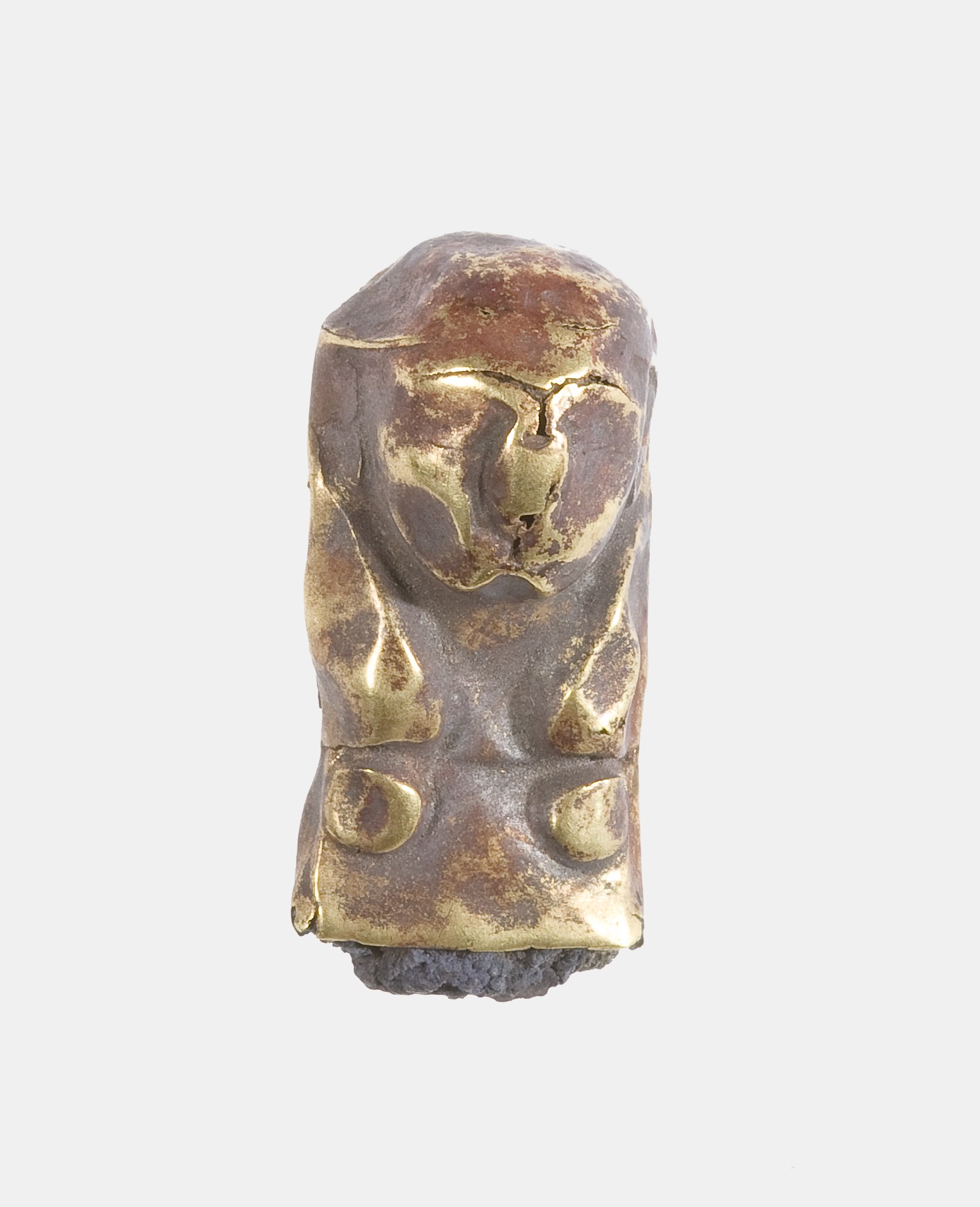
Heritage Analysis: The Peseshkef Amulet Fragment
Strategic Standalone Research Paper | Katherine Fashion Lab | Lead Heritage Curator
This report presents a comprehensive heritage analysis of a fragmentary peseshkef amulet, an ancient Egyptian ritual object crafted from gold and copper. The analysis examines its symbolic power, historical adornment practices, spiritual meaning, and proposes a high-end luxury strategy for 2026, grounded in the amulet’s profound cultural resonance. The peseshkef, central to the “Opening of the Mouth” ceremony, offers a unique lens for reimagining luxury as a vessel for transformation, protection, and legacy.
Symbolic Power: The Amulet as a Threshold Object
The peseshkef amulet, typically a small, stylized adze or blade, held immense symbolic power within ancient Egyptian funerary and ritual contexts. Its primary function was to animate the senses of the deceased during the “Opening of the Mouth” ceremony, a rite believed to restore the ability to eat, speak, and breathe in the afterlife. This act was not merely physical but metaphysical: the amulet represented the divine tool of Ptah, the creator god, and later of Horus, symbolizing the triumph of order over chaos.
The choice of materials—gold and copper—is deeply significant. Gold, associated with the sun god Ra, embodied eternal radiance, incorruptibility, and divine authority. Copper, a metal linked to the goddess Hathor and to healing, represented earthly vitality and the life force. Together, they forged a duality: the immortal and the mortal, the celestial and the terrestrial. For the wearer, the peseshkef was not an ornament but a talisman of rebirth and agency, a tool to unlock the next existence.
In contemporary terms, this symbolic power translates into a narrative of transformation and empowerment. A luxury brand that channels the peseshkef’s essence offers clients not just adornment but a ritualistic key to personal metamorphosis. The amulet’s legacy invites a redefinition of luxury as a medium for intentional change, where each piece carries the weight of ancient conviction.
Historical Adornment: Craftsmanship and Context
Historically, the peseshkef amulet was not a daily accessory but a ceremonial object of profound importance. It was often placed on the mummy’s chest or held in the hands during burial rites, crafted with meticulous precision by temple artisans. The fragment under study, composed of gold and copper, suggests a high-status individual, likely a priest or noble, for whom the amulet served as a bridge between worlds.
The craftsmanship of such amulets reflects a sophisticated understanding of metallurgy and symbolism. Gold was hammered into thin sheets, while copper was inlaid or plated, creating a contrast of warm and cool tones that evoked the balance of opposites—life and death, sun and moon. The shape, often a miniature adze or knife, was rendered with geometric precision, its edges smoothed to avoid injury to the spirit. This attention to detail underscores a culture where adornment was inseparable from sacred function.
For Katherine Fashion Lab, this historical context offers a blueprint for artisanal excellence. The 2026 luxury strategy must honor the ritualistic origins of the peseshkef by emphasizing handcrafted techniques, limited editions, and materials that carry intrinsic meaning. The fragment’s dual-metal composition inspires a palette of precious metals—rose gold, white gold, and oxidized silver—that echo the ancient interplay of gold and copper. Each piece should be positioned as a heirloom of purpose, not mere decoration.
Spiritual Meaning: The Amulet as a Vessel of the Soul
At its core, the peseshkef amulet embodies a spiritual philosophy of awakening. The “Opening of the Mouth” ceremony was a rite of passage that enabled the deceased to partake in the divine, a moment when the physical and spiritual realms converged. The amulet was the instrument of that convergence, a tangible focus for prayers and incantations that invoked the gods’ favor. Its presence ensured the soul’s continued agency in the afterlife, a concept that resonates with modern desires for legacy and transcendence.
The spiritual meaning of the peseshkef extends beyond death. In life, it was a symbol of protection and clarity, used in temple rituals to consecrate statues and sacred objects. The amulet’s power lay in its ability to open channels—of communication, of breath, of vision. For the ancient Egyptians, this was not metaphor but reality: the amulet was a living entity infused with the breath of the gods.
In a 2026 luxury context, this spiritual dimension offers a differentiating narrative. Brands that tap into the peseshkef’s essence can position their collections as tools for inner awakening, appealing to clients seeking meaning beyond materialism. The amulet’s story invites a curatorial approach to luxury, where each piece is accompanied by a ritual or intention—a meditation, a mantra, a moment of reflection. This transforms the act of purchase into a sacred transaction, aligning the brand with timeless values of renewal and self-discovery.
2026 High-End Luxury Strategy: Heritage as a Catalyst
Drawing from the peseshkef amulet’s symbolic, historical, and spiritual dimensions, Katherine Fashion Lab can develop a 2026 luxury strategy that redefines high-end adornment as a medium for transformation. The following pillars guide this approach:
Pillar 1: Ritual-Driven Design
Collections should be designed not as static objects but as instruments of ritual. Inspired by the peseshkef’s function, each piece—whether a pendant, ring, or cuff—can be crafted with hidden mechanisms or interactive elements that invite the wearer to engage in a personal ceremony. For example, a gold-and-copper locket might open to reveal a sacred inscription or a miniature tool, echoing the amulet’s role as a key to awakening. This design philosophy positions the brand as a purveyor of experiential luxury, where the object’s value is activated through use.
Pillar 2: Material Alchemy
The dual-metal composition of the peseshkef—gold and copper—serves as a material narrative for 2026. Katherine Fashion Lab can pioneer a signature alloy that blends these metals in a proprietary ratio, symbolizing the union of opposites. This alloy, marketed as “Kemet Gold” (referencing ancient Egypt’s name for itself), becomes a brand hallmark. Additionally, the strategy should incorporate recycled and ethically sourced metals, aligning with modern sustainability while honoring the ancient reverence for enduring materials.
Pillar 3: Curatorial Storytelling
Every piece in the peseshkef-inspired collection must be accompanied by a curatorial narrative that educates and inspires. This includes digital and physical content—a booklet, an augmented reality experience, or a private viewing—that explores the amulet’s history, spiritual meaning, and craftsmanship. The brand should partner with Egyptologists and ritual specialists to authenticate the narrative, ensuring cultural integrity. This positions the collection as collectible art, not mere fashion, appealing to connoisseurs who value depth over trend.
Pillar 4: Transformative Client Experience
The 2026 strategy must extend beyond the object to the client journey. Drawing from the “Opening of the Mouth” ceremony, Katherine Fashion Lab can offer bespoke rituals for clients—private ceremonies where a piece is “activated” through intention, meditation, or a personalized blessing. This could be delivered in flagship stores designed as sacred spaces, with subdued lighting, incense, and soundscapes that evoke ancient temples. Such experiences elevate the brand from a vendor to a guide in personal transformation, fostering deep loyalty and word-of-mouth prestige.
Pillar 5: Limited Edition and Legacy
Finally, the peseshkef fragment’s rarity dictates a limited-edition model. Each collection should be produced in small batches, with numbered certificates that trace the piece’s inspiration and materials. A portion of proceeds can fund archaeological preservation or cultural education, reinforcing the brand’s commitment to heritage stewardship. This creates a legacy loop: the client owns a piece of history while contributing to its survival.
Conclusion: The Amulet as a Strategic North Star
The peseshkef amulet fragment is more than an artifact; it is a strategic north star for Katherine Fashion Lab’s 2026 high-end luxury strategy. Its symbolic power of transformation, its historical roots in sacred craftsmanship, and its spiritual meaning of awakening offer a unique value proposition in a saturated market. By channeling the amulet’s essence into ritual-driven design, material alchemy, curatorial storytelling, transformative experiences, and legacy-focused production, the brand can position itself as a leader in meaningful luxury. In a world seeking connection and purpose, the peseshkef reminds us that true luxury is not about possession but about opening doors—to the self, to history, and to the eternal.