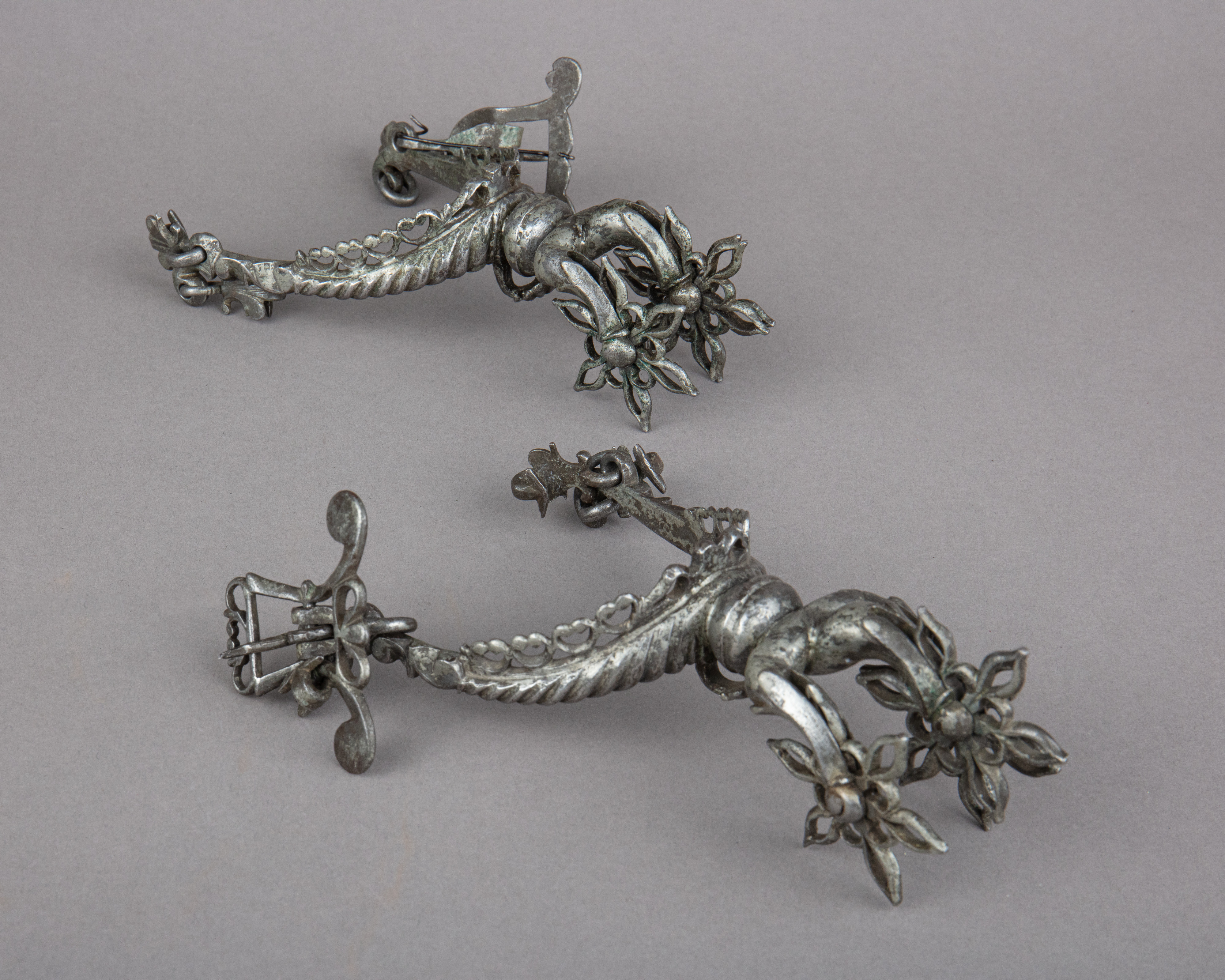
Heritage Analysis: The South German Rowel Spurs
Introduction: An Object of Command and Craft
The pair of South German rowel spurs, forged from iron and accented with tin, represents a confluence of martial utility, symbolic authority, and artisanal sophistication. Dating from the late medieval to early Renaissance period (circa 15th–16th century), these spurs are not merely functional equestrian tools; they are artifacts of hierarchical power, spiritual resonance, and meticulous craftsmanship. For Katherine Fashion Lab, a heritage analysis of these spurs offers a strategic lens through which to examine how historical adornment can inform a 2026 high-end luxury strategy that prioritizes narrative depth, material integrity, and symbolic resonance.
Symbolic Power: The Spur as a Signifier of Rank and Dominion
In the context of South German nobility and knighthood, rowel spurs were emblematic of social standing and territorial command. The rowel—a star-shaped wheel with radiating points—was not merely a mechanism for urging a horse forward; it was a visual declaration of the rider’s status. The use of iron, a material associated with strength and durability, underscored the wearer’s martial capability, while the tin accents introduced a contrasting element of refinement, suggesting that the bearer possessed both raw power and cultivated taste.
From a strategic perspective, the spur’s symbolic power lies in its duality: it is an instrument of control over a powerful animal (the horse) and a marker of the rider’s authority over land and people. For luxury branding, this duality translates into a narrative of disciplined mastery. Katherine Fashion Lab can draw upon this symbolism to craft collections that speak to the wearer’s ability to command their environment—whether through tailored silhouettes that evoke armor or accessories that incorporate sharp, geometric motifs reminiscent of the rowel. In 2026, where luxury consumers increasingly seek objects that embody personal agency and heritage, the spur’s symbolism offers a powerful archetype of leadership.
Historical Adornment: The Intersection of Function and Ornament
The South German rowel spur exemplifies how historical adornment fused utility with aesthetic expression. The iron base provided structural integrity, while the tin plating—often applied through techniques such as tinning or inlay—added a luminous, silver-like finish that caught light and conveyed wealth. This combination was not purely decorative; tin’s corrosion resistance also protected the iron from rust, ensuring the spur’s longevity. The rowel itself, with its multiple points, was both a practical device for gentle but effective horse communication and a striking visual element that echoed the star motifs common in heraldic and religious iconography.
For Katherine Fashion Lab, this historical precedent underscores the importance of material storytelling. In a 2026 luxury strategy, materials should be chosen not only for their aesthetic appeal but for their narrative resonance. Iron suggests resilience and heritage; tin implies luminosity and refinement. A modern interpretation might involve using oxidized metals paired with polished accents, or incorporating hand-forged elements that honor artisanal traditions. The spur’s design also invites consideration of modularity—the rowel could be reimagined as a detachable brooch, a belt buckle, or a heel detail, allowing the wearer to engage with the object’s history in a contemporary context.
Spiritual Meaning: The Spur as a Talisman of Purpose and Protection
Beyond its secular symbolism, the rowel spur carried spiritual connotations in the South German cultural milieu. Spurs were often associated with the chivalric code, which was deeply intertwined with Christian virtue. The spur’s sharp points could be interpreted as a reminder of the knight’s duty to defend the faith, while the circular rowel evoked the concept of eternal vigilance—a spiritual mandate to remain alert against moral and physical threats. In some contexts, spurs were blessed before battle, becoming talismans that conferred divine favor and protection upon the wearer.
This spiritual dimension offers a rich vein for luxury branding. As consumers in 2026 increasingly seek meaning beyond material possession, objects imbued with protective or purposeful symbolism hold significant appeal. Katherine Fashion Lab could explore this by incorporating motifs of circularity, points, or stars into designs, or by offering limited-edition pieces that include a ritual element—such as a card explaining the object’s historical significance or a small ceremony of “activation” for the wearer. The spur’s spiritual meaning also aligns with contemporary interest in mindfulness and intentionality, positioning the brand as a purveyor of not just fashion, but of objects that support personal growth and resilience.
Strategic Implications for 2026 High-End Luxury
To translate this heritage analysis into a actionable 2026 luxury strategy, Katherine Fashion Lab must consider three pillars: narrative authenticity, material mastery, and experiential engagement.
Narrative Authenticity: The spur’s story is one of command, craftsmanship, and spiritual purpose. A luxury collection inspired by this artifact should be accompanied by a robust narrative that traces its origins—perhaps through a short film, a museum-style exhibition at flagship stores, or a digital archive accessible via QR codes on product tags. This transparency builds trust and positions the brand as a custodian of cultural heritage, appealing to discerning clients who value education alongside acquisition.
Material Mastery: The iron-and-tin combination exemplifies how contrasting materials can create visual and tactile tension. For 2026, Katherine Fashion Lab might collaborate with contemporary metalsmiths to develop proprietary alloys or finishes that evoke the spur’s patina. The use of sustainable, ethically sourced metals would also align with growing consumer demands for environmental responsibility, while the hand-finishing of each piece would justify a premium price point. Limited runs of 100–200 units per design would enhance exclusivity.
Experiential Engagement: The spur’s spiritual dimension invites interactive experiences. Consider a “Rider’s Ritual” trunk show where clients can handle historical replicas, learn about equestrian symbolism, and commission bespoke accessories that incorporate their own heraldic motifs. Alternatively, a pop-up installation in a historic stable or castle—common in South Germany—could immerse clients in the object’s original context. Such experiences create emotional bonds that transcend transactional relationships, fostering brand loyalty.
Conclusion: From Spur to Statement
The South German rowel spur is far more than a relic; it is a blueprint for how historical adornment can inform contemporary luxury. By decoding its symbolic power, historical adornment, and spiritual meaning, Katherine Fashion Lab can develop a 2026 strategy that resonates with clients seeking depth, craftsmanship, and purpose. As the luxury market shifts toward heritage-driven narratives and experiential consumption, the spur offers a timeless lesson: true luxury lies not in ostentation, but in the quiet authority of objects that carry stories worth telling.