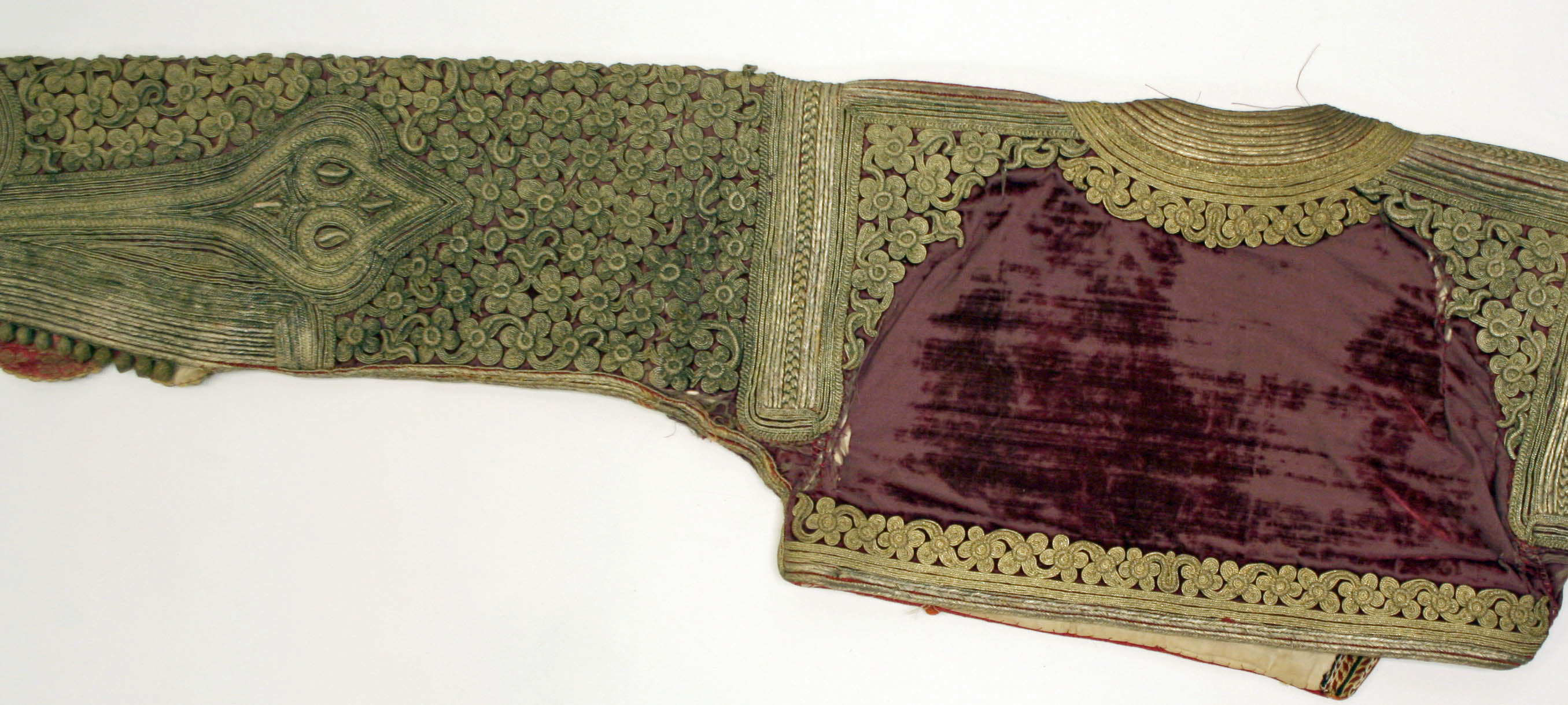
The Vest as a Global Artifact: A Couture Analysis by Katherine Fashion Lab
In the rarefied world of haute couture, the vest often occupies a paradoxical space: it is both a foundational garment and a canvas for radical reinterpretation. At Katherine Fashion Lab, we approach the vest not merely as a layering piece but as a narrative vessel—a textile chronicle that traverses continents, epochs, and craft traditions. This analysis examines a singular vest, conceived as a standalone study, whose material composition—silk, metallic threads, and cotton—anchors it in a global heritage that spans from the silk routes of East Asia to the artisanal looms of the Mediterranean. Through a rigorous dissection of its design, construction, and cultural resonance, we illuminate how this garment transcends functionality to become a statement of identity, sustainability, and artistic mastery.
Materiality: The Dialogue Between Silk, Metallic, and Cotton
The vest’s material palette is a masterclass in contrast and cohesion. Silk, sourced from heritage sericulture regions in China and India, provides a luminous, fluid base. Its natural drape and subtle sheen evoke a sense of opulence, yet the silk is not treated as a mere luxury accent. Instead, it is woven into the garment’s structure, creating a surface that catches light differently with every movement. This silk is double-faced—one side matte and the other gloss—allowing the vest to shift in appearance from day to evening, from intimate to formal.
Metallic threads, primarily composed of fine silver and gold alloys, are interwoven with the silk in a brocade technique reminiscent of Ottoman and Mughal textiles. These threads are not applied as embellishments but integrated into the weave, forming geometric patterns that reference ancient celestial maps and Islamic geometric art. The metallic elements add weight and structure, transforming the silk’s fluidity into a sculptural form. Importantly, the metals are sourced from recycled electronics and jewelry, aligning with Katherine Fashion Lab’s commitment to circular luxury. This choice redefines the concept of “preciousness,” embedding ethical provenance into the garment’s very DNA.
Cotton, often perceived as humble, serves as the vest’s structural backbone. A high-density organic cotton from the Nile Delta is used for the inner lining and interfacing. This cotton is unbleached and undyed, its natural ivory hue providing a grounding counterpoint to the silk’s brilliance. The cotton also regulates temperature and moisture, ensuring the vest remains wearable across seasons—a pragmatic nod to the garment’s intended role as a standalone piece, not merely a ceremonial artifact.
Design Architecture: A Study in Silhouette and Symmetry
The vest’s silhouette is a deliberate departure from conventional tailoring. It eschews the sharp, angular lines of a traditional waistcoat in favor of a softened, asymmetric form. The front panels overlap asymmetrically, secured by a single hand-carved horn toggle—a detail that references Japanese obi closures and Nordic shamanic adornments. This asymmetry creates a dynamic visual rhythm, drawing the eye diagonally across the torso. The back is cut in a gentle A-line, allowing the silk to cascade without constraint, while the shoulders are slightly extended, evoking the structured elegance of a 1940s riding jacket.
Proportion is meticulously calibrated. The vest extends just below the hip, offering coverage without overwhelming the frame. The armholes are cut low and wide, enabling layering over voluminous sleeves or bare skin. This versatility is intentional: the vest is designed to be worn as a primary garment, over a simple slip dress, or as a counterpoint to tailored trousers. The hem is raw-edged, left unfinished to echo the frayed borders of ancient textile fragments—a subtle homage to the wabi-sabi aesthetic of imperfection and transience.
Craft and Technique: Global Heritage in Every Stitch
The vest’s construction is a testament to cross-cultural craftsmanship. The silk and metallic weave is executed on a hand-operated Jacquard loom, a technique perfected in Lyon, France, but whose origins trace back to the drawlooms of Han Dynasty China. Each thread is tensioned by hand, resulting in a fabric that is both supple and resilient. The metallic threads are twisted with silk to prevent tarnishing, a technique known as filato in Italian textile traditions.
Embroidery further enriches the narrative. Along the vest’s left shoulder, a pattern of stylized cypress trees—a motif common in Persian carpets and Anatolian kilims—is rendered in silk floss and metallic couching. This embroidery is executed by artisans in Rajasthan, India, using the zardozi technique, which historically adorned the robes of Mughal emperors. The cypress, a symbol of immortality and resilience, links the garment to ancient funerary art and Sufi poetry. On the right lapel, a single lotus flower, embroidered in white silk, references Buddhist iconography and the lotus’s journey from mud to bloom—a metaphor for the vest’s own transformation from raw materials to art.
The interior construction is equally deliberate. The cotton lining is hand-stitched with a running stitch known as kogin, a Japanese sashiko variant historically used to reinforce farmer’s clothing. This stitch, though invisible to the wearer, adds tensile strength and a subtle textural interest. The buttonholes are bound with silk thread in a festoon stitch, a technique favored by 19th-century French tailors for its durability and elegance.
Cultural Resonance: The Vest as a Global Lexicon
This vest does not merely borrow from global heritage; it synthesizes it into a coherent, contemporary lexicon. The silk speaks to the ancient trade routes that connected Xi’an to Istanbul, carrying not only goods but ideas of beauty and status. The metallic threads recall the armor of samurai, the regalia of Byzantium, and the sacred vestments of Coptic priests. The cotton grounds the garment in the everyday, reminding us that luxury need not be alienating—it can be tactile, approachable, and sustainable.
In the context of Katherine Fashion Lab’s philosophy, this vest is a standalone study because it refuses to be reduced to a mere accessory. It is a garment that demands attention, that invites touch and contemplation. It is a response to the homogenization of global fashion, where cultural motifs are often flattened into generic prints. Here, each element retains its specificity: the cypress is not a generic tree but a Persian cypress; the silk is not just silk but a specific weave from a specific region; the cotton is not just cotton but a sustainable fiber from a specific ecosystem.
Conclusion: The Vest as a Manifesto
In the final analysis, this vest is a manifesto for a new kind of couture—one that honors heritage without being trapped by it, that embraces innovation without discarding tradition. It is a garment that acknowledges the interconnectedness of our world, where silk from China, cotton from Egypt, metallic threads from recycled sources, and embroidery from India can coexist in a single, harmonious form. For the wearer, it is not just a piece of clothing but a wearable archive, a conversation starter, and a declaration of values. At Katherine Fashion Lab, we believe that true luxury lies in this depth of meaning—in the stories woven into every thread, in the hands that shaped it, and in the global heritage that continues to inspire us.