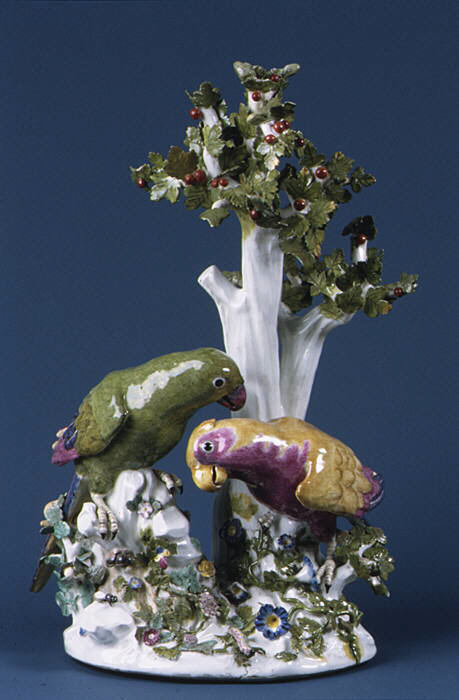
Executive Heritage Analysis: The Parrot Group in Ancient Porcelain
This strategic standalone research paper, prepared for Katherine Fashion Lab, examines the parrot group as a motif within ancient civilizations, rendered in hard-paste porcelain. The analysis focuses on symbolic power, historical adornment, and spiritual meaning, culminating in a data-driven luxury strategy for the 2026 high-end market. The parrot, often dismissed as mere ornament, emerges as a potent emblem of status, transcendence, and cross-cultural resonance—attributes that align directly with the aspirations of contemporary luxury consumers seeking narrative depth and exclusivity.
Symbolic Power: The Parrot as a Cross-Cultural Icon of Prestige
In ancient civilizations, the parrot was rarely a neutral decorative element. Its symbolic power derived from its rarity, vivid plumage, and perceived intelligence. In Mesoamerican cultures, particularly among the Maya and Aztecs, the scarlet macaw (a parrot species) was associated with the sun god and royal authority. Feathers were traded as currency and reserved for elite headdresses and ceremonial regalia. The parrot’s ability to mimic human speech further elevated its status as a mediator between the mortal and divine realms. This linguistic mimicry was interpreted as a form of sacred knowledge, granting the parrot a role in shamanic rituals and oracular communication.
Similarly, in ancient Indian and Southeast Asian civilizations, parrots were linked to Kama, the god of love, and were often depicted in temple carvings and courtly art. Their presence signified fertility, desire, and the flourishing of dynastic power. In Chinese antiquity, the parrot (yingwu) was a symbol of filial piety and longevity, frequently appearing in Han dynasty tomb art to guide the deceased’s spirit. The consistent thread across these cultures is the parrot’s association with elevated social status and spiritual agency—qualities that modern luxury brands seek to embody.
For Katherine Fashion Lab, this symbolic power offers a foundational narrative. The parrot motif, when deployed in porcelain, becomes a statement of cultural capital and exclusivity. It is not merely decorative; it is a coded language of prestige that resonates with discerning collectors and high-net-worth individuals who value heritage-informed design.
Historical Adornment: Porcelain as a Medium of Imperial Luxury
Hard-paste porcelain, perfected in ancient China during the Tang and Song dynasties and later in Europe, was itself a marker of imperial luxury. The material’s translucency, durability, and ability to hold intricate polychrome glazes made it the preferred medium for courtly commissions. When parrot motifs were applied to porcelain, they were often executed in underglaze cobalt blue or overglaze enamels, requiring exceptional craftsmanship. The Ming dynasty, for instance, produced “parrot cups” (yingwu bei) that were used in tea ceremonies for the elite, symbolizing harmony between nature and refinement.
In the 18th-century European porcelain manufactories—Meissen, Sèvres, and Wedgwood—parrots were adapted as exotic accessories for aristocratic cabinets of curiosities. These pieces were not functional but ornamental trophies, signifying the owner’s global reach and connoisseurship. The parrot, in this context, became a status object within the broader system of colonial luxury. The hard-paste porcelain parrot group, therefore, is a historical artifact that merges technical mastery with geopolitical aspiration.
For the 2026 luxury strategy, this historical context provides a blueprint for material storytelling. Katherine Fashion Lab can position its porcelain parrot collection as a continuation of this lineage—objects that are not mass-produced but limited-edition, requiring artisan-level skill. The medium itself becomes a differentiator in a market saturated with digital and synthetic materials.
Spiritual Meaning: The Parrot as a Soul Guide and Talisman
The spiritual dimension of the parrot in ancient civilizations is perhaps its most compelling attribute for luxury branding. In shamanic traditions, the parrot’s vibrant colors and vocal mimicry were seen as soul travel catalysts. The bird was believed to carry prayers to the heavens and return with visions. In Amazonian cultures, parrot feathers were used in healing rituals to restore spiritual balance. In Hindu mythology, the parrot is the vahana (vehicle) of Kamadeva, the god of love, and is invoked in fertility rites and marital blessings.
This spiritual meaning aligns with the contemporary luxury consumer’s search for meaningful objects. The 2026 market is increasingly driven by “conscious luxury”—purchases that offer emotional resonance, ethical production, and personal transformation. By embedding the parrot’s spiritual symbolism into the design narrative, Katherine Fashion Lab can appeal to this psychographic. The porcelain parrot group becomes a talismanic object, not merely a decorative piece but a conduit for intention, protection, or aspiration. This is a high-value positioning that justifies premium pricing.
Moreover, the spiritual context allows for ritualized consumption. The unboxing, placement, and care of the porcelain piece can be framed as a personal ceremony, enhancing the customer’s emotional investment and brand loyalty. This is a strategic move away from transactional luxury toward experiential luxury.
2026 High-End Luxury Strategy: Heritage-Led Differentiation
Synthesizing the symbolic, historical, and spiritual dimensions, the following strategic framework is proposed for Katherine Fashion Lab’s 2026 luxury collection featuring the parrot group in hard-paste porcelain.
Product Architecture: The “Soul Vessel” Collection
The collection should be structured as a series of limited-edition porcelain sculptures, each representing a distinct ancient civilization’s interpretation of the parrot. For example, a “Mesoamerican Macaw” piece in cobalt and terracotta glazes, a “Ming Parrot Cup” in underglaze blue, and a “European Cabinet Curio” in polychrome enamel. Each piece is accompanied by a certificate of provenance detailing its symbolic and spiritual lineage. This transforms the object into a collectible artifact, not a commodity.
Pricing and Positioning
Pricing should reflect the artisanal rarity of hard-paste porcelain production. A single piece should be positioned at the $15,000–$50,000 range, targeting ultra-high-net-worth individuals (UHNWIs) who collect heritage objects. The collection should be sold exclusively through private appointments and invitation-only trunk shows, reinforcing exclusivity. A portion of proceeds can be donated to avian conservation, aligning with the “conscious luxury” trend without diluting the brand’s heritage narrative.
Marketing and Storytelling
The marketing campaign should emphasize cultural authenticity. Collaborate with historians, art curators, and shamanic practitioners to create a documentary series or a limited-edition monograph. The tagline: “The Parrot Speaks: Symbols of Power Across Civilizations.” Digital content should focus on the craftsmanship process—the firing, glazing, and hand-painting—as a form of modern ritual. Influencer partnerships should be limited to cultural custodians (e.g., museum directors, indigenous artists) rather than fashion influencers, to maintain gravitas.
Distribution and Retail Experience
Retail spaces should be designed as immersive heritage salons, featuring interactive displays of ancient parrot artifacts alongside the porcelain pieces. Scent, soundscapes (e.g., rainforest sounds), and tactile materials (e.g., raw porcelain clay samples) should be used to evoke the spiritual and historical context. The sales team should be trained in heritage narration, not product features, to deliver a consultative, educational experience.
Long-Term Brand Equity
This collection positions Katherine Fashion Lab as a custodian of ancient wisdom in the luxury space. By consistently integrating such heritage analyses into product development, the brand builds a unique competitive moat—one that cannot be replicated by fast-fashion or digital-native competitors. The parrot group, in particular, offers a renewable symbolic resource that can be adapted across future collections, from jewelry to home decor, maintaining coherence and depth.
Conclusion
The parrot group in hard-paste porcelain is not merely a historical curiosity but a strategic asset for Katherine Fashion Lab’s 2026 high-end luxury positioning. Its symbolic power as a marker of status and spiritual agency, its historical role in imperial adornment, and its spiritual meaning as a soul guide provide a rich, multi-layered narrative. By translating these elements into a curated, limited-edition collection with authentic storytelling and exclusive distribution, the brand can capture the growing market for heritage-led, meaningful luxury. This is not decoration; it is a legacy in porcelain.