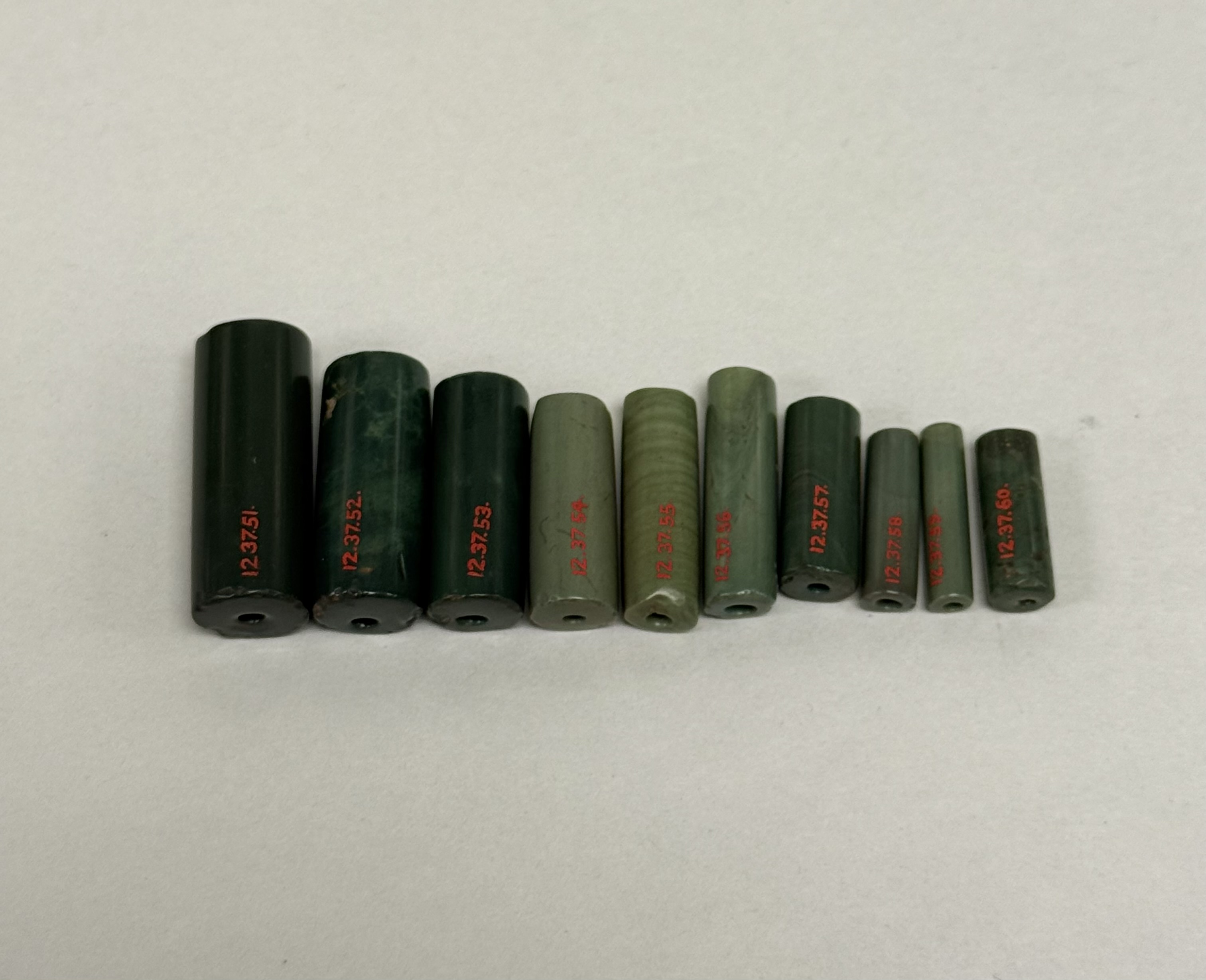
Heritage Analysis: The Green Jasper Cylinder in Japanese Cultural Context
This strategic heritage analysis examines the green jasper cylinder as a subject of profound symbolic, historical, and spiritual significance within Japanese culture. As Katherine Fashion Lab explores the integration of ancient motifs into 2026 high-end luxury strategy, the cylinder—often overlooked in favor of more obvious Japanese symbols like the cherry blossom or crane—offers a nuanced narrative of power, adornment, and metaphysical resonance. The following sections deconstruct the cylinder’s heritage, its role in historical adornment, its spiritual dimensions, and a forward-looking strategy for luxury positioning.
Symbolic Power of the Cylinder in Japanese Tradition
The cylinder form, when rendered in green jasper, carries a layered symbolism that transcends mere geometric simplicity. In Japanese cultural history, the cylinder—particularly in the context of magatama (curved beads) and cylindrical tama (jewel) forms—has been associated with authority, continuity, and cosmic order. Green jasper, a stone of grounding and protection, amplifies these meanings. Historically, jasper was revered in East Asian lapidary traditions for its ability to channel the earth’s vitality, and the cylinder shape—unbroken and symmetrical—evokes the concept of wa (harmony) and the cyclical nature of time.
In the Japanese imperial regalia, cylindrical and tubular forms appear in sacred objects such as the Yasakani no Magatama, a curved jewel symbolizing benevolence and the legitimate rule of the emperor. While not a perfect cylinder, the magatama’s cylindrical core and the use of green stones (including jasper) in early Shinto ritual objects establish a precedent for the cylinder as a marker of divine kingship. The green jasper cylinder, therefore, becomes a condensed symbol of legitimized power—a talisman of stability in a world of flux. For Katherine Fashion Lab, this symbolism offers a foundation for luxury narratives centered on enduring authority and timeless elegance, appealing to discerning clients who value heritage as a form of quiet prestige.
Historical Adornment: The Cylinder as Ornament and Status Marker
Archaeological evidence from Japan’s Jōmon period (c. 14,000–300 BCE) reveals the use of cylindrical beads and pendants made from jadeite, serpentine, and jasper. These objects were not merely decorative; they functioned as status indicators within hierarchical clan structures. The cylinder’s form—often drilled longitudinally for stringing—allowed it to be worn as a necklace or attached to garments, marking the wearer as a person of influence. Green jasper, in particular, was prized for its rarity and its association with fertility and the life-giving properties of verdant landscapes.
During the Kofun period (c. 300–538 CE), cylindrical beads known as kudatama (tube beads) became integral to elite adornment, often combined with comma-shaped magatama in elaborate necklaces and bracelets. These assemblages were deposited in burial mounds, suggesting that the cylinder was not only a living ornament but also a funerary object intended to accompany the deceased into the afterlife. The green jasper cylinder, therefore, bridges the temporal and the eternal—a dual function that contemporary luxury brands can leverage to evoke legacy and transcendence. For Katherine Fashion Lab, historical adornment research underscores the cylinder’s capacity to convey both personal identity and collective memory, making it a potent motif for limited-edition collections that speak to inheritance and permanence.
Spiritual Meaning: The Cylinder as Conduit and Container
In Shinto and Buddhist contexts, the cylinder assumes a spiritual role that extends beyond ornamentation. The cylindrical form is reminiscent of shintai—the sacred object in which a kami (spirit) resides. While shintai are often natural objects like rocks or trees, crafted cylindrical stones have been used as spiritual vessels in ritual practices. Green jasper, with its deep, earthy hue, is traditionally associated with the chakra of the heart in broader East Asian metaphysical systems, but in Japanese esoteric Buddhism (Shingon), cylindrical shapes represent the vajra (thunderbolt) or the stupa—symbols of indestructible truth and the cosmic axis.
The cylinder’s spiritual meaning is further enriched by its material: jasper is believed to absorb negative energy and promote emotional equilibrium. In Japanese folk traditions, green stones were placed in homes or worn as amulets to ward off malevolent spirits and ensure prosperity. The cylinder, as a closed form, also symbolizes containment—a vessel for spiritual energy that can be carried or displayed. For luxury strategy, this spiritual dimension offers a narrative of inner strength and protection, resonating with modern consumers who seek meaning beyond aesthetics. Katherine Fashion Lab can position the green jasper cylinder as a talismanic accessory, blending ancient spiritual technology with contemporary design—a product that not only adorns but also empowers.
2026 High-End Luxury Strategy: Heritage as Competitive Advantage
As the luxury market pivots toward cultural authenticity and experiential value, the green jasper cylinder presents a unique opportunity for Katherine Fashion Lab to differentiate its 2026 collections. The following strategic pillars are recommended based on this heritage analysis:
1. Limited-Edition Heritage Capsules
Develop a “Cylinder of Continuity” line featuring green jasper cylinders integrated into necklaces, bracelets, and cufflinks. Each piece should be accompanied by a certificate of provenance detailing the stone’s origin and its historical significance in Japanese adornment. This approach leverages scarcity and storytelling to command premium pricing, appealing to collectors who value intellectual and emotional resonance over mere trend.
2. Spiritual Wellness and Luxury Ritual
Collaborate with contemporary Shinto or Buddhist artisans to create ritual objects—such as meditation cylinders or altar ornaments—that blend heritage with modern wellness trends. Position these as functional luxury for the discerning client seeking balance and protection. The green jasper cylinder can be marketed as a modern talisman, aligning with the growing demand for mindful consumption in the high-net-worth segment.
3. Bespoke Commissioning and Artisanal Partnerships
Establish partnerships with master lapidaries in Japan who specialize in traditional jasper carving. Offer bespoke services where clients can commission personalized cylinders inscribed with family crests or spiritual symbols. This strategy reinforces exclusivity and craftsmanship, two pillars of high-end luxury that resist mass-market dilution. The cylinder’s simple form allows for infinite customization, making it a canvas for individual expression.
4. Narrative-Driven Marketing and Editorial Content
Produce a heritage white paper or a branded documentary exploring the cylinder’s journey from Jōmon ritual to modern luxury. Use this content in flagship stores and digital platforms to educate and inspire. The narrative should emphasize the cylinder’s timelessness and its ability to bridge the ancient and the contemporary, appealing to clients who view luxury as an investment in cultural capital.
Conclusion: The Cylinder as a Strategic Asset
The green jasper cylinder, rooted in Japanese heritage, offers Katherine Fashion Lab a rich tapestry of symbolic power, historical adornment, and spiritual meaning. By translating this heritage into a 2026 luxury strategy that prioritizes authenticity, craftsmanship, and narrative depth, the brand can capture a discerning audience seeking meaningful luxury. The cylinder is not merely a shape—it is a vessel for legacy, a talisman for protection, and a marker of enduring authority. In an era of ephemeral trends, the cylinder’s solid, unbroken form stands as a testament to the value of heritage in shaping the future of high-end fashion.