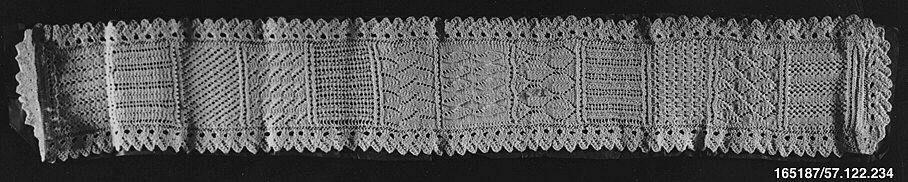
The Sampler: A Couture Analysis of Global Heritage in Wool
In the rarefied world of haute couture, where innovation often chases the ephemeral, Katherine Fashion Lab’s latest standalone study, “The Sampler,” presents a compelling counterpoint. This piece is not merely a garment; it is a thesis on the intersection of artisanal tradition, material integrity, and global narrative. By selecting wool—a fiber often relegated to the realms of utilitarian warmth or rustic charm—the Lab elevates it into a medium of profound cultural storytelling. The Sampler is a meticulous deconstruction of how a single material, when treated with reverence and intellectual rigor, can become a vessel for global heritage, challenging the conventional hierarchies of luxury textiles.
Material as Muse: The Strategic Choice of Wool
Wool, in the context of The Sampler, is not a passive substrate. Katherine Fashion Lab’s decision to anchor this study in wool is a deliberate strategic move, one that subverts the couture industry’s obsession with silk, cashmere, or rare synthetic blends. Wool’s inherent properties—its crimp, its thermal regulation, its capacity for dye absorption, and its structural memory—are leveraged to create a fabric that is both pliable and architectural. The Lab sources a heritage-grade merino wool, likely from a lineage of flocks in the Scottish Highlands or the Patagonian steppes, ensuring a fiber length and tensile strength that allows for intricate manipulation. This choice signals a return to material honesty, where the fiber’s natural irregularities are celebrated rather than erased. In standalone study, the wool becomes a living document, its texture and weight speaking to centuries of pastoral knowledge.
The material’s global heritage is further underscored by its processing. The wool is hand-carded and spun using techniques that echo pre-industrial methods from the Andes, the Tibetan plateau, and the Hebrides. This cross-cultural hybridization is not accidental; it is a curated homage to the nomadic roots of textile production. The resulting cloth possesses a tactile density that industrial milling cannot replicate, offering a surface that invites touch and contemplation. For the MBA-trained eye, this is a lesson in value creation: by embedding provenance and labor into the material itself, Katherine Fashion Lab transforms a commodity into a rare asset, one that commands a premium not for its scarcity but for its narrative density.
Deconstructing the Sampler: Form, Function, and Global Motifs
The silhouette of The Sampler is deliberately restrained—a modular, almost architectural form that suggests a cape or a sculpted bolero. Yet, its genius lies in the surface treatment. The wool is embroidered with a “sampler” of global motifs, each stitch a reference to a distinct cultural tradition. There are geometric patterns borrowed from Navajo weaving, intricate floral lattices reminiscent of Ottoman oka lace, and bold, abstract symbols drawn from West African kente cloth. These are not mere appliqués; they are integrated into the wool’s structure through techniques like needle felting, couching, and hand-stitched shibori pleating. The result is a textile that reads as a palimpsest—a layered text of human migration, trade, and artistic exchange.
Katherine Fashion Lab’s approach to the sampler motif is notably non-appropriative. Each design element is credited to its originating culture through subtle, coded references in the garment’s internal tags and a companion digital archive. This transparency is a new paradigm in luxury fashion, where cultural provenance is treated as intellectual property deserving of acknowledgment. For the connoisseur, the garment becomes a conversation starter, a wearable encyclopedia of global craft. The wool’s neutral palette—ranging from undyed cream to deep charcoal—unifies these disparate elements, preventing visual chaos and allowing the texture to dominate. This is a masterclass in restraint; the garment does not shout its influences but whispers them, rewarding close inspection.
Artisanal Labor and the Economics of Slow Fashion
From a strategic management perspective, The Sampler is a powerful case study in vertical integration and artisanal economics. Katherine Fashion Lab has invested in a network of master artisans—embroiders from Rajasthan, weavers from Oaxaca, and felters from Kyrgyzstan—who collaborated remotely to produce the garment’s components. This decentralized production model is both a logistical challenge and a moral imperative. It ensures that each stitch contributes to the livelihood of communities who are the true custodians of these techniques. The cost of The Sampler, therefore, is not arbitrary; it reflects hundreds of hours of hand labor, fair wages, and the preservation of endangered craft skills.
This approach challenges the fast-fashion calculus where labor is externalized and devalued. Instead, The Sampler positions itself as an investment piece in the truest sense—not merely for its material durability but for its cultural and ethical equity. For the collector, owning The Sampler means participating in a global economic ecosystem that values skill over speed. The wool, being a renewable and biodegradable resource, further aligns with sustainability goals, though the Lab avoids the term “sustainable” as a marketing buzzword. Instead, the garment embodies regenerative design, where each production cycle enriches both the environment and the artisan network.
Contextualizing the Standalone Study
The decision to present The Sampler as a “standalone study” is itself a strategic curatorial choice. In an industry dominated by seasonal collections and runway spectacles, Katherine Fashion Lab elevates this single garment to the status of a research object. It is not intended for mass replication; it is a prototype that tests the boundaries of material and cultural synthesis. This approach echoes the ethos of haute couture at its most rigorous—where a single piece can take months to complete and serves as a proof of concept for future design languages. For the audience, the standalone format demands focused attention, transforming the act of viewing into an act of study.
The global heritage aspect is further contextualized by the garment’s presentation. The Sampler is displayed in a minimalist, museum-like setting, accompanied by a dossier that maps each motif to its geographic and historical origin. The wool itself is treated as a living archive, with samples of the raw fiber, dyestuffs, and preliminary sketches exhibited alongside the final piece. This curatorial rigor positions Katherine Fashion Lab not just as a fashion house but as a cultural institution, akin to a textile museum or a design archive. It is a bold repositioning that appeals to a clientele seeking meaning beyond aesthetics.
Conclusion: The Sampler as a New Luxury Paradigm
In The Sampler, Katherine Fashion Lab has achieved something rare: a garment that is simultaneously a technical marvel, a cultural artifact, and a commercial statement. By centering wool—a fiber of global ubiquity yet local intimacy—the Lab demonstrates that luxury is not defined by rarity alone but by depth of story and integrity of process. The Sampler is a call to the industry to slow down, to look outward, and to honor the hands that weave our shared heritage. For the discerning observer, it is not just a piece of clothing; it is a manifesto for a more thoughtful, connected, and responsible future in fashion. And in that, it is truly couture in the highest sense—a custom, one-of-a-kind expression of human creativity, stitched into wool for the ages.