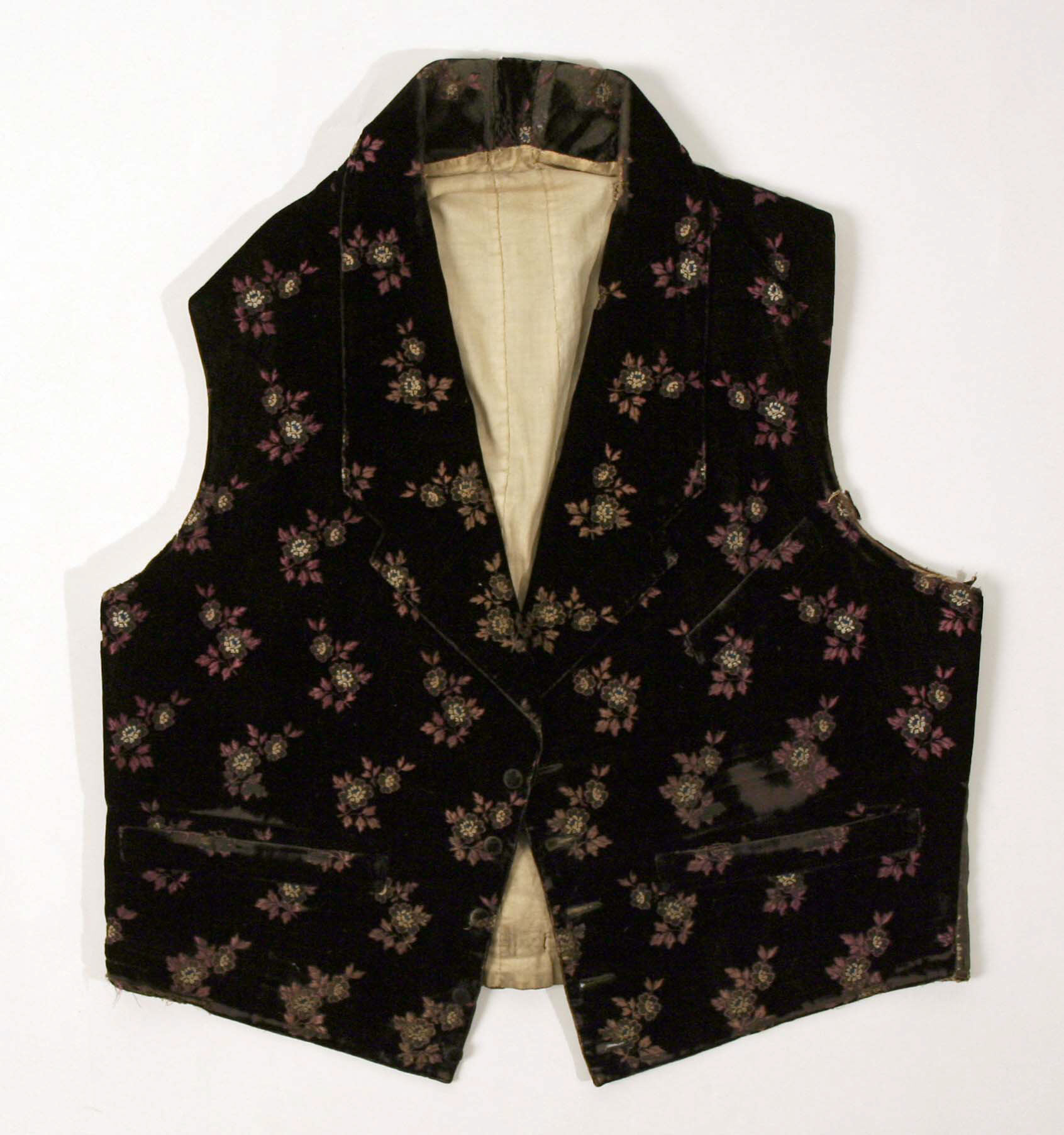
The Vest: An Architectural Study in Sartorial Reduction
Within the lexicon of couture, few garments possess the paradoxical weight of the vest. Devoid of sleeves, often stripped of collar, it stands as a study in reduction, a foundational exercise in architectural tailoring that reveals more through what it omits. At Katherine Fashion Lab, we approach the vest not as a mere accessory but as a standalone canvas upon which the core principles of European and American tailoring converge and diverge. It is the skeletal framework of suiting, isolated and elevated, demanding scrutiny for its precise negotiation between body and fabric, structure and freedom, utility and ornament.
European Rigor: The Tailored Armature
The European vest, particularly as crystallized in the British and Italian traditions, is fundamentally an exercise in structured silhouette. Its origin lies in the functional waistcoat of the 17th century, which evolved under the exacting hands of Savile Row and Neapolitan tailors into a masterpiece of controlled form. The Lab’s analysis begins with this armature. The canvas interfacing, the hand-padded edges, the precise tapering from the chest to the waist—these are not mere construction details but the very essence of the form. The European vest constructs a torso, creating a masculine V-shape through meticulous suppression of the wool or superfine cloth. The armhole is cut high and tight, a deliberate constraint that enhances the wearer’s posture and movement, reminding us that true luxury in tailoring is often defined by intelligent restriction. The fastening, a single row of buttons, becomes a focal axis, a vertical line emphasizing the engineered silhouette. Here, the vest is an interior architecture, a hidden determinant of the external elegance of the full suit.
American Liberation: The Deconstructed Dialogue
In contrast, the American vest narrative, particularly as interpreted through a modern couture lens, speaks of liberation and a dialogue with workwear. While deriving from the same historical root, its evolution alongside the ethos of ease and practicality fostered a softer, more pragmatic character. The Lab observes a distinct relaxation in the American approach—a slightly lower armhole, a less aggressive waist suppression, and a willingness to explore fabrics beyond rigid worsteds. This is the vest of the financier but also the rancher; it carries the memory of the functional frontiersman’s gilet. In a standalone context, this translates to a garment that dialogues with the body rather than commanding it. The construction may favor lighter, often unlined techniques, allowing the fabric to move with a casual grace. This American sensibility prioritizes comfort as a form of sophistication, suggesting that authority can be projected through assurance rather than rigid formality.
The Standalone Statement: From Foundation to Focal Point
Divorced from its traditional suiting context, the vest transforms. It ceases to be a foundational layer and becomes the entire argument. This is where Katherine Fashion Lab’s analysis turns to pure form. As a standalone piece, the vest’s architecture is laid bare. The back, typically hidden beneath a jacket, emerges as a critical design frontier. Will it be of silk, contrasting the wool front in the European manner, creating a private luxury? Or will it be of the same sturdy canvas, embracing a unified, utilitarian honesty? The closure evolves from a row of buttons to a potential playground of fastenings—frogs, zippers, asymmetrical straps—each altering the garment’s interaction with the body and its narrative intent.
Furthermore, the absence of sleeves heightens the importance of the side seams and armholes. Their line and finish are the vest’s articulation; a poorly considered armhole compromises the entire silhouette. In standalone wear, the vest frames the shirt or bare skin beneath, making the negative space around the arms and neck as compositionally significant as the garment itself. It becomes a frame for the individual, a sartorial spotlight.
Material as Theory: The Unspecified Medium
The deliberate absence of a specified material in this study is, in itself, a critical analytical tool. The vest’s essence is tested and expressed through its medium. Imagine the same precisely drafted pattern executed in disparate materials: In rigid brocade, it becomes a ceremonial carapace, a relic of court dress. In supple leather, it references both aviator gear and subcultural rebellion. In technical neoprene, it ventures into the realm of conceptual body-objects. In delicate silk jacquard, it speaks of decadent loungwear. The Lab contends that the vest is a chameleon, its fundamental architecture providing a stable form onto which wildly different narratives can be projected. The choice of material dictates drape, movement, and context, transforming the vest from a tailored staple into an avant-garde proposition or a piece of wearable art.
Conclusion: The Quintessential Canvas
Ultimately, the vest, in its elegant reduction, serves as the quintessential canvas for couture’s highest disciplines: precision cut, structural engineering, and material alchemy. It is a garment that demands integrity in construction, for it has nowhere to hide. Whether viewed through the lens of European rigor, which builds an ideal form upon the body, or through the American spirit of liberated utility, the vest remains a powerful study in focus. It distills the suit to its torso-centric essence, challenging the designer and the wearer to consider proportion, balance, and the bold statement of restraint. At Katherine Fashion Lab, we find that the greatest complexities often reside in the simplest forms. The vest, in its standalone glory, is not a fragment of a suit, but a complete treatise on the relationship between fabric, form, and the human frame.