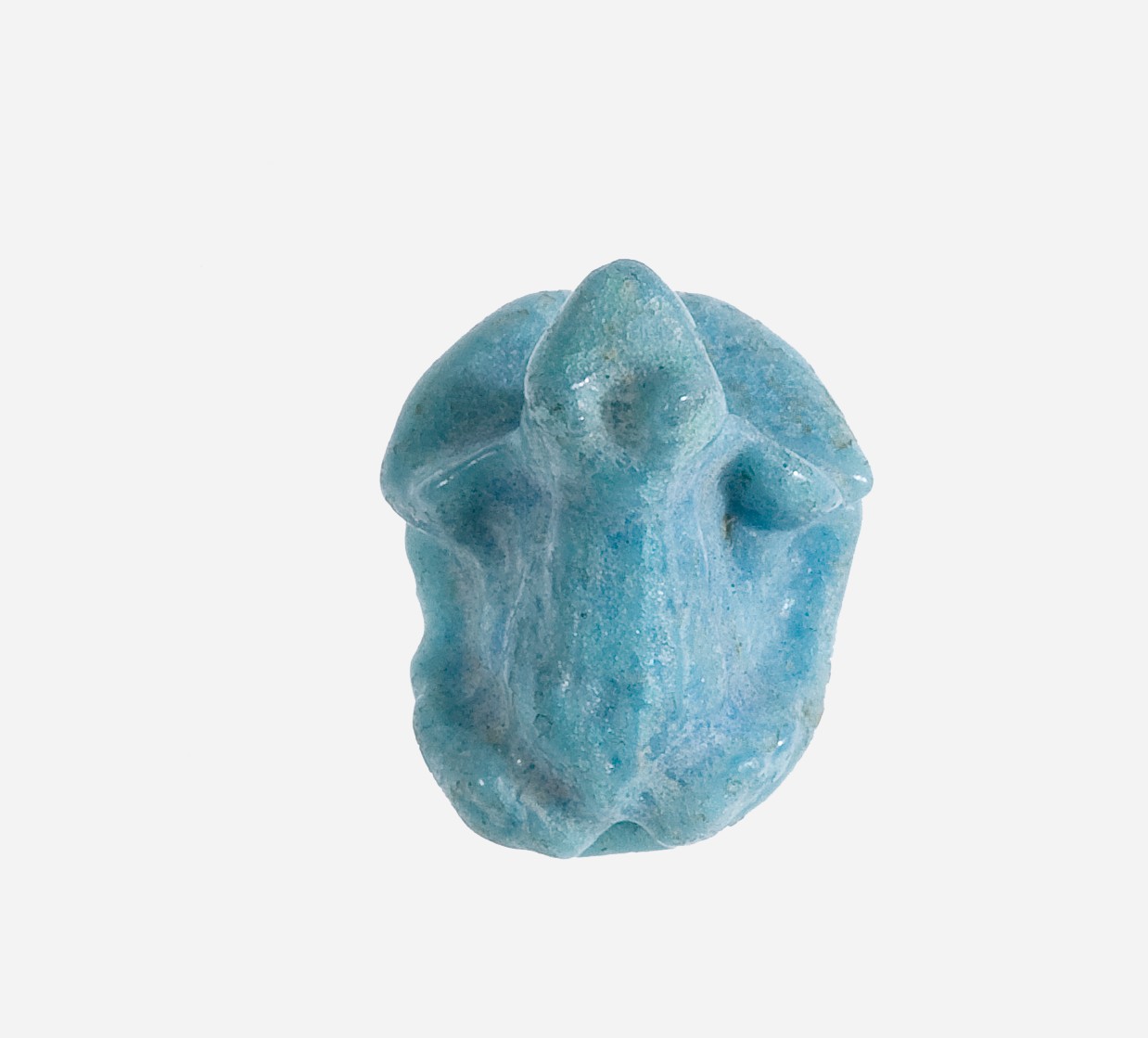
Heritage Analysis: The Frog Seal Amulet of Amenhotep III
Introduction: A Convergence of Symbolic Power and Historical Adornment
The Frog Seal Amulet, bearing the throne name of Amenhotep III—Nebmaatre—on its base, represents a singular artifact of profound cultural and spiritual significance within the ancient Egyptian civilization. Crafted from faience, a vitreous material synonymous with rebirth and the sun’s radiance, this amulet encapsulates a tripartite function: as a seal of authority, a talisman of fertility, and a marker of divine kingship. For Katherine Fashion Lab, this artifact offers a strategic blueprint for a 2026 high-end luxury strategy that transcends mere aesthetic appropriation. Instead, it demands a nuanced understanding of symbolic power, historical adornment, and spiritual meaning—elements that, when translated into contemporary luxury, can yield a collection of unparalleled depth and exclusivity.
Symbolic Power: The Frog as a Herald of Fertility and Resurrection
In ancient Egyptian cosmology, the frog was not a creature of mere terrestrial existence but a potent emblem of Heket, the goddess of childbirth and fertility. The frog’s association with the annual Nile inundation—a life-giving event that transformed barren desert into fertile soil—imbued it with connotations of renewal, abundance, and cyclical rebirth. For Amenhotep III, a pharaoh whose reign (circa 1386–1353 BCE) was marked by unprecedented prosperity and monumental building projects, the frog seal amulet would have served as a personal and state-level symbol. It affirmed the king’s role as the guarantor of Egypt’s fertility and cosmic order (Ma’at).
From a strategic luxury perspective, the frog motif offers Katherine Fashion Lab a rare opportunity to engage with a symbol that is both universally resonant and culturally specific. In 2026, where high-end consumers increasingly seek narratives of regeneration and sustainability, the frog’s symbolism of rebirth can be woven into a brand story that emphasizes renewal—whether in materials, craftsmanship, or the client’s personal journey. A luxury line inspired by this amulet could feature motifs of frogs in faience-inspired glazes, perhaps in enameled jewelry or hand-painted silk scarves, each piece serving as a talisman of transformation. The key is to elevate the frog from a mere decorative element to a symbolic anchor for the collection, much as it was for Amenhotep III.
Historical Adornment: Faience as a Medium of Prestige and Eternity
Faience, the medium of this amulet, was a technological marvel of the ancient world. Composed of crushed quartz, alkaline salts, and metallic oxides, it was fired to produce a lustrous, glass-like surface—often in shades of turquoise, blue, or green. These colors were associated with the Nile, the sky, and the afterlife, making faience an ideal material for objects intended to endure beyond mortal existence. The frog seal amulet, with its compact size (typically 1–2 cm), was designed to be worn as a pendant or ring, or carried as a seal. Its base, inscribed with the throne name of Amenhotep III, transformed it from a simple amulet into a document of authority, capable of authenticating royal decrees or personal correspondence.
For Katherine Fashion Lab, the historical context of faience as a prestige material offers a direct parallel to the high-end luxury market’s current fascination with artisanal craftsmanship and material storytelling. In 2026, luxury consumers are moving away from mass-produced, logo-heavy designs toward objects that embody rarity and heritage. A strategic line could incorporate faience-inspired finishes—such as high-fired enamel glazes or ceramic beads—into accessories like cufflinks, brooches, or handbag clasps. The seal function itself can be reimagined as a personalized luxury token, perhaps a signet ring or a pendant with a custom engraving, allowing clients to imprint their own identity onto a piece that echoes the pharaoh’s authority. This approach not only honors the artifact’s historical use but also creates an interactive, deeply personal luxury experience.
Spiritual Meaning: The Amulet as a Bridge Between Worlds
In ancient Egyptian belief, amulets were not decorative trinkets but functional objects imbued with protective and transformative power. The frog seal amulet, worn by its owner, was thought to channel the blessings of Heket, ensuring fertility in life and rebirth in the afterlife. The inclusion of Amenhotep III’s throne name added a layer of royal sanctity, linking the wearer to the divine authority of the pharaoh. This spiritual dimension—where an object serves as a conduit for cosmic forces—is a concept that resonates powerfully with modern luxury consumers, who increasingly seek meaningful objects that offer a sense of protection, intention, or connection to something greater.
Katherine Fashion Lab can leverage this spiritual meaning by positioning the frog seal amulet collection as a series of “modern talismans.” Each piece could be crafted with intentional design elements—such as hidden inscriptions, symbolic gemstones, or specific color palettes—that evoke the amulet’s original protective function. For example, a limited-edition necklace might feature a central frog motif in green enamel (symbolizing rebirth) with a discreet engraving of a personal affirmation or a client’s initials, echoing the throne name’s role. The spiritual narrative can be further amplified through exclusive storytelling events or digital content that educates clients on the amulet’s history, transforming the purchase into a ritual of empowerment. This aligns with the 2026 luxury trend of “conscious consumption,” where buyers seek products that enrich their lives on a psychological and emotional level.
2026 High-End Luxury Strategy: Synthesis and Brand Positioning
To translate the frog seal amulet into a cohesive 2026 luxury strategy, Katherine Fashion Lab must adopt a multi-layered approach that integrates symbolic power, historical adornment, and spiritual meaning into a unified brand narrative. The following strategic pillars are recommended:
1. Artisanal Collaboration: Partner with master enamelers and ceramicists to recreate faience-like finishes using contemporary techniques. Each piece should be handcrafted, with a limited production run to ensure exclusivity. This mirrors the amulet’s original status as a bespoke royal object.
2. Narrative-Driven Design: Develop a collection that tells the story of Amenhotep III’s reign, the Nile’s fertility, and the frog’s symbolism. Use lookbooks, short films, or augmented reality experiences to immerse clients in the ancient context. The design language should be minimalist but evocative, with the frog motif rendered in stylized, geometric forms that appeal to modern aesthetics while retaining historical integrity.
3. Personalization and Ritual: Offer clients the ability to customize their amulet-inspired piece with an engraving, gemstone, or color choice that reflects their personal “rebirth” or intention. This transforms the object into a modern talisman, echoing the amulet’s original spiritual function. A dedicated “Amulet Ceremony” event—where clients learn about the artifact’s history and set their intention—can elevate the purchase to a memorable luxury experience.
4. Sustainability as Rebirth: Align the collection with the frog’s symbolism of renewal by using recycled metals, ethically sourced gemstones, and low-impact production methods. Position the line as a “rebirth of ancient wisdom,” appealing to the environmentally conscious luxury consumer of 2026.
5. Exclusive Positioning: Price the collection at the highest tier of Katherine Fashion Lab’s offerings, emphasizing its rarity and cultural depth. Market it through private viewings, invitation-only trunk shows, and partnerships with museums or Egyptology experts. The goal is to create a cult object—much like the original amulet—that is coveted for its story as much as its form.
Conclusion: The Amulet as a Strategic Archetype
The Frog Seal Amulet with the throne name of Amenhotep III is more than a historical curiosity; it is a strategic archetype for luxury innovation. Its fusion of symbolic power, historical adornment, and spiritual meaning offers Katherine Fashion Lab a template for creating objects that are not merely beautiful but profoundly resonant. By honoring the amulet’s origins through artisanal craftsmanship, intentional design, and narrative depth, the brand can position itself at the forefront of a luxury market that increasingly values heritage, authenticity, and transformation. In 2026, the frog seal amulet can become a symbol of the brand’s own rebirth, bridging the ancient and the avant-garde in a collection that speaks to the enduring human desire for meaning, protection, and prestige.