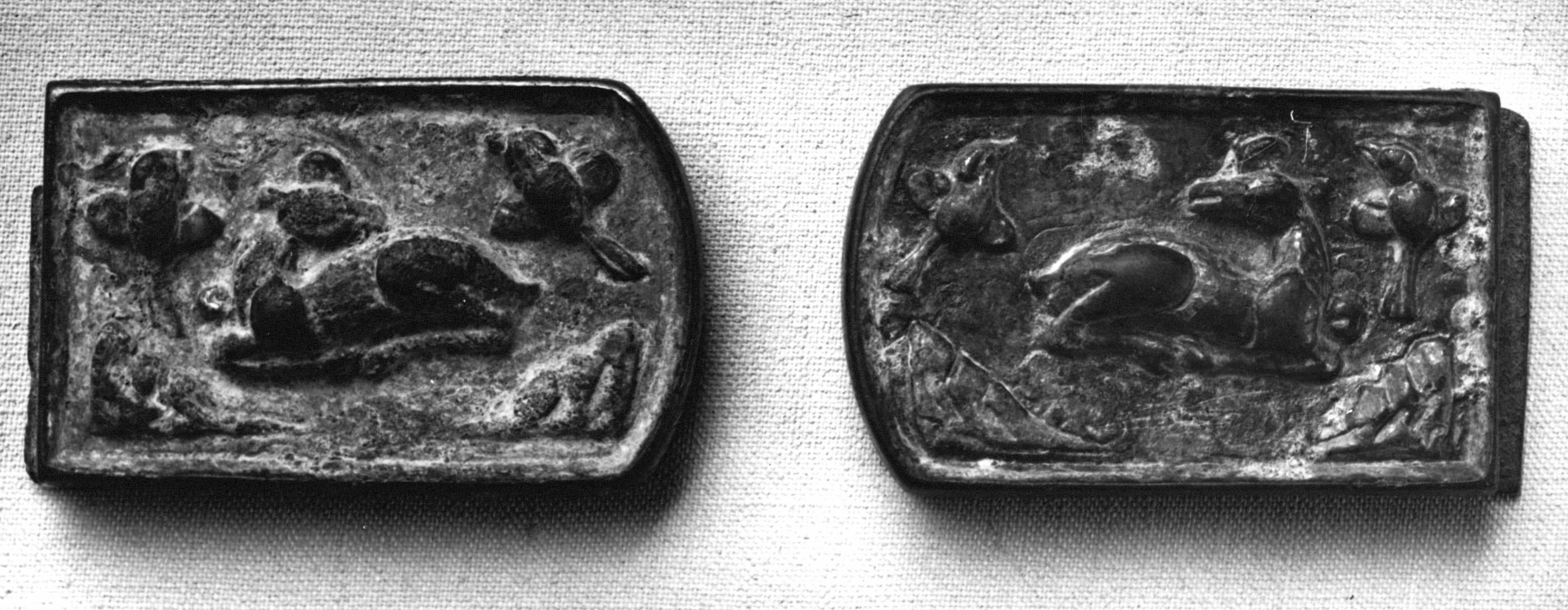
Executive Heritage Analysis: Decorative Belt Plaques of Gilt Bronze, China
This strategic standalone research paper examines the decorative belt plaques of ancient China, specifically those crafted in gilt bronze, as a lens through which to understand symbolic power, historical adornment, and spiritual meaning. The analysis concludes with a forward-looking luxury strategy for 2026, tailored to the high-end positioning of Katherine Fashion Lab. The objective is to translate these artifacts’ intrinsic authority into a contemporary design language that resonates with the modern connoisseur.
Symbolic Power: The Belt as an Instrument of Imperial and Cosmic Authority
In ancient Chinese society, the belt was far more than a functional accessory. It was a primary signifier of rank, legitimacy, and cosmic alignment. Gilt bronze belt plaques, often referred to as daikou or belt hooks, were meticulously regulated by sumptuary laws, with their material, size, and motif strictly correlating to the wearer’s status. The use of gilt—a thin layer of gold applied over bronze—elevated these objects from mere utility to sacred regalia. Gold, in Chinese cosmology, represented the yang principle: the sun, the emperor, and the unyielding force of heaven. Bronze, conversely, was associated with ritual and the earth.
The fusion of these two metals in a single plaque created a microcosm of balanced power. For the wearer—often a high-ranking official, military commander, or member of the imperial clan—the belt plaque functioned as a portable talisman of authority. It declared the wearer’s ability to mediate between the earthly and celestial realms. The gilding process itself, requiring expert craftsmanship and rare materials, underscored the exclusivity of these objects. In a 2026 luxury context, this symbolic power translates directly into the concept of “gatekeeping authority.” A modern belt plaque, even as a decorative element, can signal the wearer’s membership in a select echelon—not of birth, but of discerning taste and cultural literacy.
Historical Adornment: The Evolution of Form and Function
Historically, Chinese belt plaques evolved from simple, functional hooks used during the Warring States period (475–221 BCE) into elaborate, rectangular plaques during the Tang (618–907 CE) and Song (960–1279 CE) dynasties. The gilt bronze examples from the Tang dynasty are particularly instructive for luxury strategy. These plaques often featured openwork designs of lions, dragons, phoenixes, or grapevines, motifs borrowed from Central Asian influences along the Silk Road. The Tang court, known for its cosmopolitanism, embraced these foreign elements and integrated them into a distinctly Chinese visual language of opulence.
The manufacturing process was labor-intensive: a bronze core was cast, chased, and then gilded using mercury gilding (fire-gilding), a technique that required immense skill and posed significant health risks. This complexity ensured that each plaque was unique, a bespoke artifact. The plaques were typically arranged in sets of four to seven along a leather or silk belt, creating a rhythmic, horizontal line of visual power across the torso. This placement was intentional: the belt sat at the waist, the body’s center of gravity and a point of strategic importance in both martial and ceremonial contexts.
For Katherine Fashion Lab, this historical evolution offers a rich narrative of cultural fusion and artisanal mastery. The 2026 strategy should not simply replicate these forms but reinterpret their essence. The horizontal line of the belt, for instance, can be translated into a modular system of plaques that can be arranged or removed, allowing the wearer to customize their level of adornment. This aligns with the modern luxury consumer’s desire for personalization and ownership of narrative.
Spiritual Meaning: Talismanic Protection and Cosmic Harmony
Beyond status, these belt plaques carried profound spiritual meaning. The motifs were not decorative whims; they were deliberate choices imbued with protective and auspicious symbolism. The dragon, for example, was a symbol of imperial power and rain-making, capable of warding off evil spirits. The lion, often depicted in playful or ferocious poses, was a Buddhist guardian figure, protecting the wearer from harm. Grapevines, with their numerous seeds, represented fertility and abundance. The openwork design itself was spiritually significant: it allowed qi, or vital energy, to flow through the plaque, preventing stagnation and ensuring the wearer’s vitality.
The gilt bronze material also held metaphysical properties. Gold was believed to be incorruptible, a metal that could not tarnish or decay, symbolizing the wearer’s immortal soul or enduring legacy. Bronze, when combined with gold, was thought to amplify the wearer’s de (virtue) and attract favorable cosmic forces. Wearing such a plaque was an act of spiritual alignment, a daily reminder of one’s place in the universe.
For a 2026 luxury strategy, this spiritual dimension offers a powerful counterpoint to the often superficial nature of modern fashion. By incorporating subtle talismanic elements—such as a hidden dragon motif on the reverse of a plaque, or a material composition that references the gilding process (e.g., 24-karat gold plating over a bronze base)—Katherine Fashion Lab can position its products as objects of intentional power. The modern consumer, increasingly interested in mindfulness and authenticity, will resonate with a product that offers not just beauty but also a sense of protection and cosmic harmony.
2026 High-End Luxury Strategy: The “Gilt Authority” Collection
Based on this heritage analysis, the following strategic recommendations are proposed for Katherine Fashion Lab’s 2026 high-end luxury line, tentatively titled “Gilt Authority.”
Product Architecture: Modular and Transformative
The collection should feature a core belt structure—crafted from matte black silk or textured calf leather—with interchangeable gilt bronze plaques. Each plaque is designed as a “power token” with a specific symbolic meaning: a dragon for leadership, a phoenix for rebirth, a grapevine for prosperity. The plaques attach via a concealed magnetic mechanism, allowing the wearer to curate their own narrative. This modularity also enables the brand to offer a “starter set” and “expansion packs,” driving repeat purchases and creating a collectible ecosystem.
Material and Craftsmanship Narrative
Every plaque will be produced using a modernized version of fire-gilding, executed by master artisans in a limited atelier. The marketing narrative will emphasize the “incorruptible gold” and the “earth-born bronze”, explicitly linking the product to the spiritual and imperial traditions of ancient China. Each plaque will be individually numbered and accompanied by a certificate of authenticity that details the specific symbolism and the artisan’s lineage.
Retail Experience and Positioning
The “Gilt Authority” collection will be launched as an invitation-only event in a heritage space, such as a restored temple or a private museum. The retail environment will mimic a scholar’s study or an imperial treasury, with each plaque displayed as an artifact under glass. Sales associates will be trained as “heritage curators”, capable of explaining the symbolic power and spiritual meaning of each piece. The price point will be set at the top of the market—comparable to high jewelry—reinforcing the idea that these are not accessories but heirlooms.
Brand Collaboration and Cultural Validation
To ensure cultural authenticity, Katherine Fashion Lab should partner with a leading Chinese museum or a renowned scholar of Tang dynasty material culture. This collaboration will provide historical accuracy and lend institutional gravitas to the collection. A limited-edition capsule, co-designed with the museum, could feature exclusive motifs from their collection, further elevating the brand’s credibility in the heritage luxury space.
Conclusion: From Historical Adornment to Future Authority
The gilt bronze belt plaques of ancient China represent a pinnacle of symbolic power, historical adornment, and spiritual meaning. For Katherine Fashion Lab, these artifacts offer a blueprint for a 2026 luxury strategy that is both deeply rooted in tradition and radically innovative. By translating the modularity, material significance, and talismanic function of these plaques into a contemporary product, the brand can create a new category of “authority accessories”—objects that empower the wearer not through logos, but through the timeless language of cultural heritage. This is not a revival; it is a reclamation of power, reimagined for the discerning elite of tomorrow.