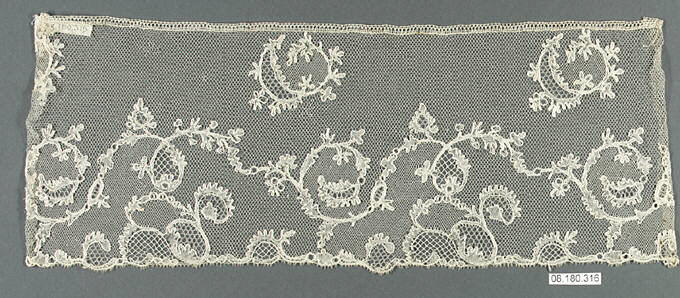
Deconstructing Heritage: The Bobbin Lace Fragment as Couture Statement
In the rarefied world of haute couture, where innovation often masquerades as disruption, Katherine Fashion Lab presents a counterintuitive yet profoundly sophisticated proposition: the Fragment. This standalone study, rooted in the meticulous craft of bobbin lace and drawing from a wellspring of Global Heritage, challenges the very notion of completeness in fashion. It is not a garment in the traditional sense, but a thesis—an exploration of memory, materiality, and the exquisite tension between decay and preservation. For the discerning connoisseur, this is not merely an accessory; it is a wearable artifact, a conversation with history stitched in thread.
The Paradox of the Fragment
The term “Fragment” is deliberate and loaded. In an industry obsessed with the whole—the complete look, the full collection—Katherine Fashion Lab posits that incompleteness can be a higher form of expression. This piece is not a remnant of something lost; it is a deliberate, curated excerpt. It exists as a standalone study, meaning it is not part of a larger ensemble but is designed to be the focal point of contemplation. The fragment becomes a lens through which we view the entire narrative of textile heritage, distilled into its most potent form. It asks the wearer and the observer to complete the story, to project their own cultural and emotional associations onto the lace. This is couture as intellectual property, where the value lies not in coverage but in conceptual density.
Global Heritage: A Tapestry of Traditions
The Global Heritage origin of this piece is not a mere marketing tagline; it is a foundational design principle. Bobbin lace, while often associated with European courts—Flanders, Venice, and France—is a truly global craft with parallel traditions in Asia, the Americas, and Africa. Katherine Fashion Lab’s interpretation synthesizes these disparate threads. The geometric precision of the lace recalls the mathematical rigor of Andean quipus and the symmetrical patterns of Islamic arabesques. The organic, floral motifs whisper of Mughal miniatures and Chinese silk embroidery. Yet, the technique remains unmistakably bobbin lace—the twisting, crossing, and pinning of threads on a pillow. This is not cultural appropriation but cultural orchestration. The Lab acts as a curator, weaving a global lexicon into a single, coherent visual language. Every knot and loop is a citation, a homage to the anonymous hands that perfected these techniques across centuries and continents.
Materiality: Bobbin Lace as Architectural Medium
The choice of bobbin lace as the sole material is a masterstroke of restraint. Unlike machine-made lace, which is uniform and lifeless, handmade bobbin lace possesses a tactile, almost organic quality. It is a material paradox: simultaneously fragile and resilient, airy yet structurally complex. In this study, the lace is not used as a trim or an embellishment; it is the entire fabric. The Lab has engineered the lace to stand on its own, often without a backing or lining, creating a negative space that is as important as the thread itself. This transparency becomes a metaphor for the fragmentary nature of heritage—what is visible is only a part of a larger, unseen whole.
The color palette is deliberately monochromatic, typically a raw, unbleached linen white or a deep, archival sepia. This choice eschews the distraction of color, forcing the eye to focus on the intricate play of light and shadow within the lace structure. The texture is varied: some sections are densely packed, almost like a woven textile, while others open into delicate, net-like voids. This textural contrast creates a rhythm, a visual score that guides the viewer’s gaze across the fragment. The material, in its raw state, references the unfinished manuscript, the archaeological find—a piece of the past preserved for future interpretation.
Context: The Standalone Study as a New Category
The context of a standalone study is critical to understanding this piece’s place in the couture ecosystem. It is not a dress, not a jacket, not a scarf. It is a wearable conceptual object. The fragment can be draped, pinned, hung, or framed. It might be worn as a collar, a veil, a sash, or even a wall installation. Its versatility is not a weakness but a strength—it invites the owner to become a co-creator, to decide how the fragment interacts with the body or the space. This blurs the line between fashion, art, and artifact. In the context of Katherine Fashion Lab’s broader oeuvre, this piece represents a departure from seasonal collections. It is a timeless object, resistant to the rapid cycles of trend and obsolescence. It is meant to be acquired, studied, and passed down, much like a piece of antique jewelry or a family heirloom.
Technical Virtuosity and Preservation
From a technical standpoint, the execution of this fragment is nothing short of extraordinary. The bobbin lace is handcrafted using fine linen thread, sometimes blended with silk or metallic filaments for subtle luminosity. The pattern is not a reproduction of an existing historical design but an original composition that mimics the irregularities of age. The Lab has deliberately introduced “imperfections”—slight asymmetries, pulled threads, and deliberate breaks—to simulate the wear of centuries. This is not a flaw; it is a feature. It is a commentary on the authenticity of the fragment. A perfect, machine-made replica would lack the soul of the original. By embracing these imperfections, the piece achieves a level of verisimilitude that is both intellectually honest and aesthetically compelling.
Preservation is also integral to the design. The fragment is often mounted on a conservation-grade backing or presented in a custom archival box. The Lab provides detailed care instructions, emphasizing that this piece is not for casual wear but for curated display and special occasions. This shifts the consumer relationship from consumption to stewardship. The owner is not just a buyer; they are a custodian of heritage.
Implications for the Future of Couture
Katherine Fashion Lab’s Fragment is a quiet revolution. In an era of fast fashion and digital saturation, it demands slowness, attention, and reverence. It suggests that the future of luxury lies not in novelty but in depth of meaning. By isolating a single technique—bobbin lace—and a single concept—the fragment—the Lab has created a piece that is both a masterclass in craftsmanship and a philosophical inquiry into the nature of heritage. It challenges the industry to reconsider what constitutes a garment, what defines a collection, and how we value the past. For the collector, the scholar, and the aesthete, this is not just a purchase; it is an acquisition of knowledge, a fragment of global history rendered in thread. And in that, it is whole.