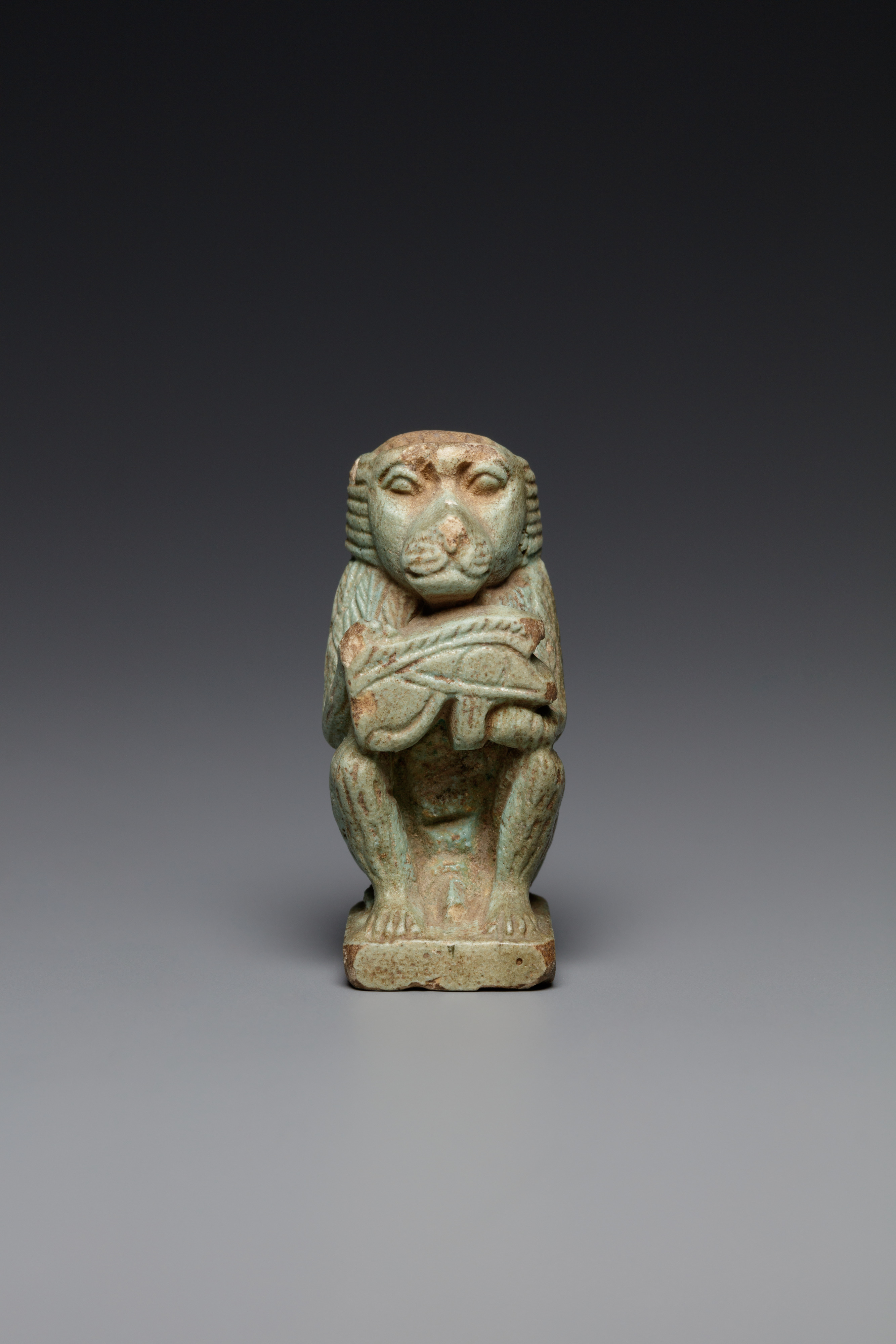
Heritage Analysis: The Baboon with a Wedjat Eye in Faience
In the annals of ancient material culture, few artifacts combine esoteric symbolism with aesthetic refinement as potently as the faience baboon bearing the wedjat eye. This object, originating from the spiritual and ceremonial heart of ancient Egyptian civilization, represents a confluence of animalistic power, divine protection, and artisanal mastery. For Katherine Fashion Lab, a heritage analysis of this piece is not merely an academic exercise but a strategic imperative. As the 2026 luxury market pivots toward narrative-driven, symbolically resonant collections, the baboon with a wedjat eye offers a blueprint for integrating primal symbolism with high-end craftsmanship. This paper deconstructs its symbolic power, historical adornment practices, spiritual meaning, and translates these elements into a 2026 luxury strategy that commands authority, exclusivity, and cultural depth.
Symbolic Power: The Baboon as a Guardian of Thresholds
Primal Authority and Lunar Connection
The baboon, in ancient Egyptian cosmology, was not a mere animal but a revered embodiment of Thoth, the god of writing, wisdom, and the moon. Depicted with a baboon’s head, Thoth served as the divine scribe and mediator. The baboon itself was associated with the lunar cycle, often shown greeting the rising sun with uplifted arms—a gesture of adoration and vigilance. This posture, captured in faience, imbues the object with primal authority. The baboon’s gaze, often fixed and unyielding, signifies a guardian of thresholds—both physical and metaphysical. In a luxury context, this symbolism translates to a brand identity that stands as a sentinel of heritage, quality, and truth. For Katherine Fashion Lab, adopting the baboon motif signals a return to foundational values: wisdom, protection, and an unassailable presence in the market.
The Wedjat Eye: Amulet of Wholeness
The wedjat eye, or the Eye of Horus, is one of the most potent protective symbols in ancient Egypt. It represents healing, restoration, and the cosmic order (Ma’at). When combined with the baboon, the wedjat eye amplifies the object’s apotropaic power. The eye is not merely an ornament; it is a functional device that wards off chaos and ensures the wearer’s integrity. In high-end luxury, this duality—beauty and protection—creates a compelling narrative. A 2026 collection featuring the wedjat eye can position itself as an armor for the modern elite, offering not just aesthetic pleasure but psychological safety. The baboon’s role as a carrier of this eye transforms the artifact into a talisman of resilience, a theme that resonates deeply in an era of global uncertainty.
Historical Adornment: Faience as a Medium of Prestige
The Alchemy of Faience
Faience, a glazed non-clay ceramic, was the ancient Egyptian precursor to modern luxury materials. Its production involved a sophisticated process of grinding quartz, mixing with alkaline binders, and firing to achieve a lustrous, vitreous surface. The brilliant blue-green hue, mimicking turquoise and lapis lazuli, was associated with rebirth, fertility, and the Nile’s life-giving waters. For Katherine Fashion Lab, faience represents the artisanal alchemy that contemporary luxury consumers crave. Unlike mass-produced metals or plastics, faience carries the imprint of the maker’s hand and the unpredictability of fire. In 2026, a heritage-driven strategy can revive faience-inspired finishes—glazed ceramics, enameled metals, or high-polish resins—that evoke this ancient prestige. The baboon’s faience form, with its subtle cracks and color variations, becomes a metaphor for imperfect perfection, a hallmark of true craftsmanship.
Adornment as Ritual Object
In ancient Egypt, such artifacts were not merely decorative; they were functional in ritual and daily life. The baboon with a wedjat eye might have been worn as a pendant, placed in tombs, or used in temple ceremonies. Its size and weight suggest it was designed for intimate interaction—held, touched, or worn close to the body. This tactile intimacy is a lost dimension in modern luxury, where digital interfaces dominate. For Katherine Fashion Lab, this insight suggests a 2026 strategy centered on haptic luxury: pieces that invite touch, that carry weight, and that warm to the skin. The baboon’s faience surface, smooth and cool, offers a sensory experience that algorithms cannot replicate. By prioritizing materiality and ritualistic use, the brand can differentiate itself in a saturated market.
Spiritual Meaning: The Convergence of Wisdom and Protection
Thoth’s Mediation and the Baboon’s Role
Spiritually, the baboon’s association with Thoth elevates it beyond mere animal symbolism. Thoth was the arbiter of divine justice, the inventor of hieroglyphs, and the keeper of time. The baboon, as his earthly manifestation, was believed to possess esoteric knowledge and the ability to communicate between realms. The wedjat eye, meanwhile, was the eye that saw all—past, present, and future. Together, they create a symbol of omniscient guardianship. For the luxury consumer in 2026, this spiritual meaning translates to a desire for objects that confer wisdom and protection. A Katherine Fashion Lab piece inspired by this motif can be marketed as a talisman for decision-makers—offering clarity, foresight, and a shield against market volatility. The spiritual narrative becomes a value proposition, not just a decorative afterthought.
Rebirth and the Afterlife
Faience’s blue-green color and the wedjat eye’s restorative power also link the baboon to themes of rebirth and the afterlife. In burial contexts, such artifacts were placed to ensure the deceased’s safe passage and regeneration. This cyclical symbolism aligns with contemporary luxury’s focus on sustainability and legacy. A 2026 collection can frame the baboon with a wedjat eye as a legacy piece—an heirloom designed to be passed down, carrying protective energy through generations. This positions Katherine Fashion Lab within the slow luxury movement, countering fast fashion’s disposability with objects that transcend time.
2026 High-End Luxury Strategy: From Artifact to Asset
Narrative-Driven Exclusivity
For 2026, Katherine Fashion Lab must leverage the baboon with a wedjat eye as a narrative anchor. The artifact’s story—its creation by ancient hands, its journey through millennia, its symbolic weight—is itself a luxury commodity. A limited-edition collection, perhaps titled “Guardians of the Threshold,” can feature baboon motifs in faience-inspired glazes, with the wedjat eye embedded in hardware, clasps, or embroidery. Each piece should come with a provenance card detailing the symbolism, appealing to collectors who value cultural authenticity. This strategy transforms a product into an asset, a conversation piece, and a status marker that cannot be replicated by fast-fashion competitors.
Material Innovation: Modern Faience
Partnering with contemporary ceramicists or enamel artisans, Katherine Fashion Lab can develop a modern faience—a proprietary glaze blend that captures the ancient luster while meeting modern durability standards. This material can be used for jewelry, bag hardware, or even fragrance bottle stoppers. The color palette should lean into the original blue-green, but with subtle variations (deep indigo, oxidized copper) to create a signature. The haptic experience of cool, smooth faience against the skin becomes a brand signature, akin to Hermès’ silk or Bottega Veneta’s intrecciato.
Spiritual Marketing and Experiential Retail
The spiritual dimension offers a rich vein for experiential marketing. Katherine Fashion Lab can host curated rituals in flagship stores—inviting clients to select a baboon talisman piece, with a brief ceremony invoking the wedjat eye’s protective power. This is not about appropriation but about cultural reverence; the brand must work with Egyptologists and contemporary spiritual practitioners to ensure respectful representation. In 2026, luxury consumers seek meaning over materialism. A baboon-inspired collection that offers both beauty and a sense of cosmic order will command premium pricing and fierce loyalty.
Pricing and Positioning
Positioning the baboon with a wedjat eye as a cult object allows for a pricing strategy that mirrors fine art. Limited runs of 100 pieces per design, with prices starting at $5,000 for smaller talismans and escalating to $50,000 for sculptural pieces. The exclusivity is reinforced by a digital provenance ledger—a blockchain record of each piece’s creation and symbolic meaning. This bridges ancient heritage with 2026 technology, appealing to both traditionalists and tech-forward clients.
Conclusion
The baboon with a wedjat eye in faience is far more than an archaeological curiosity. It is a masterclass in symbolic integration—combining animal power, divine protection, artisanal excellence, and spiritual depth. For Katherine Fashion Lab, this artifact offers a strategic foundation for a 2026 luxury line that is intellectually rigorous, materially exquisite, and emotionally resonant. By honoring the baboon’s role as a guardian and the wedjat eye’s restorative power, the brand can craft a narrative of timeless protection that speaks to the anxieties and aspirations of the modern elite. In a market flooded with ephemeral trends, the baboon with a wedjat eye stands as a permanent sentinel—a reminder that true luxury is not bought, but inherited from history itself.