Executive Summary: The Vase as a Strategic Artefact
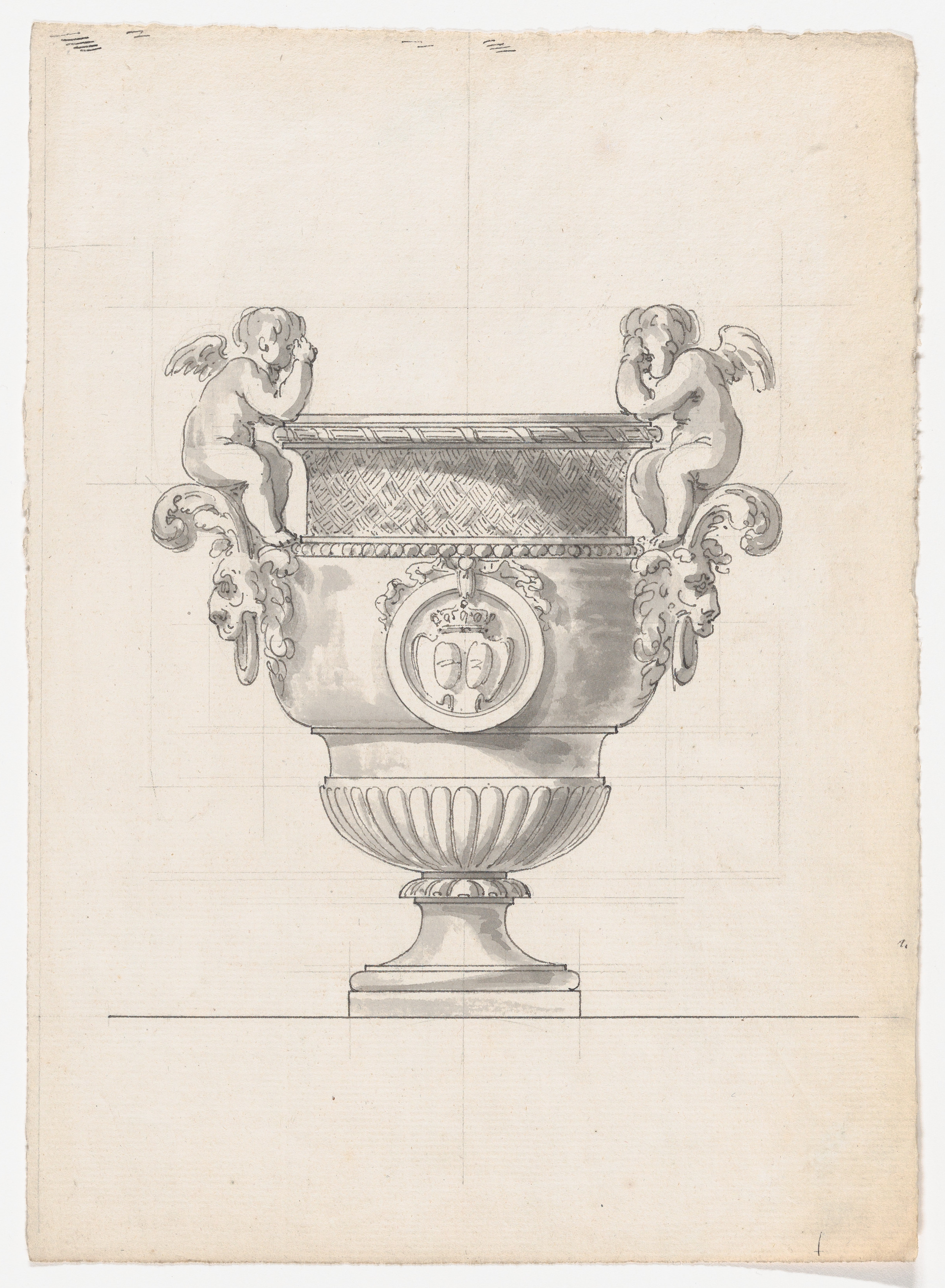
This strategic heritage analysis examines the Bronze Garden Vase with Two Putti from the Gardens of Versailles, not merely as a historical object, but as a codified system of symbolic power and narrative adornment. Originating from the apex of French absolutism, the vase transcends its materiality (bronze) and its documented medium (pen, ink, and wash over graphite) to embody a complex language of authority, divine right, and controlled nature. For Katherine Fashion Lab, this artefact serves as a profound case study in embedding timeless spiritual meaning and political theatre into tangible form. This analysis will deconstruct its symbolic lexicon to inform a forward-looking 2026 luxury strategy centered on sovereignty, legacy, and the curation of immersive, myth-driven experiences.
Deconstructing Symbolic Power: The Lexicon of Absolutism
The chosen vase is not a solitary decorative piece; it is an emissary of Louis XIV's totalizing vision. Its provenance—the Gardens of Versailles—places it within a meticulously engineered landscape designed to manifest the Sun King's dominion over both man and nature. Every element is a deliberate signifier.
The Putti as Divine Mandate
The two putti are far from mere cherubic ornaments. In the context of 17th-century French court iconography, putti often represented the benevolent forces of nature or the arts, subdued and orchestrated by the monarch's will. Their presence on a garden vase directly links the object to a concept of divinely sanctioned rule. The vase becomes a pedestal for these celestial beings, suggesting that the king's authority (and by extension, the luxury emanating from his court) is supported by providence itself. This transforms the object from container to altar, infusing it with a spiritual meaning that elevates it above the mundane.
Bronze as the Medium of Eternity
The material—bronze—is critical to decoding its symbolic power. Bronze signifies permanence, strength, and imperial grandeur. Unlike fragile porcelain or transient blooms, bronze withstands the elements, asserting its presence through seasons and centuries. It communicates an ambition for legacy, a key pillar of true luxury. The technical drawing medium (pen, ink, gray wash over precise graphite lines) further emphasizes this intent: it reflects the Enlightenment-era drive to rationalize beauty, to plan immortality with mathematical precision before casting it in enduring metal.
Historical Adornment: The Body as Landscape
The vase provides a masterclass in the philosophy of historical adornment, where adornment is not additive but constitutive of identity and space. The Gardens of Versailles were an extension of the royal body, and objects within it were jewels in a vast, open-air diadem.
From Architectural Motif to Wearable Architecture
The sculptural quality of the vase—its robust handles, rhythmic acanthus leaves, and figurative relief—presents a template for translating architectural volume into wearable form. Consider the handle not as a mere functional component but as a structural element that could inspire the curve of a collar, the sweep of a sleeve, or the architecture of a handbag. The gray wash of the drawing indicates play of light and shadow on the bronze's patinated surface, a direct analogue to the interplay of matte and lustre textiles, or embossed and smooth leathers. For KFL, this suggests a design principle of wearable monumentality—garments and accessories that carry the gravitas and proportion of sculpture.
Narrative Embroidery and Symbolic Motifs
The narrative frieze featuring the putti invites a strategy of encoded storytelling. In 2026 luxury, overt branding will cede ground to personal mythology. The putti motif, abstracted or modernized, could become a proprietary symbol for KFL—a signature embroidery, a clasp detail, a jacquard pattern—that tells a story of curated joy, divine inspiration, or nurtured creativity. This aligns with the growing consumer desire for products that are not just beautiful but bibliographic, containing layers of meaning to be discovered.
Strategic Integration: The 2026 High-End Luxury Blueprint
The 2026 luxury landscape will be defined by intellectual capital, immersive world-building, and sovereign consumer identity. The symbolism of the Versailles vase provides a robust framework to meet these demands.
Pillar 1: Sovereign Identity & Quiet Power
The vase embodies a quiet, unquestioned authority. The 2026 strategy must move beyond loud logos to cultivate this aesthetic of quiet power. This means exceptional fabrication (the "bronze" equivalent in cashmere, technical silks, or innovatively hardened fabrics), impeccable structure (the "architectural" silhouette), and a subdued, symbolic branding language (the "putti" motif). The customer does not shout; they command attention through intrinsic quality and layered meaning, asserting sovereignty over their personal style.
Pillar 2: The Legacy Garden: Experiential & Bespoke
Just as the vase was part of a larger, experiential garden, KFL must curate legacy experiences. This extends beyond trunk shows to include commissioned "garden" installations for clients, where collections are presented amidst curated art and nature. A bespoke service could be modeled on the "commissioning" of a royal vase: clients co-create unique pieces, perhaps providing personal symbols to be integrated into a classic KFL silhouette, crafting their own heirloom narrative. The medium of the original drawing—the precise plans—highlights the value of the creative process itself, which can be offered as an exclusive client journey.
Pillar 3: Spiritual Meaning & Modern Myth
The spiritual resonance of the putti—representing love, nature, divine favor—addresses a modern hunger for meaning. KFL's 2026 narrative should position its creations as talismans for a contemporary life. A coat is not just warmth; it is an armor of self-belief. A bag is not just carryall; it is a vessel for personal aspirations. Marketing and storytelling should evoke this modern mythology, connecting the heritage of artistic patronage and divine inspiration to the client's own journey of self-realization and creative expression.
Conclusion: Casting the Future in Heritage Bronze
The Bronze Garden Vase with Two Putti is a concentrated lesson in luxury as an exercise in symbolic sovereignty. For Katherine Fashion Lab, its analysis yields a clear strategic path for 2026: to create not seasonal fashion, but enduring artefacts. By translating the vase's lexicon of power (bronze permanence), its language of adornment (architectural volume, narrative motif), and its spiritual undertones (divine mandate, curated nature) into a modern design ethos, KFL can cultivate a brand that stands with the quiet authority of a monument. The goal is to offer the contemporary sovereign—the client—a legacy wardrobe: pieces that are psychologically empowering, rich with discoverable story, and, like the vase in the Sun King's garden, designed to define a space and endure far beyond the season.