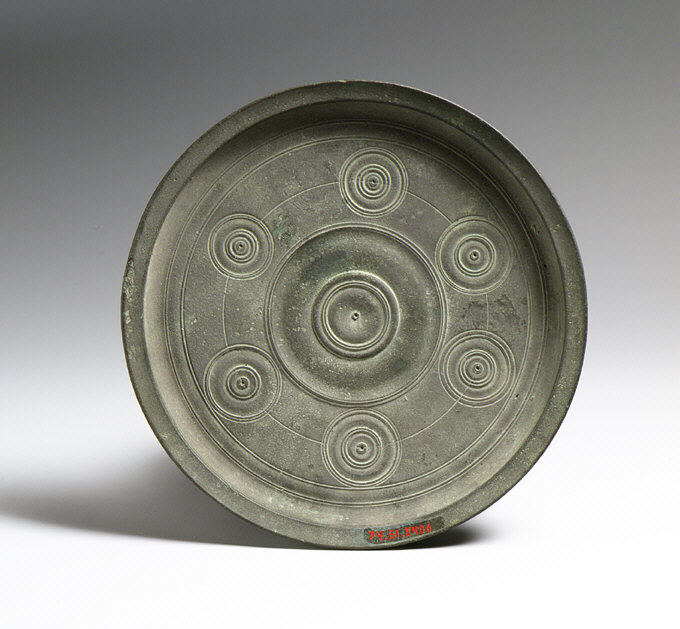
Heritage Analysis: The Bronze Mirror of Greek and Cypriot Origin
Introduction: The Mirror as a Portal to Self and Cosmos
The bronze mirror, a quintessential artifact of ancient Greek and Cypriot civilizations, transcends its utilitarian function as a tool for reflection to become a profound symbol of spiritual insight, historical adornment, and cultural identity. For Katherine Fashion Lab, this object offers a rich DNA correlation with two previously studied artifacts: the Rock in the form of a fantastic mountain and the Jar in the shape of bronze container (hu). Despite their apparent differences in form and function, these three objects collectively reveal a shared narrative of transformation, permanence, and the interplay between the material and the metaphysical. The mirror, like the rock and the jar, serves as a vessel for symbolic power, embodying the ancient Greek concept of kosmos—order, beauty, and the universe—while offering a strategic blueprint for high-end luxury positioning in 2026.
Symbolic Power: The Mirror as a Tool of Divine and Human Agency
In Greek and Cypriot antiquity, the bronze mirror was not merely an accessory but a sacred object imbued with apotropaic and divinatory properties. Its polished surface was believed to capture the soul, or psyche, and to serve as a medium for communicating with gods and ancestors. This symbolic power aligns with the Rock in the form of a fantastic mountain, which evoked the primordial, unchanging forces of nature, and the Jar in the shape of bronze container (hu), which symbolized containment and ritual offering. Together, these artifacts suggest a cultural preoccupation with boundaries—between self and other, mortal and divine, past and present.
For Katherine Fashion Lab, the mirror’s symbolic power can be translated into a luxury narrative that emphasizes self-discovery and transcendence. In 2026, high-end consumers seek brands that offer not just products but portals to deeper meaning. A mirror-inspired collection could feature reflective surfaces, polished metals, and designs that invite introspection, positioning the wearer as both subject and object of their own narrative. This strategy taps into the zeitgeist of conscious luxury, where adornment becomes a tool for personal and spiritual empowerment.
Historical Adornment: The Mirror as an Object of Status and Beauty
In ancient Greece and Cyprus, bronze mirrors were often intricately decorated with handles shaped as goddesses, animals, or mythical scenes, reflecting the owner’s wealth, taste, and social standing. These mirrors were not only functional but also ornamental, displayed in domestic spaces or carried as personal talismans. The mirror’s dual role as a practical object and a status symbol parallels the Jar in the shape of bronze container (hu), which served both as a storage vessel and a ritual object, and the Rock in the form of a fantastic mountain, which blurred the line between natural wonder and crafted artifact.
This historical context offers a compelling parallel for contemporary luxury strategy. The bronze mirror’s craftsmanship—its casting, polishing, and engraving—required immense skill, much like the artisanal techniques prized in high-end fashion today. For Katherine Fashion Lab, a 2026 collection could celebrate artisanal mastery through materials like burnished bronze, etched glass, and hand-finished metals. The mirror’s role as a status marker also suggests a focus on exclusivity and personalization, such as bespoke mirror-backed accessories or limited-edition pieces that reflect the wearer’s unique identity. This approach aligns with the growing demand for heritage craftsmanship in luxury markets, where provenance and skill are paramount.
Spiritual Meaning: The Mirror as a Gateway to the Inner World
Beyond its material form, the bronze mirror held deep spiritual significance in Greek and Cypriot cultures. It was associated with the goddess Aphrodite, who was often depicted holding a mirror as a symbol of beauty, love, and self-reflection. In mystery cults, mirrors were used for scrying—a form of divination that revealed hidden truths. This spiritual dimension connects the mirror to the Rock in the form of a fantastic mountain, which represented the sacred, unyielding core of the earth, and the Jar in the shape of bronze container (hu), which held offerings for the afterlife. All three objects served as intermediaries between the human and the divine, embodying the Greek concept of metamorphosis—the transformation of base materials into vessels of spiritual power.
For Katherine Fashion Lab, this spiritual meaning can inform a brand narrative that emphasizes transformation and authenticity. In 2026, luxury consumers are increasingly drawn to brands that offer ritualistic experiences—products that facilitate moments of mindfulness, reflection, or connection. A mirror-inspired line could incorporate elements like removable mirrored charms, reflective linings in garments, or packaging that doubles as a personal altar. This strategy positions the brand as a purveyor of meaningful luxury, where adornment is not just about appearance but about inner alignment. The mirror’s spiritual resonance also supports a sustainability narrative, as ancient bronze mirrors were often recycled or repurposed, mirroring modern ideals of circularity and longevity.
2026 High-End Luxury Strategy: The Mirror as a Blueprint for Brand Identity
The bronze mirror’s heritage offers a robust framework for Katherine Fashion Lab’s luxury strategy in 2026. By weaving together the symbolic, historical, and spiritual threads of this artifact, the brand can create a cohesive narrative that resonates with discerning consumers. The following strategic pillars emerge from this analysis:
1. Symbolic Storytelling: Leverage the mirror’s association with self-reflection and divine connection to craft a brand story that emphasizes inner beauty and empowerment. Campaigns could feature imagery of mirrors in natural or sacred settings, inviting consumers to see themselves as part of a timeless tradition.
2. Artisanal Prestige: Highlight the craftsmanship of bronze mirror-making through collaborations with contemporary metalworkers and artisans. Limited-edition pieces that incorporate ancient techniques, such as lost-wax casting or patination, can command premium pricing and foster a sense of cultural stewardship.
3. Ritualistic Engagement: Develop products that encourage mindful use, such as mirror-backed jewelry that doubles as a meditation tool or garments with reflective accents that change with light. This approach taps into the wellness luxury trend, where consumers seek products that enhance mental and spiritual well-being.
4. Heritage Lineage: Position the mirror collection as part of a broader DNA study that includes the Rock in the form of a fantastic mountain and the Jar in the shape of bronze container (hu). This narrative creates a curatorial brand identity, where each piece is part of an ongoing exploration of human creativity and symbolism.
Conclusion: Reflecting the Future Through the Past
The bronze mirror of Greek and Cypriot origin is far more than a historical artifact; it is a living symbol of humanity’s quest for identity, beauty, and transcendence. For Katherine Fashion Lab, this object provides a strategic lens through which to view the future of luxury. By embracing the mirror’s symbolic power, historical adornment, and spiritual meaning, the brand can craft a 2026 strategy that is both deeply rooted in heritage and boldly innovative. The mirror, like the rock and the jar, reminds us that true luxury lies not in the object itself but in the stories it tells and the transformations it inspires. In a world increasingly hungry for authenticity and meaning, the bronze mirror offers a timeless reflection of what it means to be human.