The Art of Courtly Presence: A Couture Analysis of a French Presentation Ensemble
Historical Context and the Language of Power
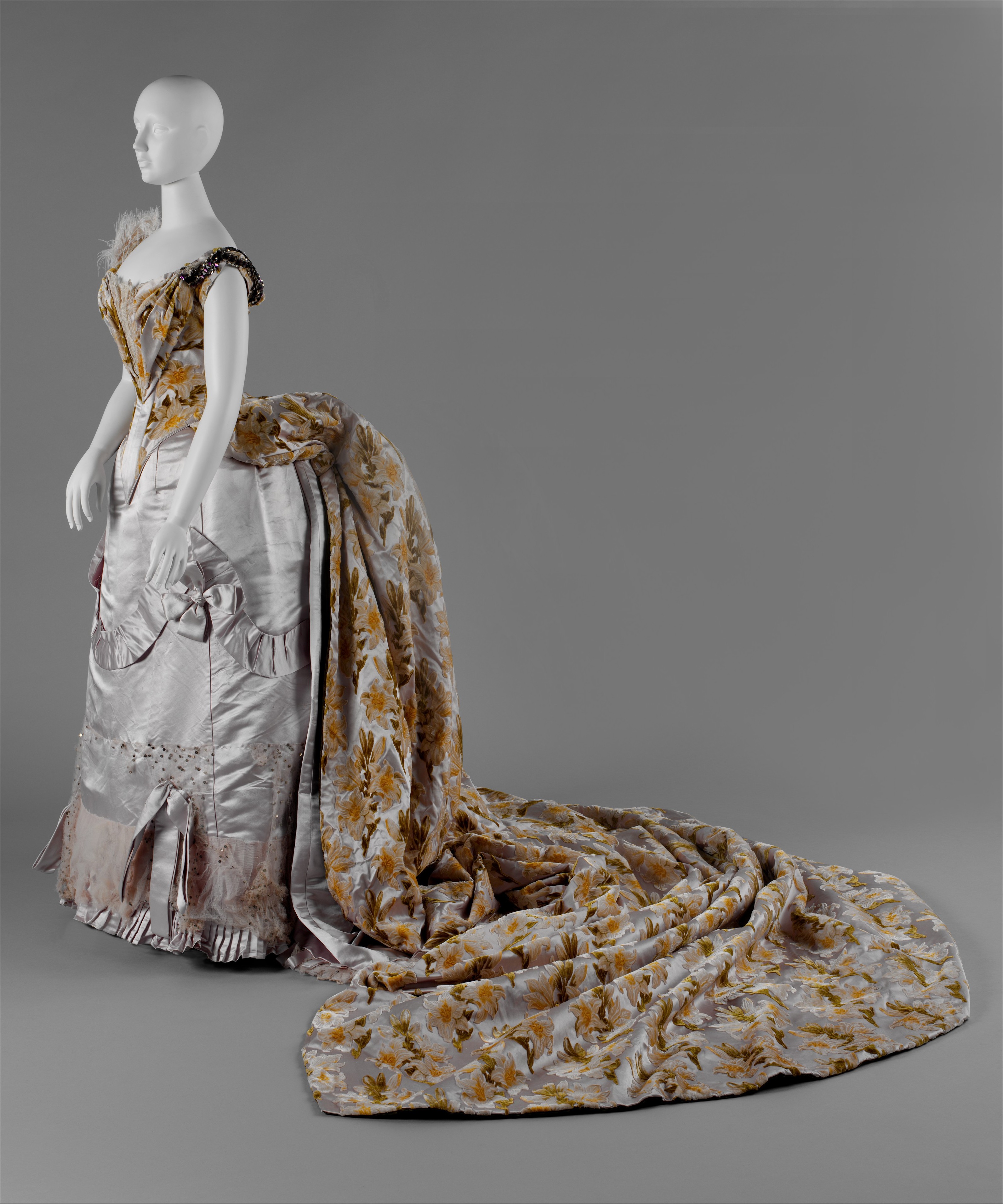
The court presentation ensemble, a quintessential artifact of French aristocratic fashion, transcends mere clothing to become a strategic instrument of social and political communication. Originating in the opulent courts of the Ancien Régime, such ensembles were meticulously engineered to convey status, lineage, and allegiance through every fiber and embellishment. This standalone analysis examines a particular composition, likely from the late 18th or early 19th century, where the interplay of silk, metal, feathers, and glass creates a visual symphony of authority and grace. The ensemble’s construction—spanning multiple distinct segments labeled (a) through (l)—reveals a sophisticated understanding of material hierarchy and symbolic weight, where each component serves a deliberate narrative function within the rigid etiquette of court life.
Material Mastery: The Foundation of Silk and Metal
The predominant use of silk across all components—from (a) through (l)—establishes a baseline of luxury that was both practical and symbolic. French silk, particularly from Lyon, was renowned for its luminosity, drape, and ability to absorb vibrant dyes. In this ensemble, the silk provides a fluid yet structured canvas, its subtle sheen catching candlelight in the grand halls of Versailles or the Tuileries. The inclusion of metal threads in components (a) through (d) and (h) through (l) introduces a rigid, reflective counterpoint. These metallic elements—likely gold or silver-wrapped threads—were not merely decorative; they signified wealth that could be liquidated in times of crisis, a form of wearable treasury. The metal’s interplay with silk creates a tactile tension: the softness of the textile yields to the unyielding gleam of the metal, mirroring the courtier’s need for both grace and unassailable status.
Feathers and Glass: Theatricality and Transience
Components (a) and (g) incorporate feathers, a material that introduces movement and ephemeral beauty. In French court fashion, feathers—often from ostriches, herons, or birds of paradise—were markers of exoticism and global reach, as many were imported from distant colonies. Their inclusion in this ensemble suggests a specific ceremonial function, perhaps for a ball or a formal audience where dynamic visual impact was paramount. The feathers’ lightness contrasts with the metallic weight, creating a sense of ethereal grandeur. Meanwhile, glass in component (a) adds a prismatic dimension. Glass beads or sequins, often faceted, would have scattered light, mimicking the sparkle of diamonds while remaining more accessible. This strategic use of glass reflects the couturier’s understanding of optical illusion: the ensemble dazzles from a distance, ensuring the wearer’s presence is felt across a vast, crowded room.
Structural Deconstruction: From (a) to (l)
A granular examination of the ensemble’s labeled segments reveals a deliberate hierarchy of materials and construction. Component (a), with its combination of silk, metal, feathers, and glass, likely forms the centerpiece—perhaps a bodice or a headpiece—where the most dramatic elements converge. This concentration of diverse materials anchors the ensemble’s visual narrative, drawing the eye to the wearer’s upper body, the traditional locus of authority. Components (b) through (d), constructed solely of silk and metal, suggest transitional elements such as sleeves or a train, where structural integrity and movement are prioritized over excessive ornamentation. The metal threads here likely reinforce seams or create subtle patterns, ensuring durability without sacrificing elegance.
Components (e) and (f), made entirely of silk, represent zones of quiet refinement. These may correspond to an underskirt or lining, where the pure silk provides a smooth, unadorned backdrop that allows the more ornate sections to shine. The absence of metal in these parts also reduces weight, enabling the wearer to move with the required fluidity. Component (g), with feathers, silk, and metal, likely forms a dramatic shoulder piece or a fan-shaped accent, reintroducing the theatricality of (a) but in a more localized form. Finally, components (h) through (l), all silk and metal, suggest repetitive structural elements—perhaps a series of buttons, trim, or a structured collar—that unify the ensemble through consistent material language.
Symbolic Resonance and Courtly Performance
The ensemble’s material composition is inseparable from its symbolic function. In French court culture, presentation was a performance of power, and every detail was scrutinized. The metal threads, often woven into intricate brocart or lampas patterns, echoed the gilded architecture of the palace, creating a visual harmony between the wearer and their environment. The feathers evoked the plumage of the royal menagerie, a subtle reminder of the monarch’s dominion over nature and the exotic. The glass elements, while less precious than gemstones, demonstrated an understanding of light and spectacle—a critical skill in a court where visibility was synonymous with influence.
Moreover, the ensemble’s standalone study allows for a focused appreciation of its craftsmanship. The absence of surviving contextual accessories—such as jewelry or footwear—does not diminish its impact; rather, it highlights the self-contained logic of the garment. Each material was chosen not only for its aesthetic qualities but for its ability to communicate the wearer’s place within the complex social hierarchy. The silk speaks to refined taste, the metal to enduring wealth, the feathers to global connections, and the glass to a mastery of illusion.
Conclusion: The Enduring Legacy of French Couture
This court presentation ensemble, through its deliberate orchestration of silk, metal, feathers, and glass, offers a profound lesson in the economics of prestige and the artistry of self-presentation. It is a testament to the French couturier’s ability to transform raw materials into a narrative of power and beauty. For the modern analyst, it serves as a reminder that fashion, at its most elevated, is never merely decorative—it is a strategic tool for navigating the most unforgiving social arenas. The ensemble’s material hierarchy, from the foundational silk to the dazzling glass and feathers, mirrors the layered complexities of courtly life, where every thread was a statement, and every gesture, a negotiation of one’s place in the world.