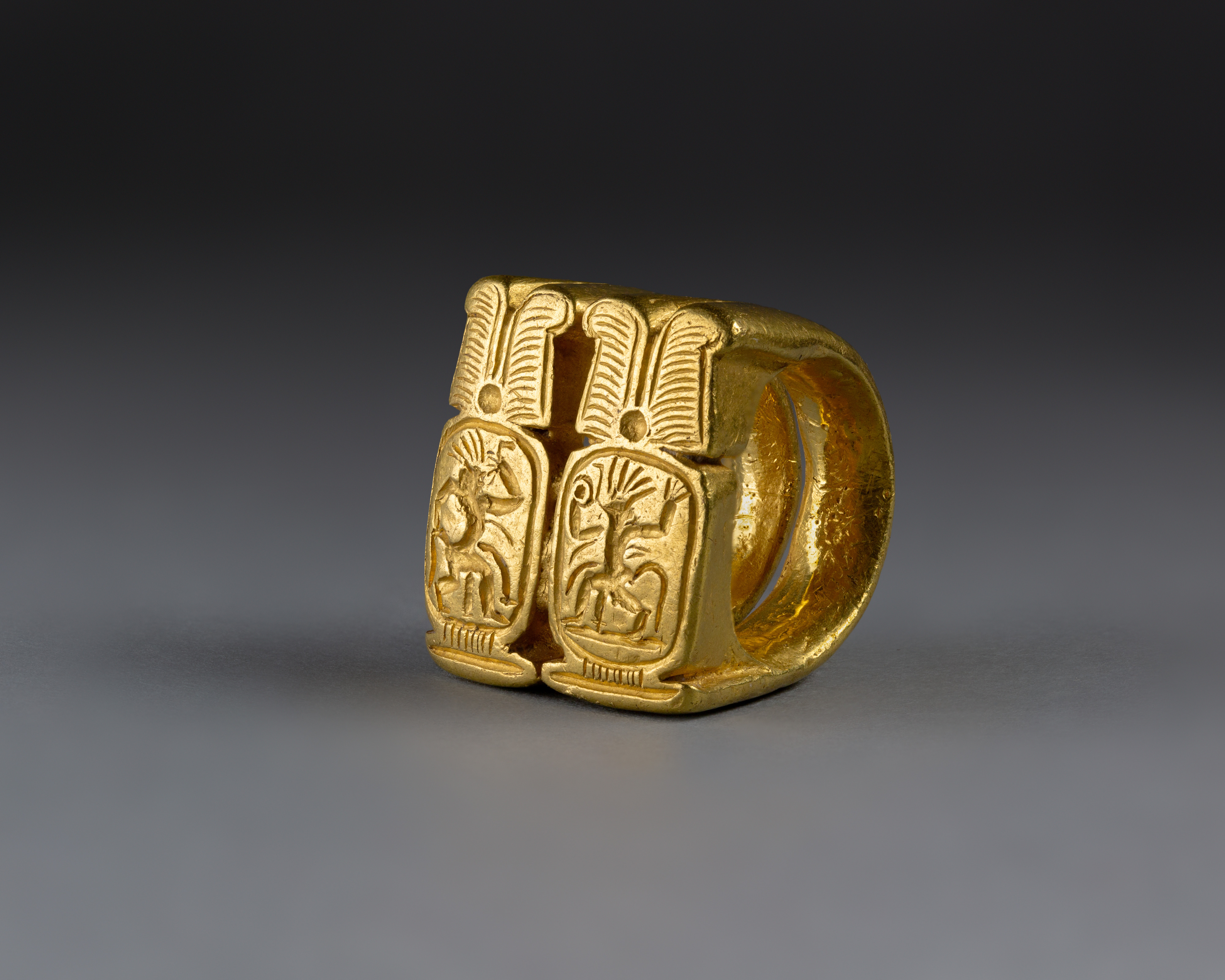
Heritage Analysis: The Signet Ring as a Vessel of Authority and Identity
In the annals of human civilization, few artifacts possess the enduring symbolic resonance of the signet ring. Originating in the ancient civilizations of Mesopotamia, Egypt, and the Indus Valley, this small yet potent object served not merely as adornment but as a functional instrument of power, identity, and spiritual protection. For Katherine Fashion Lab, the signet ring represents a critical intersection of historical legacy and modern luxury—a tangible link to the DNA of authority that informs our ongoing study of symbolic adornment. This analysis explores the signet ring’s symbolic power, its role in historical adornment, its spiritual meaning, and a strategic framework for its integration into a 2026 high-end luxury collection, drawing direct correlation with our research on the Mirror with Split-Lea—a duality of polished silver and gold-inlaid palmettes confronting the narrative relief of a stone sarcophagus.
Symbolic Power: The Imprint of Sovereignty
The signet ring’s primary function was as a seal of authenticity and authority. In ancient Mesopotamia, cylinder seals carved from semi-precious stones were rolled over clay to mark ownership, legal agreements, and royal decrees. By the time of Ancient Egypt, the ring form evolved into a bezel-mounted scarab or cartouche, often inscribed with the name of the pharaoh or a high-ranking official. The act of pressing the ring into wax or clay was not merely administrative; it was a performative assertion of identity and power. The ring’s bearer wielded the ability to authorize, to command, and to bind—a microcosm of the state’s authority made portable.
This symbolic power resonates deeply with our study of the Mirror with Split-Lea. The mirror’s polished silver surface, inlaid with gold palmettes, reflects the bearer’s image—a literal and metaphorical self-representation. Conversely, the sarcophagus’s relief tells a narrative of life and death, a permanent record of identity. The signet ring, like the mirror, is a tool of self-projection; like the sarcophagus, it is a permanent marker of existence. In both cases, the object transcends its materiality to become a vessel of legacy. For Katherine Fashion Lab, the 2026 strategy must leverage this duality: the signet ring as both a personal statement of power and a heirloom of lineage.
Historical Adornment: The Body as a Canvas of Status
Historically, the signet ring was not a casual accessory. In Ancient Rome, the anulus signatorius was worn exclusively by free citizens, and later by senators and equestrians, as a mark of social rank. The material—gold, iron, or bronze—signified one’s station. Gold signet rings were reserved for the elite, often bearing intaglio carvings of deities, ancestors, or personal emblems. The ring’s placement on the left hand, specifically the fourth finger, was believed to be connected to the vena amoris (vein of love), linking authority with intimate devotion. This interplay of public status and private symbolism is a hallmark of historical adornment.
Our research on the Mirror with Split-Lea underscores this dual function. The mirror’s polished side invites self-contemplation, while the carved relief on the reverse offers a narrative to the world. Similarly, the signet ring’s bezel—often worn facing inward—was a private talisman, yet its impression was a public declaration. For the 2026 luxury market, this historical context informs a design philosophy where the ring’s exterior (the band and setting) must evoke timeless elegance, while the interior (the engraving or hidden detail) offers a personal, almost secret, narrative. This aligns with the contemporary consumer’s desire for authenticity and intimacy in luxury goods.
Spiritual Meaning: The Ring as a Talisman of Protection
Beyond its secular authority, the signet ring carried profound spiritual significance. In Ancient Egypt, the scarab beetle—a common motif—symbolized rebirth and protection, often inscribed with spells from the Book of the Dead. The ring was believed to guard the wearer in life and guide the soul in the afterlife. In Mesopotamian culture, cylinder seals bore images of protective deities, and the act of sealing was a ritual that invoked divine witness. The ring’s circular form, unbroken and eternal, echoed cosmic cycles and the infinite nature of the soul.
This spiritual dimension is mirrored in the Mirror with Split-Lea. The gold palmettes on the mirror suggest fertility, victory, and eternal life—motifs common in funerary art. The sarcophagus’s relief, meanwhile, is a narrative of the soul’s journey. Together, they embody the tension between earthly reflection and transcendent truth. The signet ring, as a wearable artifact, bridges this gap. For Katherine Fashion Lab, the 2026 collection should incorporate spiritual motifs—such as the scarab, the ankh, or the Tree of Life—not merely as decorative elements but as symbols of protection and continuity. This resonates with a growing luxury market seeking objects that offer meaning beyond material value.
2026 High-End Luxury Strategy: The Signet Ring as Brand DNA
To position the signet ring as a cornerstone of Katherine Fashion Lab’s 2026 strategy, we must translate its heritage into a contemporary luxury narrative. The following strategic pillars are proposed:
1. Heritage Storytelling and Authenticity
Leverage the ring’s ancient origins as a narrative of power and permanence. Each piece should be accompanied by a documented provenance—whether through materials (e.g., ethically sourced gold, ancient-inspired alloys) or design codes (e.g., intaglio motifs drawn from museum archives). The Mirror with Split-Lea study provides a ready lexicon: the duality of polished surfaces and hidden narratives. Launch a limited-edition series where each ring features a bezel with a micro-engraved scene, visible only under magnification, echoing the sarcophagus’s relief detail. This creates a collector’s mentality and exclusivity.
2. Bespoke Personalization as a Service
Historical signet rings were deeply personal. Offer a made-to-order service where clients commission rings with family crests, personal symbols, or encrypted messages. This taps into the modern desire for individuality and legacy. Use digital scanning and 3D wax carving to replicate the precision of ancient intaglio. Position this as a “seal of the self” for the 21st-century elite—a wearable signature that cannot be replicated.
3. Material and Craftsmanship Excellence
Gold remains the medium of choice, but with a twist. Introduce rose gold and white gold alloys with a matte finish, evoking the patina of ancient artifacts. Collaborate with master engravers from Italy or Thailand to ensure hand-carved intaglio of museum quality. The band should be substantial but ergonomic, designed for daily wear yet heirloom-ready. Limited releases in platinum or palladium could target ultra-high-net-worth clients seeking rarity.
4. Spiritual and Emotional Resonance
Align the collection with themes of protection and legacy. Create a sub-line called “The Guardian Ring,” featuring protective motifs such as the Eye of Horus or the Hamsa. Market these as talismans for modern warriors—entrepreneurs, leaders, and creatives navigating a volatile world. The spiritual dimension, rooted in ancient practice, offers a counterpoint to fast fashion and disposable luxury.
5. Experiential Retail and Digital Integration
Launch the collection in a flagship experience that mirrors the Mirror with Split-Lea duality. One side of the boutique features polished silver and gold displays (reflecting the mirror), while the other side presents a stone-walled gallery with narrative reliefs (echoing the sarcophagus). Clients can “seal” their purchase with a custom wax stamp ceremony, creating a ritual that connects them to ancient tradition. Digitally, offer an AR experience where the ring’s engraving reveals a hidden story when scanned.
Conclusion: The Eternal Signet
The signet ring is not merely an accessory; it is a micro-archive of human ambition, faith, and identity. From the clay tablets of Sumer to the wax seals of medieval Europe, it has endured as a symbol of the individual’s mark on the world. For Katherine Fashion Lab, the 2026 collection must honor this legacy while innovating for the future. By drawing on the DNA of the Mirror with Split-Lea—its interplay of light and shadow, surface and depth, reflection and narrative—the signet ring can become a modern talisman of power and purpose. In an era of digital impersonality, the weight of gold and the precision of an engraved seal offer something irreplaceable: the authority to leave a lasting impression.