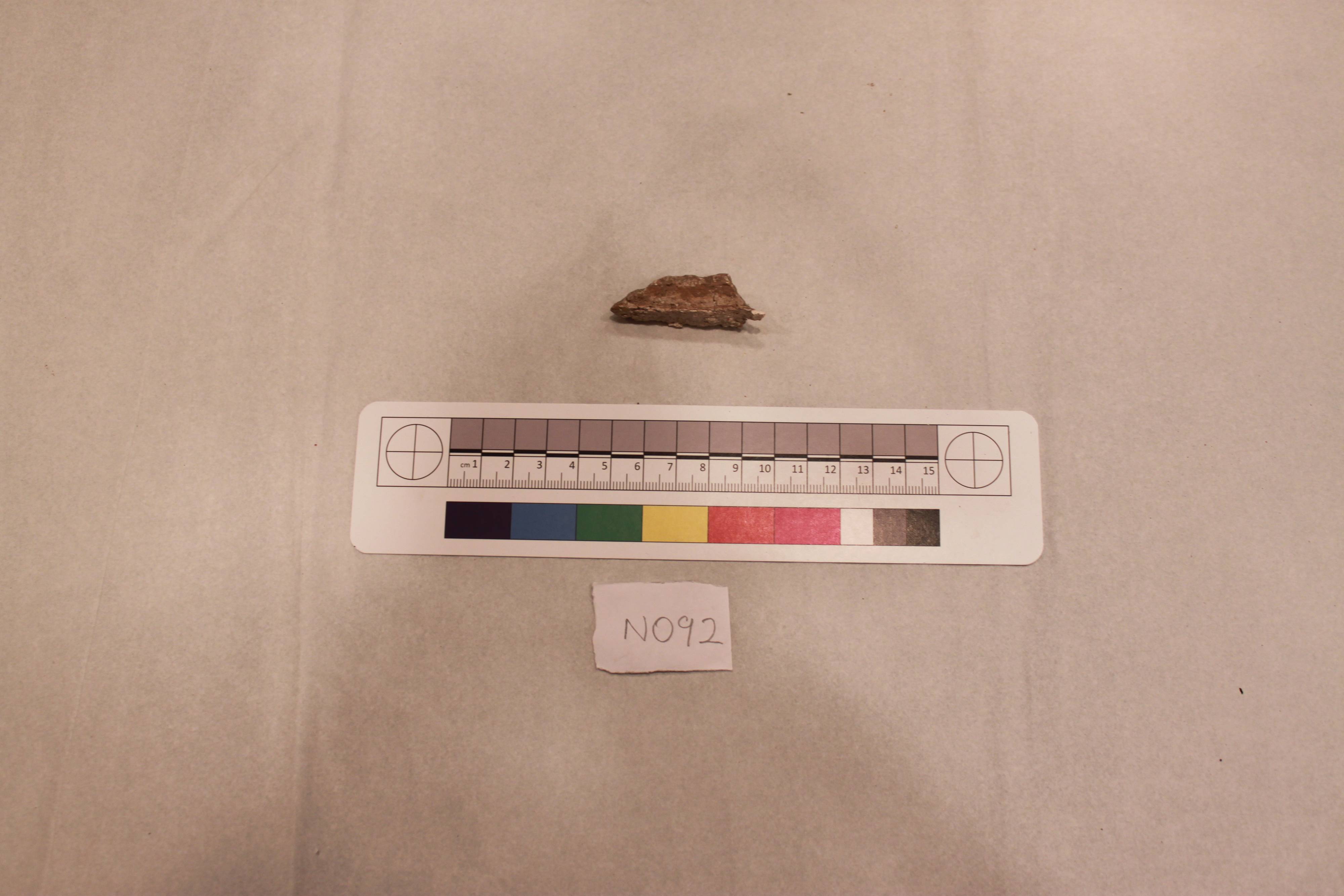
Strategic Heritage Analysis: The Stucco Fragment as a Foundational Code for Katherine Fashion Lab
This analysis examines a singular artifact—a carved and painted stucco fragment from an ancient civilization—through the strategic lens of heritage luxury. For Katherine Fashion Lab, such an object is not merely an archaeological curiosity but a dense repository of symbolic capital. It serves as a primary source for constructing a unique and defensible brand mythology, one that transcends temporal boundaries to inform a forward-facing 2026 luxury strategy. By deconstructing its materiality, iconography, and inherent contradictions, we extract core codes of symbolic power, historical adornment, and spiritual meaning, translating them into a framework for profound consumer engagement and market distinction.
Deconstructing the Artifact: Materiality as Message
The medium itself, stucco, is a strategic allegory for the brand-building process. A composite of lime, sand, and water, it begins as a malleable, almost humble substance. Through skilled application and carving, it is transformed into a durable surface for monumental narrative and adornment. This mirrors the luxury alchemy of taking raw materials—silk, cashmere, pigments—and, through artisanat, imbuing them with lasting cultural and economic value. The fragment’s state is particularly telling: its incompleteness invites extrapolation, narrative projection, and modern completion. For Katherine Fashion Lab, this validates an aesthetic of intentional asymmetry, of garments that suggest a grander, personal narrative left for the wearer to define. The painted residue indicates a original polychrome life, a reminder that ancient monuments were vibrantly colored, challenging modern perceptions of austere antiquity. This directly informs a 2026 color strategy rooted in mineral pigments, faded fresco palettes, and the strategic, luminous application of color as a modern-day hieroglyph.
The Semiotics of Adornment and Hierarchical Power
As a likely architectural element from a temple or palace, this stucco fragment functioned as fixed adornment, blurring the line between building and body. Its carvings—whether depicting divine figures, regal insignia, or sacred flora/fauna—were not decorative but declarative. They projected authority, spiritual sanction, and cultural identity onto the space and, by extension, onto those privileged to inhabit it. This translates to a core brand principle for Katherine Fashion Lab: garments as architectonics for the body. Silhouettes should possess a structural integrity, a sense of volume and drape that creates a personal monumentality. Embroidery, weaving, and appliqué are to be treated as modern carving, not as surface embellishment but as integral, load-bearing narrative elements that communicate status and belonging. The fragment’s original placement, high on a wall or around a portal, speaks to a grammar of elevation and exclusivity—a logic directly applicable to the brand’s retail architecture and visual merchandising in 2026, creating immersive, temple-like spaces that elevate the client ritual.
Spiritual Meaning and the Modern Talisman
The spiritual resonance of the fragment is its most potent transferable asset. In its original context, it served as a permanent interface with the divine, a focal point for ritual and belief. The act of carving was itself likely a devotional practice. In a 2026 luxury landscape defined by experience and meaning-over-matter, this spiritual coding offers a profound antidote to mere materialism. Katherine Fashion Lab can interpret this not through literalism, but by embedding garments with a sense of ritual and intention. This involves reviving and protecting specific artisan techniques (a form of modern preservation), incorporating symbolic motifs that serve as personal talismans for the wearer, and framing the collection around archetypal themes of journey, protection, and transformation. The "fragment" suggests a broken wholeness—a concept that resonates deeply with contemporary searches for authenticity and integration. Collections can explore this through deconstruction and re-assembly, garments that are consciously "repaired" or pieced together, telling a story of resilience and curated history.
Strategic Application: The 2026 High-End Luxury Framework
By 2026, luxury will be bifurcated between hyper-technological futurism and deep, authentic heritage. Katherine Fashion Lab’s strategy, anchored by this stucco fragment analysis, will command the latter pole with innovative rigor.
1. The "Archaeological Edit" Collection: The flagship 2026 collection will be presented as a series of "finds." Textiles will be developed to mimic the craquelure and patina of aged stucco, using innovative fabric treatments and layered weaving. Colors are excavated: dust-of-lapis, faded vermilion, sun-bleached ochre. Silhouettes are fragmentary—one sculpted shoulder, a paneled skirt that suggests a missing piece—inviting the wearer to complete the form with their own presence.
2. Symbolic Narrative & Client Journey: Each piece is accompanied by a "Fragment File"—a digital artifact using AR to show the motif’s origin and meaning, connecting the garment to its conceptual heritage. This transforms the purchase into an acquisition of cultural intelligence, not just an object.
3. Material Innovation & Artisan Alliance: Invest in R&D for modern composite materials that echo stucco’s transformative nature (e.g., biodegradable composites mixed with precious fibers). Forge exclusive partnerships with global artisan collectives specializing in ancient relief and mural techniques, translating them onto leather and textile.
4. Experiential Monumentality: Pop-up installations will mirror archaeological digs. Client presentations will be held in locations with raw, historic textures, where the new collection is "uncovered." This frames the brand not as a seasonal trend, but as a curatorial force, unearthing timeless wisdom for the modern elite.
Conclusion: From Fragment to Foundation
The stucco fragment, in its silent, broken state, provides Katherine Fashion Lab with a complete strategic lexicon. It teaches that true luxury is composite, built from layers of meaning and skill. It demonstrates that adornment is a spatial and spiritual act of power. It proves that incompleteness is more compelling than perfection, as it actively engages the imagination of the beholder. For the 2026 high-end market, where consumers seek anchors of authenticity in a fluid world, this heritage provides an unassailable foundation. The brand’s mission becomes the careful, creative excavation of these ancient codes, reassembling them not as relics, but as radically relevant blueprints for the future of desire. The fragment is no longer a piece of the past; it is the cornerstone of a modern maison.