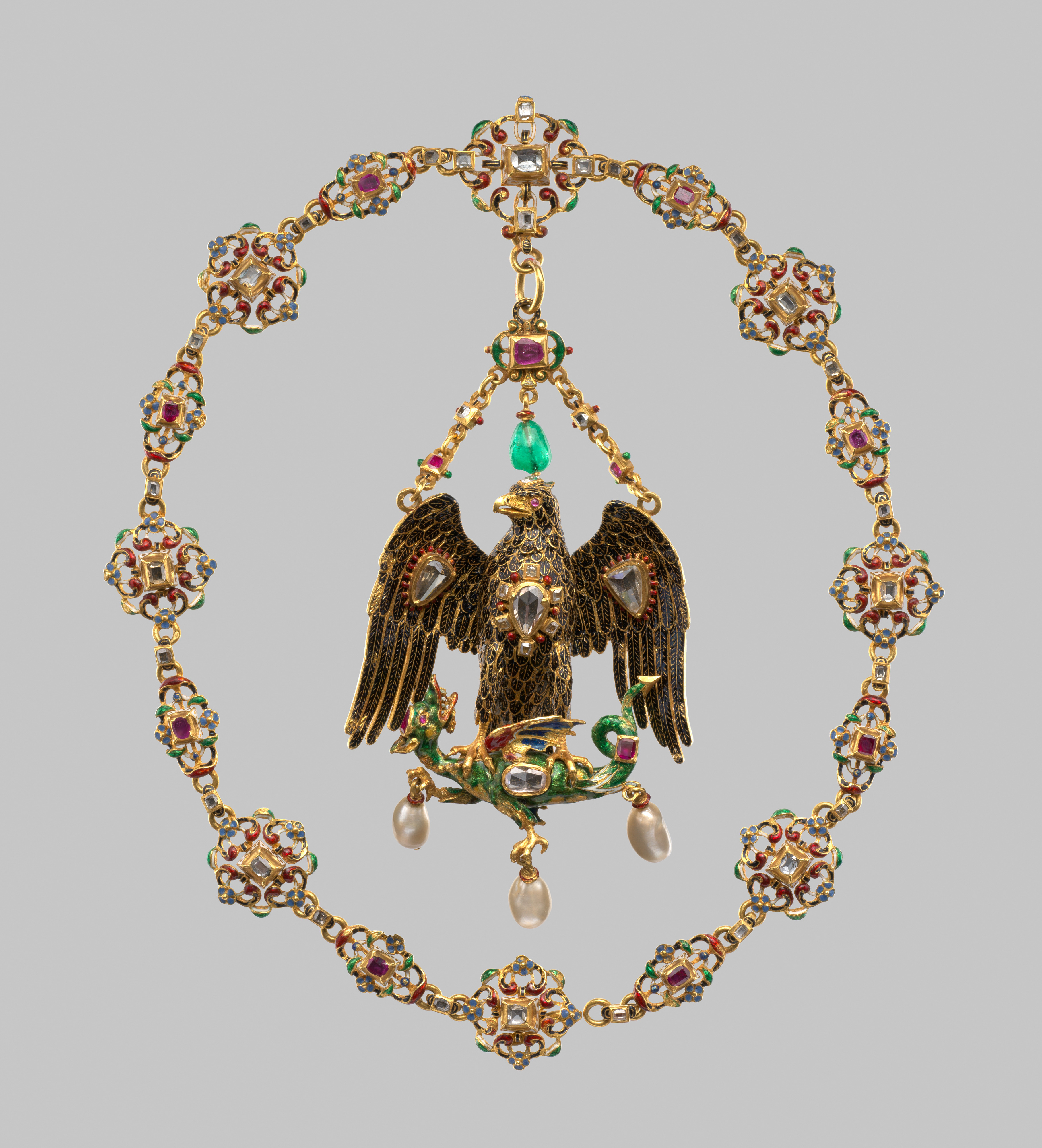
Heritage Analysis: The Pendant and Necklace as Instruments of Power and Prestige
In the annals of human civilization, few artifacts convey the confluence of wealth, spirituality, and social hierarchy as profoundly as the pendant and necklace. For Katherine Fashion Lab, a deep strategic examination of these adornments—crafted in gold, enamel, rubies, diamonds, and emeralds—reveals not merely decorative objects, but potent symbols of authority, cosmic connection, and dynastic legacy. This analysis, conducted under the framework of Strategic Standalone Research, deconstructs the pendant and necklace from an ancient civilization context, extracting core principles that can inform a high-end luxury strategy for 2026. The objective is to reposition these timeless forms as vehicles for modern symbolic power, leveraging historical authenticity to command premium market positioning.
Historical Adornment: The Necklace as a Social and Political Artifact
In ancient civilizations—from the Pharaohs of Egypt to the Imperial courts of Byzantium and the dynastic rulers of the Indus Valley—the necklace was never a mere accessory. It was a declaration of divine mandate. Gold, the medium of choice, was revered as the flesh of the gods, a material that did not tarnish, symbolizing eternal sovereignty. The inclusion of rubies, emeralds, and diamonds further amplified this narrative. Rubies, associated with blood and life force, were believed to protect warriors and rulers in battle. Emeralds, sacred to Venus and the goddess of fertility, signified rebirth and eternal youth. Diamonds, the hardest natural substance, represented invincibility and unbreakable truth.
The pendant, suspended at the center of the necklace, functioned as the focal point of power. It was often engraved with hieroglyphs, celestial symbols, or the likeness of a deity. In ancient Egypt, the menat necklace, worn by priestesses and royalty, was believed to possess protective and regenerative properties. The pendant was not merely worn; it was activated through ritual. This historical context underscores a critical insight for Katherine Fashion Lab: adornment is a technology of power. The necklace and pendant were instruments of governance, spiritual communication, and social stratification. To replicate this in a modern luxury strategy, the design must evoke the same gravitas—a piece that does not simply decorate, but commands attention and conveys lineage.
Symbolic Power: The Spiritual and Metaphysical Dimensions
The spiritual meaning embedded in the pendant and necklace is a reservoir of symbolic capital that luxury brands can leverage to differentiate their offerings. In ancient cultures, the pendant was often a talisman, a portable shrine that connected the wearer to the cosmic order. The use of enamel in ancient jewelry—a technique perfected by the Celts and later the Byzantines—added color symbolism: blue for the heavens, red for sacrifice, green for the earth. When combined with precious stones, the pendant became a microcosm of the universe.
For Katherine Fashion Lab, the strategic implication is clear: the pendant must be positioned as an object of metaphysical significance. The rubies, emeralds, and diamonds should not be described solely in terms of carat weight or clarity, but as carriers of ancient virtues. Rubies as guardians of vitality, emeralds as harbingers of growth, diamonds as anchors of truth. This narrative transforms the jewelry from a commodity into a legacy artifact. The 2026 luxury consumer, increasingly drawn to brands that offer meaning over mere materialism, will find resonance in a piece that promises spiritual protection, empowerment, and a connection to ancestral wisdom.
Materiality and Craftsmanship: The Language of Precious Mediums
The choice of gold, enamel, rubies, diamonds, and emeralds is not arbitrary; it is a deliberate orchestration of material hierarchy. Gold provides the structural and symbolic foundation—its malleability allows for intricate filigree and granulation, techniques mastered by ancient goldsmiths. Enamel, when applied, introduces a painterly quality, allowing for the depiction of mythological scenes or geometric patterns that encode cultural narratives. The rubies and emeralds, cut and polished with primitive tools, were valued for their color saturation and perceived magical properties. Diamonds, rare and difficult to work, were reserved for the highest echelons of power.
From a strategic standpoint, Katherine Fashion Lab must emphasize the artisanal narrative in its 2026 strategy. The modern luxury consumer craves authenticity and provenance. By referencing ancient techniques—such as cloisonné enamel or hand-cut stone settings—the brand can position each piece as a limited-edition work of art. The pendant and necklace become not just jewelry, but heirlooms in the making. This aligns with the broader luxury trend toward slow luxury, where craftsmanship and heritage justify premium pricing. The medium is the message: gold, enamel, and precious stones are the vocabulary of power, and Katherine Fashion Lab must speak this language fluently.
2026 High-End Luxury Strategy: From Historical Adornment to Modern Iconography
The translation of ancient symbolism into a contemporary luxury strategy requires a nuanced approach. The 2026 consumer is educated, globally aware, and skeptical of superficial branding. Katherine Fashion Lab must position the pendant and necklace as strategic investments in personal mythology. This involves three pillars:
Pillar One: Narrative Sovereignty
The brand must curate a proprietary mythology around each collection. Rather than generic “inspired by ancient Egypt” marketing, Katherine Fashion Lab should develop a cohesive lore that ties specific gemstones and motifs to archetypal virtues. For example, a pendant featuring a ruby and emerald in a sunburst setting could be marketed as the “Guardian of Vitality,” referencing the ancient belief that these stones ward off decay and attract prosperity. This narrative sovereignty creates a unique value proposition that competitors cannot easily replicate.
Pillar Two: Experiential Luxury and Ritual
Ancient adornment was inseparable from ritual—the donning of a necklace was a ceremonial act. Katherine Fashion Lab can reintroduce this through bespoke commissioning experiences. Clients should be invited to participate in the selection of stones, the design of the pendant’s symbolic motifs, and the inscription of personal or familial symbols. The act of acquisition becomes a rite of passage, mirroring the ancient practice of receiving a talisman from a priest or ruler. This elevates the transaction from purchase to initiation, commanding higher price points and deeper brand loyalty.
Pillar Three: Limited Edition and Heirloom Status
The use of gold, enamel, rubies, diamonds, and emeralds inherently suggests rarity. Katherine Fashion Lab should enforce strict edition sizes—perhaps no more than 50 pieces per design—and incorporate serialized provenance documents that trace the materials to their origins. This aligns with the 2026 luxury trend of investment-grade accessories, where jewelry is viewed as an asset class. By positioning the pendant and necklace as future heirlooms, the brand taps into the consumer’s desire for permanence in a transient world.
Conclusion: The Strategic Imperative of Heritage
The pendant and necklace from ancient civilization, rendered in gold, enamel, rubies, diamonds, and emeralds, are not historical curiosities—they are blueprints for modern luxury dominance. Katherine Fashion Lab possesses the unique opportunity to bridge the sacred and the commercial, the ancient and the avant-garde. By foregrounding symbolic power, historical adornment, and spiritual meaning, the brand can craft a 2026 strategy that resonates with the discerning consumer’s quest for identity, protection, and legacy. The pendant is not merely worn; it is inherited. The necklace is not merely displayed; it is performed. In this strategic framework, Katherine Fashion Lab does not sell jewelry; it curates power.