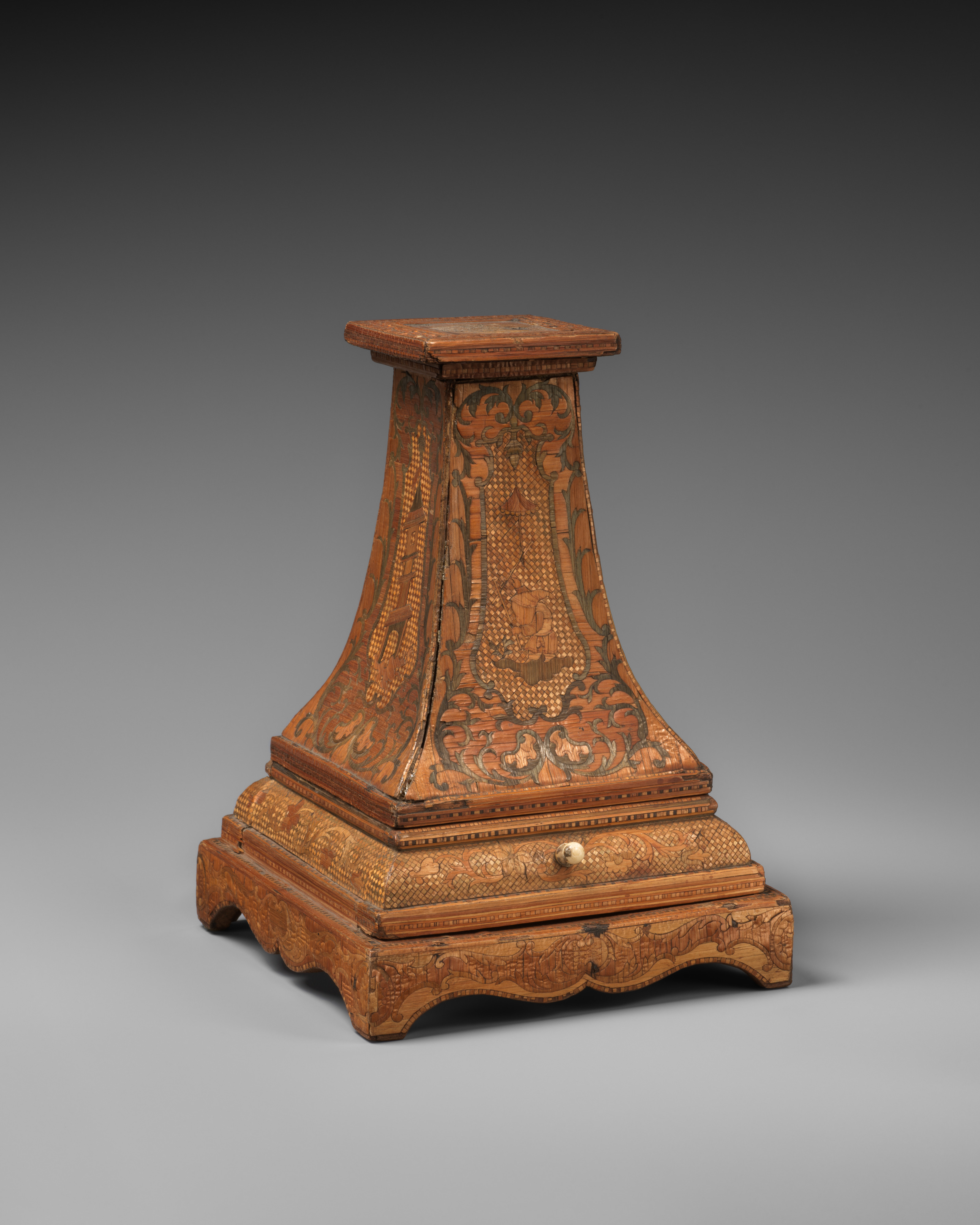
Heritage Analysis: The Pedestal as a Symbol of Power and Adornment in Ancient Civilization
In the pursuit of defining Katherine Fashion Lab’s 2026 high-end luxury strategy, the pedestal emerges as a profound artifact of symbolic power, historical adornment, and spiritual meaning. This analysis examines a specific pedestal crafted from straw on wood and ivory, originating from an ancient civilization. As a standalone research piece, it dissects the object’s materiality, cultural resonance, and potential to inform a luxury brand narrative that transcends mere aesthetics, offering a strategic foundation for exclusivity and heritage-driven storytelling.
Materiality and Craft: Straw, Wood, and Ivory
The pedestal’s medium—straw on wood, ivory—represents a deliberate synthesis of organic and precious resources. Straw, often associated with agrarian cycles and humility, is layered upon wood, a symbol of structural endurance. The inclusion of ivory, a material of elite status due to its rarity and difficulty of acquisition, elevates the object from utilitarian to ceremonial. In ancient civilizations, such combinations were not arbitrary; they reflected a cosmology where the mundane (straw) and the divine (ivory) coexisted, mirroring the human connection to earth and the heavens. For Katherine Fashion Lab, this material duality offers a strategic lens: luxury in 2026 must balance accessibility with exclusivity, using humble foundations to highlight opulent accents. This approach aligns with contemporary demands for sustainable luxury, where natural materials like straw and wood signal eco-consciousness, while ivory—or its ethical substitutes—connotes timeless prestige.
Symbolic Power: The Pedestal as a Throne of Authority
The pedestal, in its most elemental form, elevates. In ancient civilizations, it functioned as a physical and symbolic platform for rulers, deities, or sacred objects. The act of raising an individual or icon above ground level denoted transcendence from the profane to the sacred. For instance, in Mesopotamian and Egyptian cultures, pedestals were integral to throne rooms and temples, where they amplified the authority of pharaohs or priests. The straw and wood construction, while seemingly modest, would have been painted or adorned with ivory inlays to denote rank. This juxtaposition of raw material with refined decoration underscores a core principle of power: legitimacy is often built on perceived humility, yet sustained through visible markers of status. For Katherine Fashion Lab, this translates into a 2026 strategy where luxury is not overtly ostentatious but rather subtle, rooted in narrative and provenance. A pedestal-inspired design—whether in jewelry stands, display platforms, or architectural motifs—can communicate a brand’s authority through understated elegance, appealing to discerning clients who value heritage over hype.
Historical Adornment: The Pedestal as a Canvas for Decorative Art
Adornment in ancient civilizations was rarely superficial; it was a language of identity, belief, and social hierarchy. The pedestal served as a canvas for this language, with straw weaving patterns and ivory carvings depicting mythological scenes, geometric motifs, or celestial symbols. Straw, when woven, could represent fertility and abundance, while ivory carvings often portrayed protective deities or ancestral figures. This decorative complexity transformed the pedestal from a functional object into a narrative artifact. For Katherine Fashion Lab, historical adornment offers a rich vocabulary for 2026 collections. The brand can draw on these motifs—such as spiral weaves or ivory-like inlays—to create bespoke accessories or packaging that tell stories of elevation and protection. Strategic use of such adornment positions the brand as a curator of cultural memory, appealing to a clientele seeking meaning in their purchases. Moreover, the pedestal’s role as a display piece for other objects (e.g., statues, vessels) suggests a meta-luxury: the brand itself becomes a pedestal for the wearer’s identity, elevating their personal narrative through carefully crafted adornment.
Spiritual Meaning: The Pedestal as a Bridge Between Realms
Spiritually, the pedestal was a threshold. In ancient rites, it marked the point where human offerings met divine presence. The use of straw—a material tied to harvest and renewal—alongside wood (the world tree in many cosmologies) and ivory (often associated with purity and immortality) imbued the object with ritualistic potency. For example, in ancient Chinese or Indus Valley traditions, pedestals for incense burners or idols were designed to channel prayers upward. The tactile texture of straw and the cool smoothness of ivory created a sensory contrast that heightened spiritual focus. For Katherine Fashion Lab, this spiritual dimension is critical for 2026 luxury strategy. As consumers increasingly seek products that offer mindfulness and connection, the pedestal’s symbolism can be reinterpreted in limited-edition collections, pop-up installations, or virtual experiences. A fragrance line, for instance, could feature pedestal-inspired bottles that evoke the ritual of anointment. Alternatively, a runway show might use pedestals as symbolic stages, where models embody the sacred elevation of the human form. This spiritual resonance differentiates the brand in a saturated market, aligning luxury with introspection and aspiration.
2026 High-End Luxury Strategy: Pedestal-Inspired Brand Architecture
Integrating the pedestal’s heritage into a cohesive 2026 strategy requires a multi-tiered approach. First, product design should incorporate pedestal motifs in jewelry stands, handbag hardware, or shoe heels, using sustainable materials like bamboo (mimicking straw) and ethically sourced bone (substituting ivory). Second, brand storytelling must emphasize the pedestal’s role as an elevator—both literal and metaphorical—of the wearer. Marketing campaigns could feature imagery of individuals standing on pedestals in natural or architectural settings, evoking ancient authority while projecting modern confidence. Third, exclusivity can be achieved through limited-edition “Pedestal Collection” pieces, each accompanied by a certificate detailing the cultural symbolism and craftsmanship. Finally, experiential luxury should include private client events where pedestals are used as display altars for new collections, allowing clients to engage with the object’s spiritual and historical layers. This strategy positions Katherine Fashion Lab not merely as a purveyor of goods, but as a guardian of cultural heritage, offering a luxury that is both timeless and forward-looking.
Conclusion: The Pedestal as a Strategic Asset for Heritage Luxury
The pedestal, in its ancient form of straw on wood and ivory, is far more than a structural support. It is a repository of symbolic power, a testament to historical adornment, and a vessel for spiritual meaning. For Katherine Fashion Lab, this artifact provides a blueprint for a 2026 high-end luxury strategy that values substance over spectacle, narrative over novelty. By embracing the pedestal’s dualities—humble and precious, functional and sacred—the brand can craft an identity that resonates with a sophisticated global audience. In an era where luxury is increasingly defined by its ability to elevate the human experience, the pedestal stands as a timeless archetype, ready to be reimagined for the future.