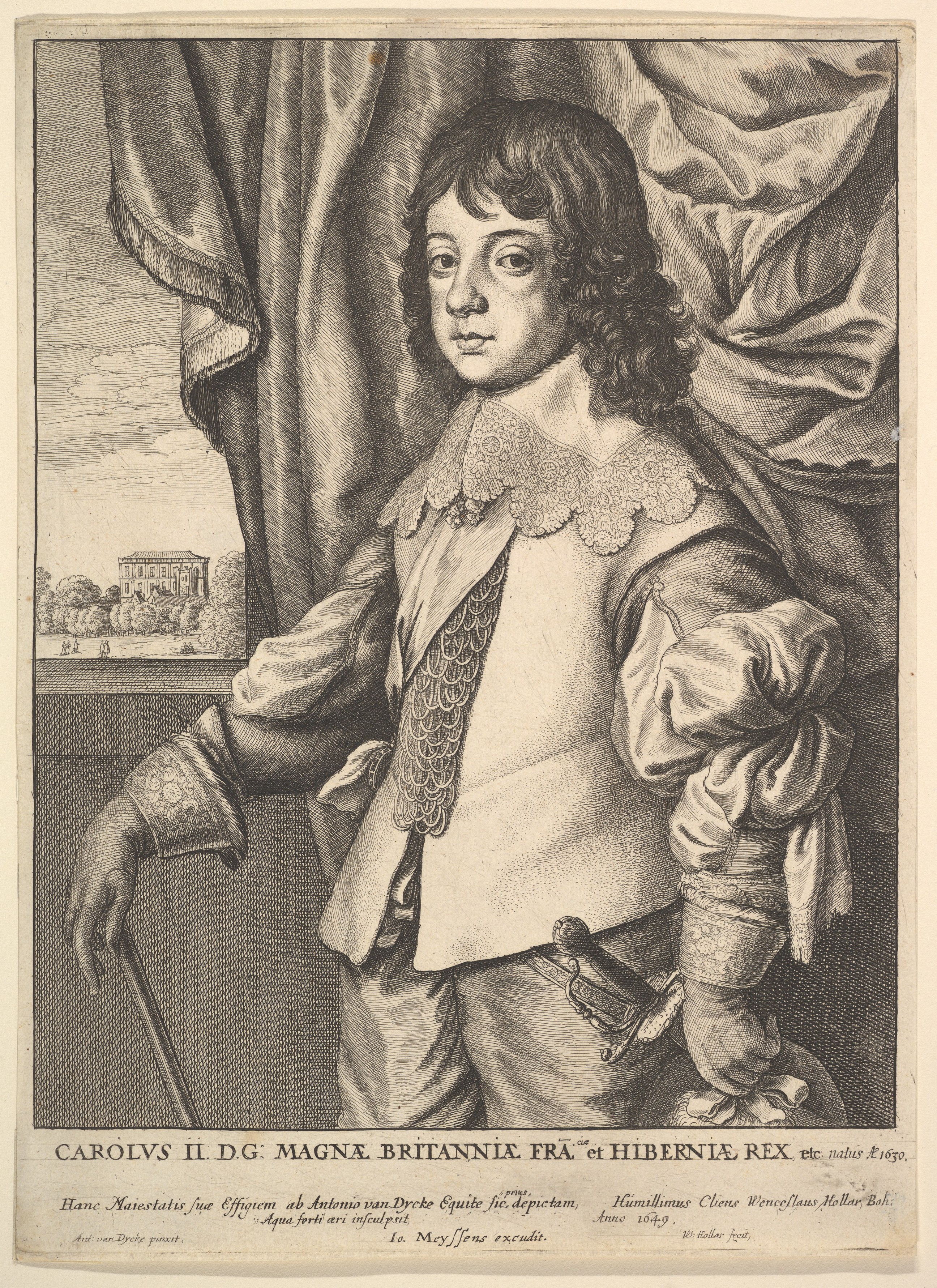
The Monarch as Medium: A Couture Analysis of Charles II Through the Etching's Third State
In the meticulous world of haute couture, a garment is never merely a finished object; it is a narrative suspended in a state of becoming. Each fitting, each adjustment of a dart or re-embellishment of a bead, represents a distinct "state" in the evolution of an idea. It is through this lens that Katherine Fashion Lab examines the 17th-century etching of King Charles II, specifically its third state of six. This analysis transcends mere historical costume study, treating the printed image not as a static portrait but as a prototype for sovereign identity. The etching plate itself becomes our atelier, and each state a crucial fitting in the construction of a king's public persona for a global audience.
Deconstructing the Third State: The Atelier of Image
The third state of an etching is a pivotal moment in the printmaking process. The initial design has been bitten by acid into the copper plate (first state), and preliminary work has established the core composition. The third state, however, is where nuance is layered, where shadow and substance are negotiated. It is analogous to the first major toile fitting in couture: the structure is evident, but the definitive character—the precise drape, the balance of ornament, the play of light on texture—is being resolved. In this specific state of the Charles II portrait, we observe the foundational lines of power—the armor, the regal pose, the authoritative gaze—being systematically reinforced with deeper, more assertive cross-hatching. This is not the tentative sketch of a concept, nor is it the final, polished edition meant for mass dissemination. It is the strategic articulation of authority, where the etcher’s needle acts like a master tailor’s shears, cutting away ambiguity to reveal a sharper, more formidable silhouette of kingship.
Material Intelligence: Etching as Textile Analogue
The choice of etching as our primary material is deliberate. As a technique, etching relies on the corrosive action of acid on metal, a process of controlled degradation that creates line and texture. This mirrors the couturier’s relationship with fabric: cutting, slashing, pleating, and manipulating material to yield a desired form from a flat plane. The "fabric" of this portrait is the copper plate, and its "textile" qualities are defined by the etcher’s marks. The cross-hatching in the third state builds density and shadow, akin to the layering of velvets over silks or the application of intricate passementerie. The untouched, burnished highlights of the plate represent the strategic use of lustrous satin or metallic thread, catching the light to draw the eye to the face and hands—the focal points of command and grace. This state captures the tactile authority of the monarchical "suit," where visual weight conveys political heft. The armor is not merely depicted; it is rendered with a granular, wearable reality through the accumulation of minute, deliberate strokes.
Global Heritage Context: A Sovereign for the World Stage
Charles II’s reign (1660-1685) was a period of restoration not only of the English monarchy but of its engagement with a burgeoning global consciousness. The court was a nexus of international influence, from French fashion and Dutch art to trade with the Indies and the Americas. An etching, as a reproducible and transportable medium, was a primary vector for distributing the king’s image across Europe and beyond. Therefore, this third state must be analyzed as a global communications asset. Every decision etched into the copper at this juncture asks: How will this portrait translate in Paris, Amsterdam, or Madrid? The classical column in the background is not mere set-dressing; it is a universal signifier of empire and legacy, connecting the Stuart line to Roman antiquity. The composition borrows from Baroque portraiture conventions understood by continental elites. In couture terms, this is a garment designed for the international runway—it incorporates recognizable codes (the power shoulder of its era, the waist-defining sash of command) while asserting a unique, British sovereignty. It is diplomatic dressing at the highest level, engineered for a cross-cultural audience.
The Standalone Study: Isolating the Creative Moment
Analyzing this state as a standalone study is a quintessential Katherine Fashion Lab methodology. It allows us to freeze-frame the creative process, to appreciate the decisions made at this specific juncture without the distraction of what came before or after. We see the etcher problem-solving: perhaps the initial rendering of the lace cravat was too faint, so in this state, it is given more intricate definition, much like a designer deciding a neckline requires additional beading. The shadow under the chin is deepened to better sculpt the face, analogous to adjusting a garment’s inner structure to improve posture and presence. This isolation reveals the iterative, experimental heart of creation, whether in a 17th-century print studio or a modern couture house. It celebrates the provisional, the intelligent adjustment, the moment where an image is most alive with potential and risk. The third state is confident but not final; it holds the energy of a work in magnificent progress.
Conclusion: The Unfinished Majesty
For Katherine Fashion Lab, this etching’s third state is a masterclass in the construction of iconic identity. It demonstrates that power, like the most exquisite gown, is not born fully formed. It is built through successive layers of intention, refinement, and strategic communication. Charles II emerges from this specific matrix of lines not just as a historical figure, but as a tailored proposition of kingship. The analysis reaffirms that true luxury, in image or in attire, lies in the visibility of its craftsmanship—the acknowledgment of the states, the fittings, and the intelligent hands that guide a concept from raw material to enduring symbol. In the silent, precise marks of the etcher’s needle, we find the same relentless pursuit of perfection that drives the couturier’s hand, forever capturing majesty in a state of beautiful, deliberate becoming.