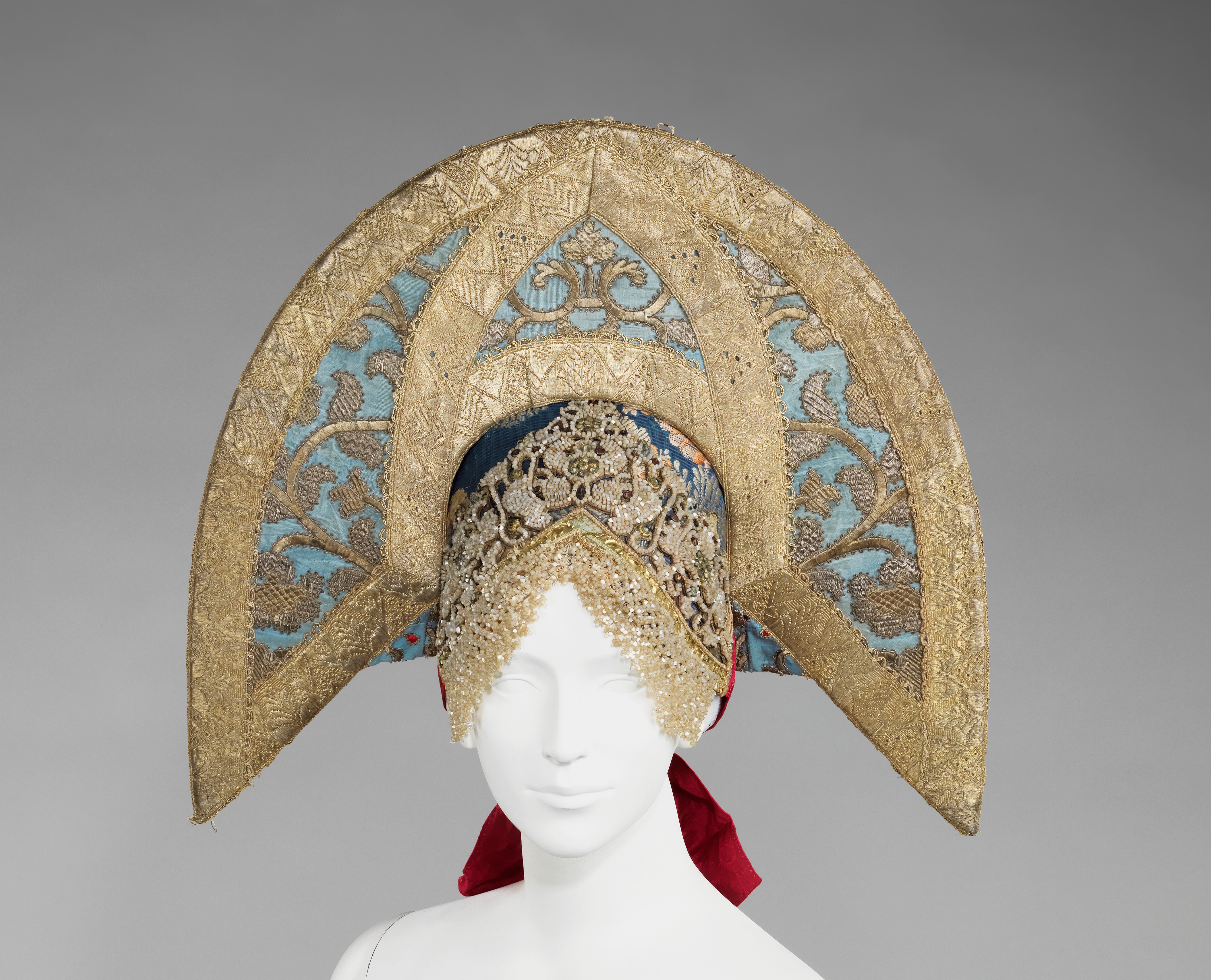
Heritage Analysis: The Russian Headdress as a Symbol of Sovereign Identity and Spiritual Authority
In the annals of global adornment, few artifacts possess the concentrated symbolic gravity of the Russian headdress. From the towering kokoshnik of the noblewoman to the intricate kichka of the peasant bride, these objects were never merely decorative. They were instruments of social stratification, vessels of spiritual protection, and repositories of dynastic memory. For Katherine Fashion Lab, a strategic engagement with this heritage offers not a nostalgic reproduction, but a template for 2026 high-end luxury strategy rooted in the articulation of power through material scarcity, ritual significance, and cultural sovereignty.
Material Lexicon: Silk, Metal, Cotton, and Paper as Hieroglyphs of Status
The physical composition of the Russian headdress encodes a precise language of social rank and spiritual intent. The curator must first parse these materials not as mere media, but as deliberate signifiers within a closed semiotic system.
Silk and Metal: The Language of Imperial Prestige
Silk, imported along the Silk Road and later produced domestically, was reserved for the upper echelons of Russian society. Its luminosity signified wealth, but more critically, it reflected the wearer’s proximity to the Tsar and the Orthodox Church. Gold and silver threads—often woven into the headdress’s front panel—were not simply decorative; they were apotropaic. The metallic sheen was believed to deflect the evil eye, a pervasive concern in Russian folk cosmology. For a luxury brand in 2026, the use of precious metal threads is not about ostentation but about energetic protection. The modern consumer, particularly in the high-net-worth segment, increasingly seeks objects that offer psychological armor. A headdress that incorporates hand-woven gold thread can be marketed not as a hat, but as a portable sanctuary.
Cotton and Paper: The Democratization of the Sacred
While silk denoted aristocracy, cotton and paper were the materials of the peasantry and the merchant class. Yet these humble mediums were imbued with profound spiritual meaning. Cotton headdresses, often embroidered with red and black geometric patterns, were fertility talismans. The paper, used as a stiffener inside the kichka, was frequently inscribed with prayers or family genealogies. This juxtaposition—the sacred hidden within the mundane—offers a powerful strategic insight for 2026 luxury. The interior lining of a garment or accessory can become a private canvas for bespoke symbolism. Katherine Fashion Lab could pioneer a service where the inner structure of a headdress contains a client’s personal mantra or astrological chart, printed on archival paper, making the object a silent confidant.
Symbolic Power and Historical Adornment: The Headdress as Political Architecture
The Russian headdress was not worn; it was constructed. Its height, shape, and weight were architectural. The kokoshnik, with its crescent or diadem-like form, mimicked the domes of Orthodox cathedrals. This was deliberate. The wearer became a living icon, her head a mobile reliquary. The strategic lesson for luxury is clear: form must communicate authority before any detail is read.
The Hierarchy of Silhouette
In pre-Petrine Russia, a married woman’s headdress was required to cover all hair, as exposed hair was considered immodest and spiritually dangerous. The taller and more elaborate the headdress, the higher the woman’s status. The height of the kokoshnik directly correlated with the wealth of her husband’s family. This is a critical precedent for 2026 luxury strategy: verticality as a signifier of power. A modern interpretation could explore elongated, sculptural forms that command space, echoing the architectural ambition of the original. The headdress becomes a crown of lineage, not a fashion accessory.
Spiritual Meaning: The Headdress as a Threshold Between Worlds
Russian headdresses were deeply interwoven with Orthodox Christian and pre-Christian Slavic animism. They were worn during key life transitions: birth, marriage, and death. The venchik, a paper or fabric band worn by the deceased, was inscribed with prayers for the soul’s journey. The svadebnyi venok (wedding wreath) was a circle of protection against misfortune. This duality—the headdress as both celebratory and funereal—offers a profound narrative for luxury branding.
Ritual Provenance as Brand Asset
For the 2026 market, where authenticity is paramount, the ritual origin of a piece can be its most valuable attribute. A headdress designed for a modern wedding could include a removable inner band inscribed with a blessing, to be kept as a heirloom. A transitional headdress—one that can be reconfigured from a ceremonial piece to a daily talisman—speaks to the contemporary desire for objects that accompany the wearer through life’s stages. Katherine Fashion Lab can position its headdresses as guardians of personal history, not ephemeral trends.
2026 High-End Luxury Strategy: From Artifact to Sovereign Statement
The Russian headdress provides a complete strategic framework for a luxury house seeking differentiation in a saturated market. The following pillars emerge from this heritage analysis:
1. Material Scarcity as a Marker of Spiritual Value
Just as silk and gold threads were reserved for the elite, Katherine Fashion Lab must source materials that are geographically specific and labor-intensive. Hand-spun silk from Central Asia, ethically mined silver, and hand-marbled paper from Russian monasteries. The scarcity is not artificial; it is a function of craft survival. Each piece should require a minimum of 200 hours of handwork, a fact that must be communicated through transparent provenance documentation.
2. The Headdress as a Symbolic Investment
The 2026 luxury consumer is not buying a hat; they are buying a symbolic asset. The headdress’s historical role as a dowry item—an object that stored family wealth—can be reimagined. Each headdress could include a digital provenance token that records its creation, materials, and the family history of the artisan. This transforms the object into a collectible that appreciates in cultural capital over time.
3. Ritualized Retail Experience
No headdress should be sold off a shelf. The purchase must be a ceremony. Clients should be guided through a consultation that explores their personal symbolism, their lineage, and their aspirations. The fitting should include a blessing ritual—a moment where the headdress is placed on the head with intention. This elevates the transaction from commerce to consecration.
4. Architectural Silhouette as Brand Identity
Just as the kokoshnik is instantly recognizable, Katherine Fashion Lab’s headdresses must develop a signature form. Whether it is a sweeping crescent, a tiered tower, or a veiled dome, the silhouette must be unmistakable. This form will become the brand’s visual shorthand, appearing in campaigns, packaging, and even architectural motifs in flagship stores.
Conclusion: The Headdress as a Charter for Cultural Luxury
The Russian headdress is not a relic; it is a strategic blueprint. Its materials spoke of power, its form of spiritual architecture, and its rituals of life’s most sacred transitions. For Katherine Fashion Lab, the path to 2026 luxury is not through imitation but through translation. The headdress must be reborn as a sovereign object—one that protects, signifies, and endures. In a market flooded with the transient, the headdress offers what the luxury consumer most craves: permanence with meaning. The house that understands this will not merely sell adornment; it will sell legacy.