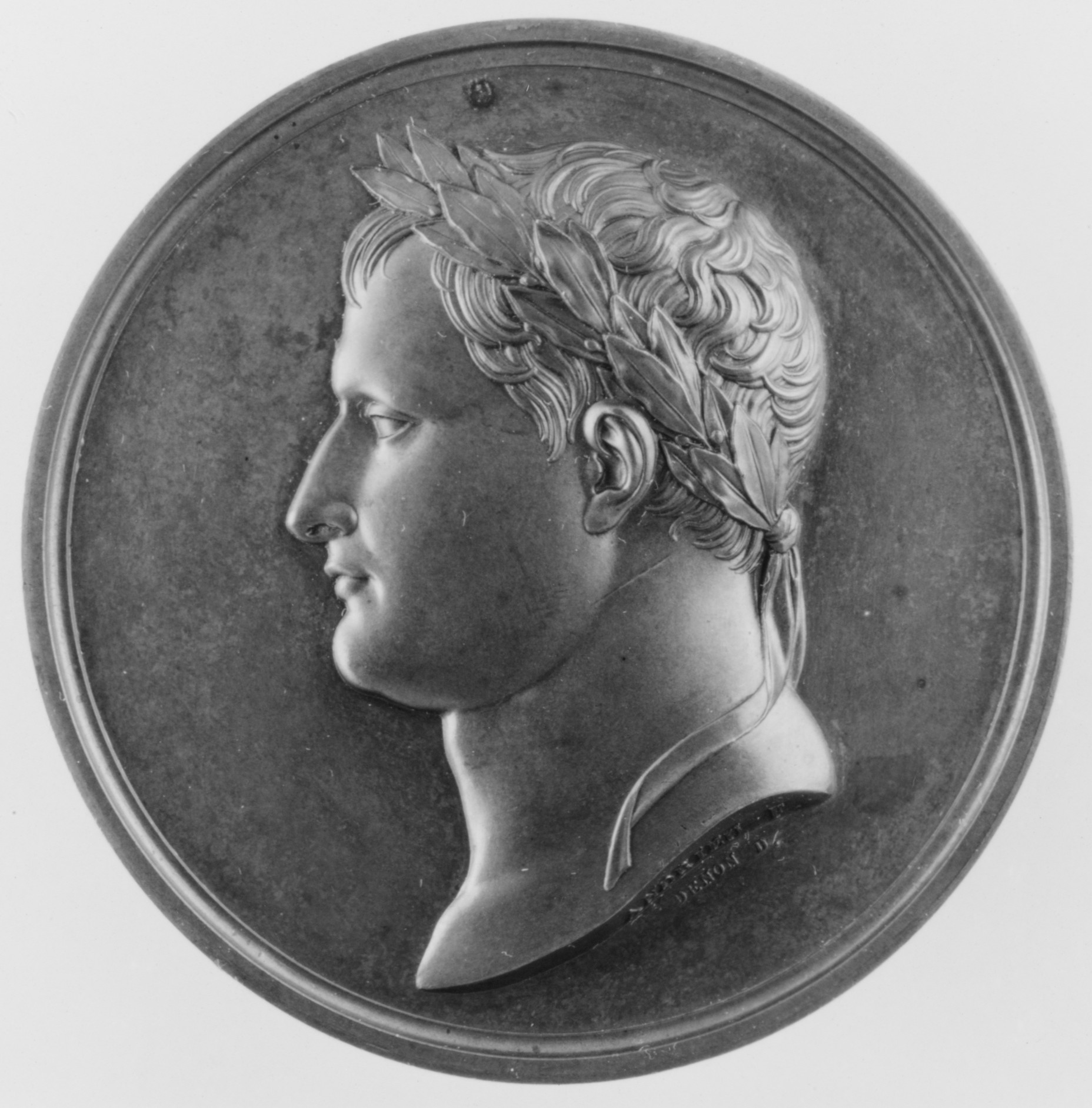
Heritage Analysis: Napoleon, Baptism of the King of Rome
Artifact Overview and Provenance
The subject under analysis—a bronze struck medal commemorating the Baptism of the King of Rome—represents a pivotal moment in Napoleonic iconography and the broader continuum of imperial self-fashioning. Struck in bronze, a medium historically associated with durability, commemoration, and the dissemination of state power, this artifact functions as both a historical document and a talisman of dynastic legitimacy. The Baptism of Napoleon II, King of Rome, on June 9, 1811, was not merely a religious ceremony; it was a calculated performance of sovereignty, designed to anchor the Bonaparte dynasty within the sacred and temporal hierarchies of Europe. For Katherine Fashion Lab, this object offers a strategic lexicon of symbolic power, historical adornment, and spiritual meaning that can be translated into a 2026 high-end luxury strategy.
Symbolic Power: The Language of Dynastic Legitimacy
The medal’s iconography is dense with coded assertions of authority. Typically, such medals feature the infant King of Rome held aloft by his parents or by allegorical figures representing France, Empire, and the Church. The baptismal font, often rendered as a classical or imperial vessel, signals the fusion of Roman imperial tradition with Christian sacrality. The crown, scepter, and eagle motifs are not decorative; they are semiotic anchors that assert the Bonapartes as heirs to Charlemagne and the Caesars. For the luxury strategist, this is a masterclass in narrative control. Every element—from the child’s posture to the positioning of the clergy—is orchestrated to convey an unbroken lineage of power. In 2026, luxury brands can adopt this approach by embedding heraldic codes and genealogical motifs into their collections, not as mere ornament, but as a declarative statement of heritage and exclusivity. The bronze medium itself, resistant to decay, symbolizes the permanence of status—a quality that high-end consumers increasingly seek in an era of ephemeral trends.
Historical Adornment: Bronze as a Medium of Prestige
Bronze, in the Napoleonic context, was a material of deliberate choice. Unlike gold, which could be perceived as ostentatious, or silver, which was common, bronze carried connotations of classical gravitas and military fortitude. The struck technique—hammering the design into the metal—ensured sharp, enduring relief, making the medal a miniature monument. This artifact was not merely a commemorative piece; it was an adornment of state, meant to be worn, displayed, or circulated among the elite as a mark of favor and allegiance. For Katherine Fashion Lab, the lesson is in the material storytelling of bronze. In 2026, luxury jewelry and accessories can draw upon the patina and weight of bronze to evoke a sense of ancient authority. The tactile experience of a bronze piece—cool to the touch, substantial in the hand—creates an intimate connection with history. This is not a material for mass production; it is for the discerning few who understand that true luxury is found in the object’s story, not just its surface.
Spiritual Meaning: Baptism as a Ritual of Transformation
The baptism of the King of Rome was a spiritual event with profound political implications. In Catholic tradition, baptism signifies purification, rebirth, and entry into the community of believers. For Napoleon, it was a means to sanctify his dynasty, positioning his son as a divinely ordained heir. The medal captures this liminal moment—the infant, still innocent, is being initiated into a destiny of power. The spiritual dimension here is not merely religious; it is about transcendence through ritual. For the luxury consumer in 2026, spiritual meaning is increasingly sought through objects that mark life’s thresholds—birth, marriage, legacy. Katherine Fashion Lab can reinterpret this by creating commemorative pieces that serve as modern-day talismans. A bronze cuff, for instance, engraved with a personal or family crest, can function as a secular baptism into a brand’s lineage. The ritual of acquisition—presentation in a weighted box, a certificate of authenticity, a private viewing—becomes part of the spiritual experience. The artifact’s sacred geometry (circles, crosses, stars) can be abstracted into contemporary design, offering the wearer a connection to the eternal without explicit religious iconography.
Strategic Implications for 2026 High-End Luxury
Katherine Fashion Lab must consider the Napoleon medal as a strategic standalone artifact that informs a broader luxury philosophy. The 2026 market will be defined by authenticity, rarity, and narrative depth. Consumers, particularly Gen X and older Millennials with disposable income, are moving away from logo-driven status toward heritage-infused minimalism. The bronze medal offers three actionable pillars:
First, the power of the limited edition. Napoleon’s medals were struck in controlled quantities, often given only to court members and foreign dignitaries. Katherine Fashion Lab can adopt a “by invitation only” model for certain collections, using bronze as the medium. Each piece would be numbered, dated, and accompanied by a digital provenance ledger (blockchain-based) that traces its design lineage back to this artifact. This creates scarcity as a form of respect, not exclusion.
Second, the integration of ritual. The baptism was a multi-sensory event—music, incense, vestments, and the physical act of anointing. Luxury in 2026 must be experiential. Katherine Fashion Lab can design unboxing ceremonies that mimic the solemnity of a historical ceremony. The bronze object would be presented in a coffret lined with velvet, accompanied by a scented parchment (evoking the incense of Notre-Dame) and a personalized letter from the creative director, written in the tone of a historical proclamation. This transforms the purchase into a rite of passage.
Third, the lexicon of symbols. The eagle, the bee, the crown, and the cross are not arbitrary; they are power archetypes. Katherine Fashion Lab can develop a symbolic alphabet for its 2026 collections, where each motif carries a specific meaning—strength, legacy, protection, transcendence. This allows the wearer to curate their own narrative, selecting pieces that resonate with their personal history. For instance, a bronze ring engraved with a Napoleonic bee (symbol of immortality and resurrection) can be marketed as a talisman for entrepreneurs or family leaders. The brand becomes a custodian of meaning, not just a purveyor of goods.
Conclusion: The Bronze Standard of Luxury
The Napoleon Baptism of the King of Rome medal is far more than a historical curio; it is a strategic template for how power, adornment, and spirituality converge in a single object. For Katherine Fashion Lab, the challenge is to translate this density into wearable, collectible art that speaks to the 2026 consumer’s hunger for depth. The bronze medium, with its ancient resonance and tactile gravity, offers a counterpoint to the digital ephemerality of the age. By embracing the ritual of creation, the symbolism of permanence, and the exclusivity of heritage, the brand can position itself at the intersection of history and high fashion. The medal’s message is clear: true luxury is not bought; it is inherited through design. Katherine Fashion Lab’s 2026 strategy should be a modern baptism—a rebirth of the object as a vessel for timeless authority.