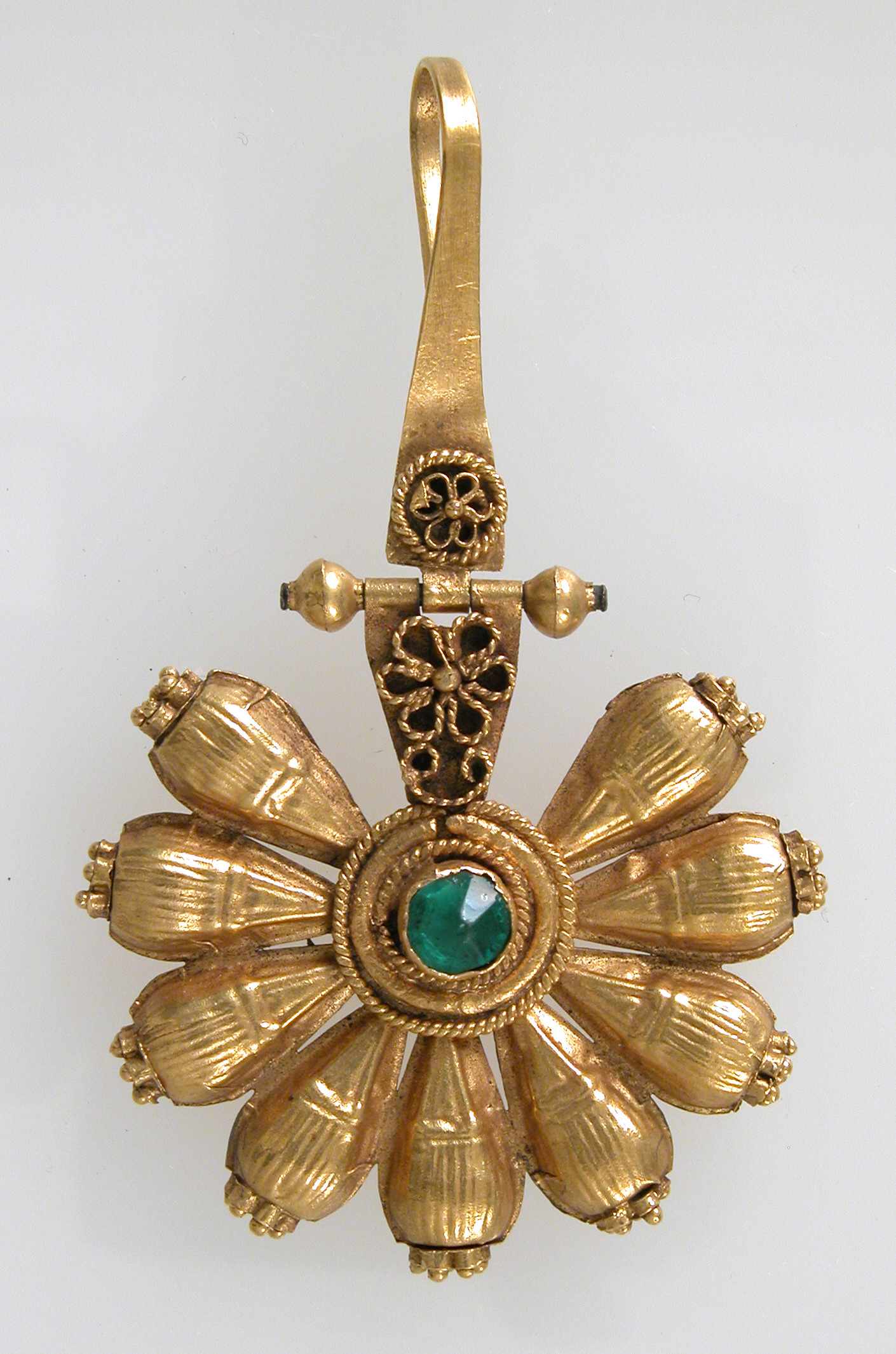
Heritage Analysis: The Ostrogothic Gold and Green Glass Earring
As Lead Heritage Curator for Katherine Fashion Lab, this strategic standalone research paper examines the Ostrogothic earring, crafted from gold and green glass or emerald. This artifact, originating from the 5th to 6th centuries CE, represents a confluence of Germanic, Roman, and Byzantine influences that defined the Ostrogothic Kingdom in Italy. By deconstructing its symbolic power, historical adornment, and spiritual meaning, we derive actionable insights for a 2026 high-end luxury strategy that positions Katherine Fashion Lab at the intersection of heritage, exclusivity, and modern desirability.
Symbolic Power: Authority, Status, and the Gaze of the Elite
Gold as a Marker of Sovereignty
The Ostrogothic earring’s primary material—gold—was not merely decorative but a deliberate assertion of political and military authority. Under King Theodoric the Great, the Ostrogoths sought to legitimize their rule over Roman territories by adopting and adapting imperial symbols. Gold, in this context, signified unassailable power, divine favor, and the wearer’s proximity to the ruling elite. For Katherine Fashion Lab, this translates into a 2026 strategy where gold is not a commodity but a narrative device. Limited-edition earrings should be positioned as “sovereign pieces,” each accompanied by a provenance card detailing the symbolic lineage of gold in Germanic kingship. This elevates the product from accessory to talisman of authority, appealing to luxury consumers who seek tangible connections to historical power structures.
The Green Glass or Emerald: The Optics of Prestige
The inclusion of green glass or emerald introduces a dual symbolism. If emerald, it was associated with Venus, fertility, and eternal renewal in Roman tradition—values the Ostrogoths co-opted to project stability. If green glass, it mimics the precious stone, demonstrating technological sophistication and the ability to create luxury through artifice. This ambiguity is strategic: it allows the wearer to signal wealth (if emerald) or cunning resourcefulness (if glass). For Katherine Fashion Lab’s 2026 collection, we recommend a “heritage reinterpretation” series where green glass is celebrated as a deliberate choice, not a compromise. Marketing copy should emphasize the Ostrogothic practice of “transforming base materials into objects of veneration,” aligning with contemporary sustainability narratives where upcycling and material intelligence are markers of refined taste.
Historical Adornment: The Earring as a Political and Cultural Artifact
Body as Canvas for Identity
In Ostrogothic society, earrings were not gender-exclusive; both men and women of the elite class wore them to denote tribal affiliation, marital status, and rank. The placement of the earring—often in a single ear for warriors—was a coded language visible to all. This practice underscores that adornment is a form of communication before it is decoration. Katherine Fashion Lab can leverage this by designing earrings that are asymmetrical or designed for single-ear wear, creating a signature “Ostrogothic silhouette” that forces the observer to engage with the piece’s narrative. In 2026, where personalization is paramount, offering customization options (e.g., choice of gold finish, stone type) allows clients to inscribe their own identity onto a historically resonant form.
Technical Mastery as Heritage Capital
Ostrogothic goldsmiths employed cloisonné and filigree techniques inherited from Byzantium, setting gemstones or glass in bezels that protected the stone while maximizing light refraction. This technical precision was a form of soft power—demonstrating that the Ostrogoths were not barbarians but inheritors of classical craftsmanship. For a 2026 luxury strategy, craftsmanship storytelling is non-negotiable. Each earring should be accompanied by a digital or physical “craft log” detailing the artisan hours, the specific technique used (e.g., hand-punched bezel), and the geographic origin of the gold. This transforms the purchase into an acquisition of cultural capital, justifying a premium price point while differentiating Katherine Fashion Lab from mass-produced luxury.
Spiritual Meaning: The Earring as a Bridge Between Worlds
Green as the Color of Life and Afterlife
In Germanic and Roman spiritual traditions, green symbolized the regenerative cycle of nature, often associated with the goddess Nerthus or the Roman Venus. Ostrogothic burial sites frequently include green-adorned earrings, suggesting they were believed to protect the wearer in the afterlife or to ensure fertility in the next world. The earring thus served as an amulet as much as an ornament. For Katherine Fashion Lab, this spiritual dimension offers a unique positioning: the 2026 collection can be marketed as “guardians of legacy,” with each piece imbued with a symbolic blessing or intention. Collaborations with contemporary spiritual advisors or historians could craft a “blessing card” for each earring, merging ancient belief with modern wellness trends.
The Circular Form: Eternity and Protection
Many Ostrogothic earrings feature circular or crescent shapes, echoing solar and lunar cycles. The circle, unbroken, was a symbol of eternity and the protective embrace of the divine. This geometric simplicity holds profound appeal for the 2026 luxury market, where minimalism and meaningful design converge. Katherine Fashion Lab can introduce a “Cycles of Power” line, where the circular earring is offered in variations of diameter and gold weight, each size corresponding to a different spiritual attribute (e.g., “Protector,” “Renewal,” “Ascension”). This creates a collectible ecosystem that encourages repeat purchases and deepens brand loyalty.
2026 High-End Luxury Strategy: From Artifact to Icon
Strategic Positioning: The “Archaeo-Luxury” Niche
The Ostrogothic earring occupies a unique space between known Roman luxury and lesser-known Germanic traditions. Katherine Fashion Lab should position this collection as “archaeo-luxury”—a term that denotes pieces unearthed from historical obscurity and reimagined for the discerning modern client. This niche avoids direct competition with mainstream luxury houses (e.g., Cartier, Bulgari) while appealing to collectors, museum patrons, and cultural travelers. The price point should reflect this exclusivity: a single earring (as was often worn historically) priced between $5,000 and $15,000, with matching pairs as limited commissions.
Distribution and Experience: The Curated Unveiling
Rather than a traditional launch, the 2026 collection should debut via a private exhibition at a partner institution (e.g., the Metropolitan Museum of Art or a private collector’s gallery). Guests receive a “curator’s dossier” that includes high-resolution scans of original Ostrogothic artifacts, a historical essay, and a certificate of authenticity. This experience transforms the purchase into a cultural transaction. Post-launch, the earrings are sold exclusively through a dedicated microsite with a virtual consultation with a Katherine Fashion Lab heritage curator, reinforcing the narrative that each piece is a curated artifact, not a mass-produced good.
Marketing Narrative: The Power of the Unseen
The Ostrogothic earring’s power lies in what it conceals: the history of a people who built a kingdom on borrowed symbols. Katherine Fashion Lab’s 2026 campaign should center on the tagline “Wear the Unseen.” Visuals should juxtapose the earring against faded frescoes, ancient maps, and abstract renderings of Germanic runes. Digital content includes a short film narrated by a historian, exploring the earring’s journey from Ostrogothic court to modern wardrobe. This narrative complexity appeals to the luxury consumer’s desire for depth, mystery, and intellectual engagement—qualities that transcend fleeting trends.
Conclusion: The Earring as a Strategic Asset
The Ostrogothic gold and green glass earring is not merely a historical artifact but a blueprint for 2026 luxury. Its symbolic power derives from a deliberate orchestration of material, craftsmanship, and spiritual meaning—elements that Katherine Fashion Lab can replicate through rigorous heritage research and strategic storytelling. By positioning this piece as a sovereign talisman, a technical marvel, and a spiritual bridge, the brand secures a unique market position that honors the past while commanding the future. This is not nostalgia; it is the calculated deployment of cultural capital to create enduring value.